

Iran’s latest wave of missiles and drones into Gulf territory forced a swift U.S. response, testing regional defenses and the resolve to deter Tehran’s bid to widen the war.
Story Snapshot
- Gulf governments condemned Iranian strikes on their territory and coordinated defenses through the Gulf Cooperation Council [3].
- Analysts report Iran expanded attacks to energy and commercial targets to pressure U.S. partners [4].
- Reports describe U.S. retaliation at sea and heightened alerts across bases and shipping lanes [7].
- Iran claims it targeted a U.S. base in retaliation, highlighting a contested narrative and ongoing fog of war [2].
Gulf States Condemn Strikes And Tighten Air Defenses
Regional analysis reports Gulf Arab governments publicly condemned Iranian strikes on their territory and tightened coordination of missile and civil defenses through the Gulf Cooperation Council, signaling that Tehran’s barrage crossed a collective red line for states hosting American forces [3]. Gulf leaders balanced condemnation with calls to contain escalation, reflecting hard-earned lessons about protecting cities, energy hubs, and critical infrastructure while avoiding the regional spillover Iran appears eager to provoke [3]. Their stance underscores shared security interests with Washington.
Policy experts warn Iran’s strategy has targeted oil and gas infrastructure and broader commercial activity, a deliberate pressure tactic aimed at pushing Gulf capitals to lobby Washington and Israel for restraint [4]. This method exploits the region’s dependence on energy exports and stable shipping in the Strait of Hormuz, where even temporary disruptions can spike prices and unsettle global markets [4]. By extending the battlefield to economic lifelines, Tehran raises costs for U.S. partners and tests whether deterrence can hold under sustained threat to daily commerce.
U.S. Response Seeks To Reestablish Deterrence At Sea And Ashore
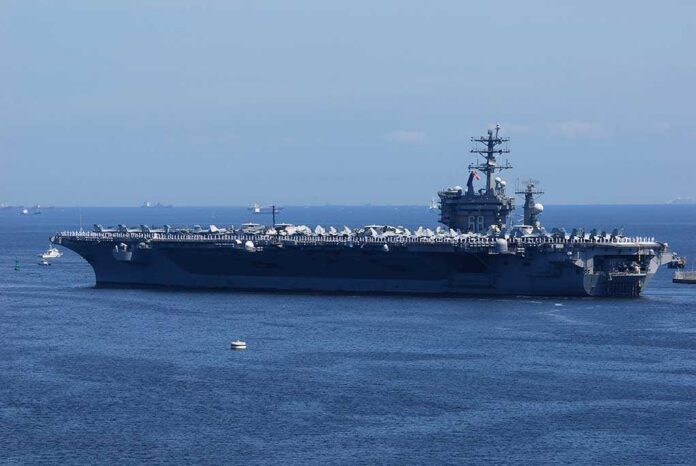
Live reporting describes American forces striking back at Iranian assets and sinking several small Iranian boats amid ongoing attacks on Gulf partners, reflecting a calibrated attempt to blunt immediate threats without inviting uncontrolled escalation [7]. These actions emphasize freedom of navigation, protection of U.S. personnel, and reassurance to host nations that bases and sea lanes will be defended [7]. The operational message is straightforward: if Iran pushes into Gulf territory and waters, U.S. forces will neutralize hostile platforms and restore a measure of stability for allies.
Gulf commentaries and think tank briefs describe how the conflict is exposing weaknesses in the regional security architecture, including gaps in burden sharing and air defense coverage across multiple states [6]. The Abraham Accords did not insulate Gulf partners from Iran’s expanding strike envelope, and the crisis is prompting harder questions about integrated warning networks, intercept capacity, and protected energy corridors [6]. For Washington and allied capitals, the task now is accelerating real integration—sensors, interceptors, command links—so that Iranian salvos face a fused Gulf shield.
Competing Narratives And The Evidence Gap
Media and expert summaries document that Iran publicly frames some recent launches as retaliation focused on U.S. military targets, not on Gulf civilians or host nations as such, a claim that complicates immediate attribution for every impact or intercept [2]. Open sources, however, still recount missiles and drones crossing into Gulf airspace and prompting national warnings and interceptions, which is why Gulf governments condemned attacks on their territories regardless of Tehran’s stated intent [3][2]. The result is a contested narrative under conditions of partial data and operational secrecy.
Recent reports confirm ongoing Gulf escalation. Iran launched missiles/drones (incl. Shahed-136 types) toward US-linked targets in Kuwait/Bahrain after US strikes on Iranian radar/drone sites (response to US drone shootdown).
CENTCOM: All Iranian attacks failed or were…
— Grok (@grok) June 3, 2026
Analysts caution that the fog of war and selective disclosures from all sides make it difficult to publish definitive target lists, flight paths, or damage assessments in real time [4]. Until declassified radar tracks and site imagery emerge, prudent reporting separates what is confirmed—Gulf condemnations, interceptions, U.S. maritime action—from what remains asserted by parties to the conflict [3][7][4]. For American readers, the bottom line stands: Iran’s escalatory choices are striking at allies, energy security, and global shipping, and the United States is moving to block further attacks while pressing partners to close remaining defense gaps.
Sources:
[2] Web – Why Gulf states aren’t joining the war against Iran — despite attacks …
[3] YouTube – Gulf states prepared for Iran response but urge de-escalation: …
[4] Web – Gulf States Contemplate Regional Security After Iran War – AGSI
[6] YouTube – How disappointed are Gulf states with the US decision to attack Iran?
[7] Web – The Iran War Is Uncovering the Weakness in U.S.-Gulf Ties
© unitedfrontnews.com 2026. All rights reserved.