
When a president claims he revived a “dead” America into “the hottest country in the world,” it taps straight into growing anger on both the right and the left that the nation’s economic story no longer matches ordinary people’s daily reality.
Story Snapshot
- President Trump is telling Americans the country was “dead” under Biden but is now the “hottest” economy anywhere in the world.
- The White House points to lower inflation, strong growth, and trillions in new investment to back this turnaround claim.
- Independent fact‑checkers say the “dead” economy line and $18 trillion investment figure are exaggerated and partly unproven.
- The gap between upbeat speeches and everyday costs feeds a shared belief that political elites spin numbers while most families still struggle.
Trump’s “Dead Country” to “Hottest in the World” Claim
President Donald Trump has made a simple, bold claim: “One year ago, our country was dead. Now we are the hottest country anywhere in the world.” He has repeated that line in his State of the Union address, a national budget speech, and at global events like the World Economic Forum in Davos. In these speeches, he says he inherited a nation in crisis from Joe Biden and quickly turned it into a booming powerhouse. Supporters hear proof that “America First” is finally paying off.
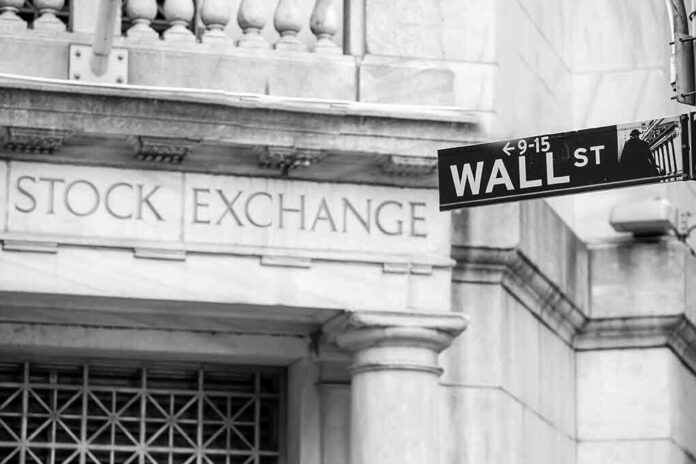
During his 2026 State of the Union, Trump tied this dramatic language to a list of economic numbers. He told Congress that core inflation—the measure that leaves out food and energy—had dropped to about 1.7 percent in the last three months of 2025, the lowest level in more than five years. He also said the stock market had hit more than 50 record highs since his election and framed these gains as proof that America is now “respected again like never before.” These claims are meant to show a clear break from what he calls “stagflation” under Biden.
What the White House Says about Growth, Inflation, and Investment
The Trump White House backs the “hottest country” slogan with a story of rapid economic turnaround. Officials say growth in late 2025 reached levels above what major forecasters expected and that inflation, which had hurt families earlier in the decade, is now “defeated” or close to ideal. They argue that lower inflation, rising wages, and new factory openings prove the economy is finally working for workers again. This message is aimed at both conservatives tired of high prices and liberals worried about stagnant paychecks.
Trump also highlights what he calls a “record‑setting” wave of global investment. In Davos and in Washington, he has claimed that he secured more than $18 trillion in new money “pouring in from all over the globe” in just 12 months, after what he describes as less than $1 trillion during Biden’s four years. He links this to his tariffs and America First policies, arguing that companies now see the United States as the best place on earth to build and hire. For voters who feel globalism hollowed out their towns, this narrative offers a sense of payback and renewal.
Fact‑Checkers: Strong Economy, But Big Exaggerations
Independent analysts agree the United States economy has grown and inflation has eased, but they say Trump’s “dead” versus “hottest” framing stretches the truth. One review notes that the U.S. economy was already growing around 2.8 percent in 2024, and continued to expand after that, though with bumps. That means the country was not “dead” in the literal sense of shrinking year after year. Fact‑checkers call the slogan “misleading” because it turns a real improvement into a simple rescue story that ignores earlier gains and ongoing problems.
Reporters and economists also question the $18 trillion investment figure Trump repeats. A detailed fact‑check cites White House internal figures closer to $9.6 trillion, and notes that even that lower number seems to include projects announced during the Biden years. Analysts say Trump has not shown public documentation for the full $18 trillion, and that some of the money looks more like long‑term pledges than confirmed spending. This matters because big headline numbers can give people the impression that their own finances should already feel much better, even when many still struggle to pay for housing, health care, and energy.
Why Many Americans Still Feel Left Behind
For many families, the debate is less about the exact growth rate and more about daily life. Even with lower inflation, prices remain far above where they were earlier in the decade, and costs for basics like groceries, rent, and gas still squeeze budgets. Earlier data showed inflation easing but not disappearing, and news coverage highlighted job losses and rising fuel prices at points in 2026. So while charts in Washington look better, many people on both sides ask: if we are “the hottest country,” why does it still feel so hard to get ahead?
That gap between official success and personal struggle feeds a deeper, shared frustration. Research on politics and the economy finds that in a polarized country, leaders often tell simple stories of “booming” or “dead” economies, even when the real data is mixed. At the same time, growing inequality and partisan conflict make it easier for elites to spin numbers without losing core supporters. Many conservatives see a ruling class hooked on global deals and cheap labor; many liberals see a system that protects the rich while cutting social support. Both groups increasingly suspect that whoever is in office, the “deep state” and big money still run the show.
What This Moment Says about Power and Trust
Trump’s “dead to hottest” storyline fits a wider pattern where presidents take credit for complex economic shifts and present them as personal victories. Studies of U.S. history show that the economy is shaped by many forces, not just the person in the White House. Yet campaign teams and administrations keep selling simple turnarounds, because these messages help win elections and shore up support during hard times. That is true for Republicans and Democrats alike. The result is a growing sense among ordinary Americans that they are being managed with slogans, not fully informed with facts.
For readers across the political spectrum who worry about corruption, globalism, and a fading American Dream, this story is not just about Trump. It is about how leaders use big numbers and dramatic language to claim success while millions still feel stuck. Some economic indicators really have improved under Trump, and many businesses are investing. But when presidents declare “we are the hottest country anywhere in the world” after calling the nation “dead” only a year before, they also deepen the feeling that Washington lives in a different reality than the rest of the country. That widening trust gap may be one of the most serious challenges America faces, no matter which party is in power.
Sources:
facebook.com, msn.com, aljazeera.com, cincinnati.com, finance.yahoo.com, nationaltoday.com, pbs.org, nytimes.com, bloomberg.com, cnbc.com, reuters.com, richmondfed.org, journals.sagepub.com, nationalaffairs.com, ersj.eu, cambridge.org, en.wikipedia.org
© unitedfrontnews.com 2026. All rights reserved.