

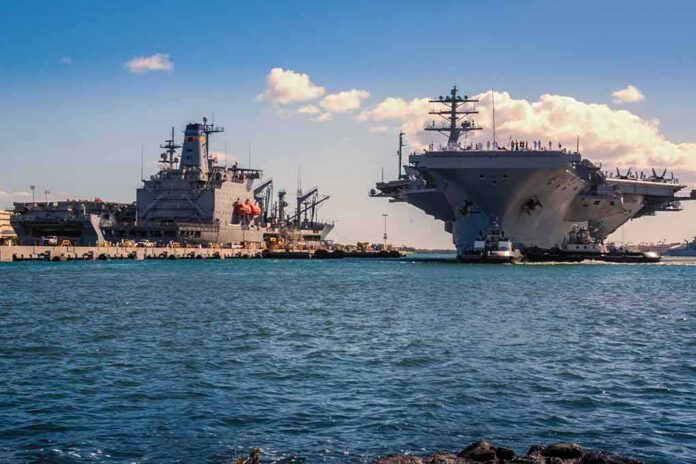
U.S. Marines and sailors sank what commanders called a floating fuel hub for cartel boats in the Eastern Pacific, striking at the support system that keeps cocaine moving north.
Story Highlights
- U.S. forces, working with Ecuador, boarded and sank an alleged cartel refueling vessel on Aug. 28.
- Southern Command said the action hit logistics that keep cocaine routes alive in the Eastern Pacific.
- The mission followed new U.S. sanctions on Ecuador-linked gangs and vessels tied to drug smuggling.
- Analysts say stopping fuel and support can slow more cocaine than chasing single loads.
What The Military Says Happened
On August 28, U.S. Marines and sailors from the amphibious transport dock USS San Antonio, working with Ecuadorian authorities, boarded a vessel in international waters in the Eastern Pacific and later sank it. U.S. Southern Command said the ship served as a floating refueling station for at-sea drug operations and called the strike a direct blow to cartel logistics. Command statements tied the action to ongoing cooperation with Ecuador under established agreements.
U.S. Southern Command leadership said the hit targeted the backbone of trafficking, not just one shipment. Officials described the refueling platform as a critical node that lets smaller, fast boats extend their range and avoid ports where they are easier to spot. The command framed the mission as part of a wider push to break the supply chain that moves cocaine from South America toward Mexico and, eventually, the United States market.
Why Logistics Are The New Target
Security experts and past reviews show traffickers rely on layers of support at sea: fuel, food, repairs, and handoff points. These services turn the Eastern Pacific into a highway for drugs. Research on interdiction has found that hitting support nodes can slow many later runs by raising costs and risk across the network, while chases of single loads often miss the larger system. That is why refueling hubs draw more focus from joint maritime teams today.
The Eastern Pacific remains a primary route for cocaine bound for the United States, according to regional analyses. That reality has pushed the United States and partners to blend sea operations with financial pressure. When forces remove fuel access and Treasury blocks ships or companies that support runs, cartels must replace both hardware and money channels. That double hit can strain gangs already fighting rivals and police at home ports.
Sanctions Set The Stage For The Strike
Days before the boarding, the United States Department of the Treasury sanctioned 15 Ecuador-based targets and identified 10 vessels for alleged roles in covert cocaine shipping each month from South America to Mexico. Treasury linked them to Ecuador’s Los Choneros and Los Lobos, two violent groups tied to maritime trafficking. These designations aimed to freeze assets and deter insurers, banks, and ports from touching flagged ships and firms.
WOW – Our marines and sailors have fractured a primary artery of this illicit logistics chain and sent an unmistakable message to narco-terrorists across the region.
The following statement from Commander Gen. Francis L. Donovan:
"Today's interdiction and sinking of a floating… https://t.co/cm6r25L807
— BelannF (@BelannF) August 29, 2026
Earlier actions also singled out Los Choneros and its leader under counter narcotics authorities, citing their control of key routes with help from Mexican partners. These steps show a pattern: use sanctions to mark the players and ships, then use maritime patrols to find and remove the tools at sea. Together, the moves try to cut the fuel and financing that let cartel boats range far from shore with little risk of running dry.
What It Means For Americans Watching The Border
The boarding and sinking speak to a larger worry shared across the aisle: powerful networks move drugs while leaders argue, and communities pay the price. Many Americans see a system that fails to stop the flow, whether they blame lax enforcement or deep corruption. Targeting a floating fuel station will not end the trade, but it goes after the enablers that make the route efficient and cheap. That is where lasting pressure can build.
This operation also shows how alliances matter. Ecuador’s role and prior agreements gave legal cover and local insight. Joint efforts like this lower the load on U.S. taxpayers and raise the risk for traffickers across borders. Results still depend on steady patrol time, smart intel, and follow-through on sanctions. But when coordinated, these tools can raise cartel costs and push more seizures and disruptions in the months ahead.
Sources:
realcleardefense.com, usatoday.com, telesurenglish.net, insightcrime.org, home.treasury.gov, bloomberg.com, cbsnews.com, rand.org, europarl.europa.eu, southcom.mil, apps.dtic.mil
© unitedfrontnews.com 2026. All rights reserved.