

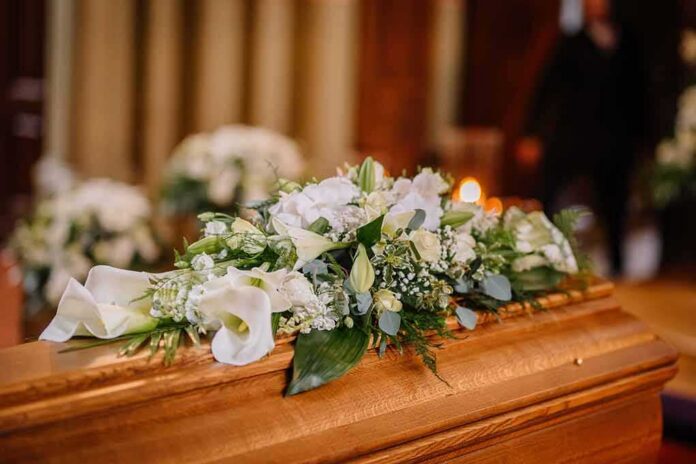
Serbia returned Ratko Mladić’s body from The Hague and prepared a Belgrade burial that triggered a fresh political storm at home and abroad.
Story Snapshot
- Serbia brought Mladić’s body home and set a Monday burial in Belgrade.
- Serbian officials first signaled “highest” honors, then reports suggested a scaled-back plan.
- Family announced the time and place, with a church viewing before Topčider cemetery.
- The funeral revived fierce debate over wartime memory and state legitimacy.
What Happened: Transfer, Timing, and Place
French wire service and United States reporting said Serbia flew Ratko Mladić’s body from The Hague to Belgrade on a government plane, setting the stage for burial in the capital. Serbian and regional outlets reported the funeral for Monday, September 7, with a viewing at the Church of St. Luke, followed by burial at Topčider cemetery. Darko Mladić, the son, publicly gave the date and early start time, signaling that the family drove key arrangements.
Deutsche Welle and other outlets documented that Mladić died in custody while serving a life sentence for genocide and other war crimes, which made the burial both inevitable and politically charged. Serbia’s plan drew fast attention because it blended family control with signs of state coordination. The government-organized transport added weight. The fixed schedule and the prominent Belgrade cemetery underlined that the event would not be quiet or hidden from public view.
State Honors: Announcements and Later Signals
Serbia’s justice minister, Nenad Vujić, was quoted on August 28 saying Mladić would be buried with the “highest military and state honors,” a phrase repeated across outlets and widely amplified. Later, Euronews reported that commemoration events did not feature serving officials, artillery salutes, or ceremonial military units, describing a more limited approach than early talk suggested. The shift left a public record where initial promises and subsequent practice did not fully match, adding to confusion over official roles.
Coverage across several outlets agreed on core details like date and location, but differed on the exact level of honors, pointing to either late changes or imprecise early reporting. Reports did not include a full, published protocol from Serbia spelling out who would stand in formation, what salutes would occur, or which offices would appear at the graveside. That absence kept the focus on statements and on-the-ground descriptions rather than a single formal order that settled the matter.
Why It Matters: Memory Politics and Institutional Legitimacy
Deutsche Welle framed the event inside Serbia’s and Bosnia’s long struggle over how to remember the wars, the victims, and those convicted of crimes. Funerals in the region often become proxy fights over identity and truth. This one was no exception. To some, any official presence looks like glorifying a man judged guilty of genocide. To others, the burial reads as respect for a former general and family wishes, regardless of international court rulings.
For readers in the United States, the story highlights a familiar concern: political leaders send mixed signals while institutions struggle to uphold clear standards. Early talk of top honors followed by reports of a scaled ceremony fed a belief that elites manage optics more than principles. Clear, public protocols would have reduced doubt. Instead, fragmented messaging deepened mistrust, which citizens on both the left and right already feel toward government at home and abroad.
What We Know vs. What Is Still Documented
We know the body returned to Serbia on a government flight, the family set a Monday funeral, and media described a church viewing and Topčider burial plan. We also know early official remarks pushed “highest” honors, while later reporting described a toned-down event without key state symbols. We have not seen a full, published Serbian protocol that lists ceremonial units or ordered salutes, so reporting relies on minister remarks and on-scene descriptions.
Bottom Line: A Funeral That Became a Political Signal
Serbia turned a necessary burial into a test of state identity. The government helped move the body and, at first, spoke of top honors. Later accounts showed a narrower ceremony. The family’s plan anchored the schedule, but state actions shaped the stage. In the Balkans, choices at gravesides echo far beyond cemeteries. Here, they revived old wounds and modern doubts about whether leaders choose clarity and law, or short-term signals that keep a divided past alive.
Sources:
youtube.com, dw.com, cnn.com, france24.com, telegraf.rs, washingtonpost.com, vreme.com, english.nv.ua, vesnik.ai
© unitedfrontnews.com 2026. All rights reserved.