

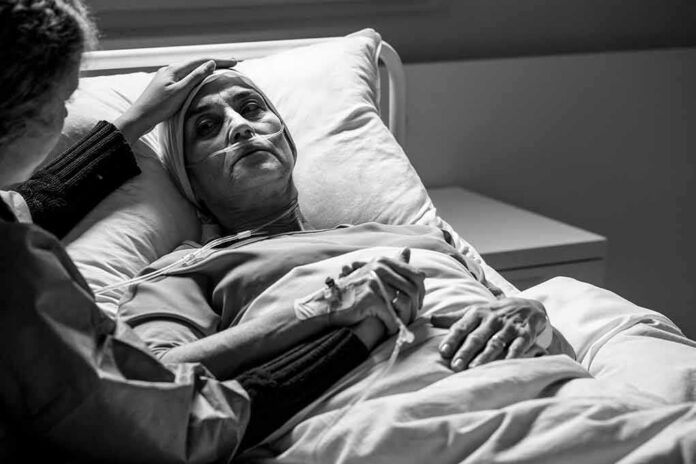
New research shows that when dementia strikes one spouse, the other’s brain health is pulled into the danger zone too — not by infection, but by years of shared habits, stress, and environment.
Story Snapshot
- Spouses of people with dementia face a sharply higher risk of developing dementia themselves.
- Studies point to shared lifestyle, health history, and caregiving stress, not “catching” dementia like a virus.
- Couples often share key brain-risk factors such as inactivity, depression, and head injuries over decades.
- Experts say targeted support for at-risk couples could prevent decline but warn current systems lag far behind.
Big new studies show dementia clusters inside marriages
A huge nationwide study from Taiwan followed nearly one million married adults and found that if one spouse developed dementia, the other was far more likely to receive the same diagnosis. Women whose partners had dementia faced about a 74 percent higher relative risk; for men, the increase was about 69 percent. Earlier work in Utah’s Cache County Study reported an even stronger pattern, with spouses of dementia patients showing roughly six times greater risk than spouses of people without dementia.
These numbers sound frightening, but they do not mean dementia is contagious in the way a flu virus is. Researchers stress that these findings come from observational cohort studies that track couples over time. They show strong links, not simple cause and effect. When scientists adjust for age, sex, genes, and basic health markers, the spousal risk stays higher. That suggests something real is happening inside households — yet it is tied to how couples live and cope, not to germs passing between them.
Shared lives mean shared brain-risk factors
Couple studies consistently find that husbands and wives resemble each other both in cognitive outcomes and in the exposures that matter most for late-life brain health. A JAMA Network Open cohort of 784 older couples showed that factors shared inside the marriage — physical inactivity, major depressive disorder, and history of head injury — explained almost half of the extra dementia risk for spouses. A larger review of 11 studies reached a similar conclusion: spouses of people with cognitive impairment had higher odds of their own decline, and the match was linked to caregiving stress, assortative mating, and shared lifestyle.
Assortative mating is a research term for a simple idea: people tend to marry partners with similar education levels, income, and health behaviors. Over years, they also adopt each other’s habits, from diet to exercise to smoking. That means the spouse of a person with dementia often shares the same long-term risk profile — low activity, high blood pressure, diabetes, or obesity — which are all firmly tied to late-life dementia. One major analysis of spouse dementia risk argues that this shared environment and behavior, built over decades, is the most likely driver of the pattern, rather than anything mysterious or sudden.
Caregiving stress can damage the caregiver’s brain
Once dementia appears in one partner, the other often becomes a full-time caregiver, and that role can be brutal. Research on spousal caregiving shows that stressful life events that threaten close bonds, such as spouse illness or widowhood, are linked with greater cognitive decline and more dementia cases. Across five different studies, spouses caring for partners with dementia showed higher dementia incidence, worse cognitive scores at each time point, or faster decline than similar people who were not caregivers.
One key paper described this as an “ironic tragedy” and noted that the added risk grew as exposure time increased: when researchers factored in how long someone had been caring for a partner with dementia, their risk jump rose from about 48 percent to roughly 600 percent compared with spouses of people without dementia. Chronic stress, broken sleep, social isolation, and skipped self-care are common for caregivers and all have been tied to worse brain outcomes. Put simply, the longer the healthy spouse sacrifices their own health to support their partner, the more their own brain may pay the price.
Marriage can protect the brain — but only when it is healthy
These findings sit beside another well-known pattern: people who are married tend to have a lower overall risk of cognitive impairment and dementia than lifelong singles or widowed people. Researchers call this the “marital advantage.” Having a supportive partner can mean more social contact, better monitoring of health problems, shared finances, and help sticking with good habits. A large U.S. study tied greater positive marital quality to better cognitive function, while more negative marital stress was linked to worse scores.
Having a spouse with dementia makes you 74% more likely to get it yourself. A huge new study just found it, and the headlines are already asking whether you can catch dementia from your husband or wife.
The study is real and big. A million married people in Taiwan, tracked… pic.twitter.com/n9ygf2aeU0
— Adam Zachary Wasserman (@adamzwasserman) July 21, 2026
This creates a paradox. A strong marriage can guard brain health for decades, but when dementia strikes, the very closeness of the bond can raise the healthy spouse’s risk. Experts stress that this double-edged effect makes targeted support for couples crucial. If families get help early — with respite care, mental health support, and guidance on staying physically active — they may blunt the damage to caregivers’ brains. Yet many Americans, on the left and the right, see this kind of help as another thing the federal government talks about but rarely delivers at scale.
Why this matters for everyday families
Across the political spectrum, older Americans already feel that the system is failing them on health, cost of care, and basic security. These spouse dementia findings add another worry: your partner’s diagnosis can quietly raise your own risk because you share the same stressed home and the same limited options. Researchers now argue that brain health is a couple-level issue, not just an individual one, and that prevention efforts should focus on shared lifestyle change and caregiver protection, not fear of “catching” dementia.
For families, the practical takeaway is both sobering and hopeful. Long before dementia appears, spouses can lower shared risk by staying physically active, protecting heart health, treating depression, and preventing head injuries. When dementia does appear, caregivers need real support, not slogans — tools to protect their own sleep, stress, and social life while they help the partner they love. Scientists are sounding the alarm; whether leaders respond with more than talk remains to be seen.
Sources:
pubmed.ncbi.nlm.nih.gov, papers.ssrn.com, ntnu.edu, frontiersin.org, pmc.ncbi.nlm.nih.gov, thelancet.com, cnn.com, bu.edu, medicalnewstoday.com, aric.cscc.unc.edu
© unitedfrontnews.com 2026. All rights reserved.