
A Tennessee woman gave birth aboard a packed Delta flight with no medical equipment available, forcing off-duty paramedics to improvise with a passenger’s shoelace to tie the umbilical cord—raising serious questions about airline preparedness for in-flight medical emergencies.
Story Snapshot
- Ashley Blair delivered baby Brielle on Delta flight from Atlanta to Portland just as the plane touched down, aided by two off-duty paramedics who had no obstetrical kit
- Paramedics used improvised tools including passenger blankets and a shoelace to tie the umbilical cord, contradicting Delta’s claim that a doctor assisted
- The incident highlights gaps in airline medical preparedness, as U.S. carriers lack mandatory obstetrical kits despite rising in-flight birth incidents
- Both mother and healthy 5.5-pound baby girl were transported to hospital for observation after the 153-passenger flight became 154 mid-air
Emergency Birth at 30,000 Feet
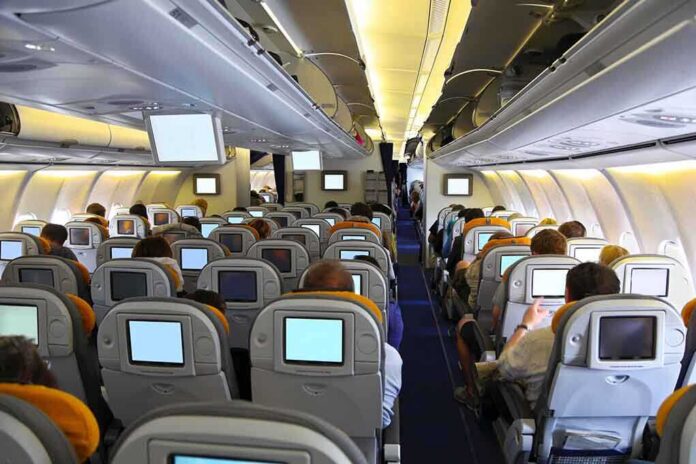
Ashley Blair from Tennessee entered active labor approximately 30 minutes before her Delta Air Lines flight from Atlanta was scheduled to land at Portland International Airport on Friday night. Two off-duty paramedics, Tina Fritz and Kaarin Powell, responded to a flight attendant’s call for medical assistance. The paramedics cleared space in the rear galley area by reseating passengers and prepared for an emergency delivery using only the limited resources available aboard the Boeing 737. Blair pushed three times, and baby Brielle Renee arrived weighing 5.5 pounds precisely as the aircraft’s wheels touched the runway.
Improvised Medical Response Raises Concerns
Fritz and Powell improvised critical medical tools because the aircraft lacked proper obstetrical equipment. They used passenger blankets to create a sterile field and tied the umbilical cord with a shoelace donated by a fellow passenger. The paramedics, returning from vacation in the Dominican Republic, had been assisting another passenger when summoned for the birth emergency. Fritz later emphasized the urgency of the situation, revealing she refused crew instructions to sit down during landing because she was holding the newborn. This resourcefulness saved the day, but it underscores a troubling reality: airlines are not required to carry obstetrical kits.
Delta’s Conflicting Account Sparks Questions
Delta Air Lines issued a statement thanking “crew and medical volunteers, including a doctor and two nurses” for their assistance during the emergency. Fritz directly disputed this claim in an interview with the Associated Press, stating no doctor was present and the nurse remained with another patient throughout the delivery. Delta did not respond to requests for clarification on the discrepancy. This contradiction raises concerns about corporate accountability and transparency, particularly when the airline’s official narrative doesn’t match the firsthand account of the medical professionals who actually delivered the baby under challenging circumstances.
Airlines Rely on Luck, Not Protocol
The successful delivery aboard Flight 153 relied entirely on the fortunate presence of trained paramedics among the passengers. U.S. airlines face no Federal Aviation Administration mandate to stock obstetrical kits, leaving crews dependent on improvisation and volunteer assistance during rare but critical in-flight births. This incident occurred just days after another Delta passenger gave birth on a flight from Guadalajara to Atlanta with help from firefighters after landing. The recurring pattern suggests airlines are gambling with passenger safety by failing to prepare for predictable medical emergencies, prioritizing cost savings over comprehensive medical readiness.
Common Sense Preparedness Lacking
While in-flight births remain statistically rare, they are documented events that airlines should anticipate with proper equipment and training protocols. The Blair family’s story ended happily—mother and baby were transported to a local hospital by Portland Airport Fire & Rescue and reported healthy. However, the incident exposes a gap between corporate PR statements and operational reality. Passengers who pay premium prices for air travel deserve assurance that airlines maintain basic medical equipment for foreseeable emergencies. Relying on chance presence of medical professionals among passengers is not a safety strategy; it’s institutional negligence dressed up as good fortune.
Sources:
Baby on board: Paramedics help passenger give birth just before Delta flight lands – WRAL
Woman gives birth on Delta flight with help of Atlanta firefighters – WSVN