
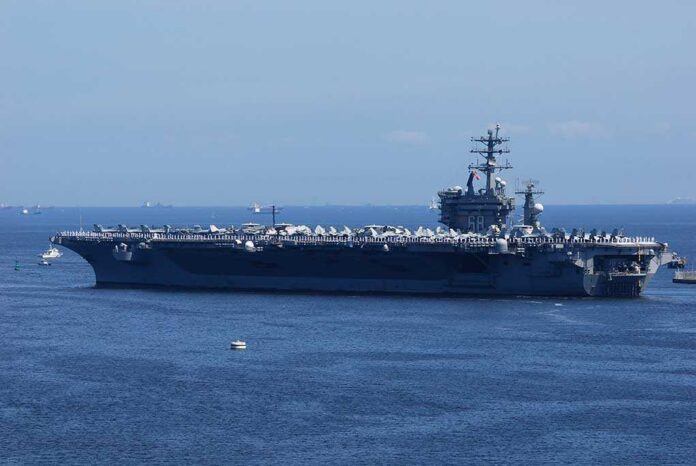
America’s $13.3 billion flagship carrier, deployed for a war many Americans never wanted, sits crippled in Crete after a laundry fire exposed catastrophic failures that left over 600 exhausted sailors sleeping on floors and decks—a humiliating symbol of military mismanagement while our troops fight yet another Middle East conflict.
Story Highlights
- USS Gerald R. Ford evacuated to Crete after 30-hour laundry fire destroyed berthing spaces, displacing 600+ sailors during Red Sea operations against Iran
- Pentagon reveals insufficient test data on key systems including EMALS catapults, radar, and damage resilience following the March 12 incident
- Crew endured 19-hour maintenance shifts on failing plumbing systems during 10-month deployment, raising questions about sabotage and operational readiness
- $13.3 billion carrier pulled from combat operations amid ongoing reliability issues, embarrassing Navy leadership during high-stakes Iran conflict
Laundry Fire Cripples Navy’s Most Expensive Warship
The USS Gerald R. Ford caught fire on March 12, 2026, in its aft main laundry facility while operating in the northern Red Sea during operations against Iran. The blaze burned for over 30 hours, spreading through ventilation systems and destroying berthing spaces that housed hundreds of sailors. Despite Navy assurances that propulsion and operations remained unaffected, the damage forced the carrier to abort its mission and limp to Souda Bay, Crete, for repairs. Over 600 sailors lost their living quarters, forcing them to sleep on decks, tables, and floors aboard a vessel that cost American taxpayers more than the GDP of many nations.
Crew Exhaustion and Maintenance Failures Raise Alarm
The Ford’s crew had endured a punishing 10-month deployment supporting “Operation Epic Fury” against Iran, working 19-hour shifts to maintain failing vacuum plumbing systems plagued by deferred maintenance. Shipping professor Sal Mercogliano described industrial laundries as a “smorgasbord of dangers” due to flammable lint accumulation, overloaded dryers, and human error under stress. The fire injured three sailors, with dozens to potentially over 200 treated for smoke inhalation, though official figures remain inconsistent. NCIS has launched an investigation into possible arson or sabotage, fueling rumors that exhausted crew members may have deliberately caused the blaze to escape deployment.
Pentagon Reveals Deeper Systemic Problems
By March 25, Pentagon testing officials confirmed the Navy lacks sufficient operational data on the Ford’s critical systems, including electromagnetic aircraft launch systems, advanced radar arrays, weapons elevators, and damage control capabilities. These revelations compound years of delays, cost overruns, and reliability failures that have plagued the Ford-class since its 2017 commissioning. The laundry fire wasn’t combat damage—it was a self-inflicted wound exposing design flaws in ventilation systems that allowed fire to spread uncontrollably. This debacle mirrors the 2020 USS Bonhomme Richard fire that destroyed another ship, highlighting persistent Navy failures in damage control and maintenance protocols.
Political Fallout Amid Unpopular War
The Ford incident arrives at the worst possible time for an administration already facing MAGA grassroots backlash over the Iran war. Conservatives who elected Trump to end endless Middle East conflicts now watch their sons and daughters serve aboard a broken carrier supporting operations many view as contradicting America First principles. The crew’s humanitarian crisis—service members sleeping on hard surfaces while their ship burns—symbolizes the human cost of globalist interventionism and defense contractor profiteering. Repair costs will add millions to the Ford’s already staggering $13.3 billion price tag, money that could have secured our southern border or invested in American communities struggling with inflation from decades of fiscal mismanagement.
Aircraft Carrier USS Gerald R. Ford Cost $13,000,000,000: 600 Sailors Are Sleeping on Decks After a 30-Hour Firehttps://t.co/u9fE0qQBYm
— 19FortyFive (@19_forty_five) March 27, 2026
The Navy claims the carrier will return to operations by early April, but the damage to credibility cannot be repaired so quickly. American families deserve answers about why their most expensive warship failed from a laundry fire, why exhausted sailors work themselves to collapse, and most importantly, why we’re fighting another regime-change war that serves foreign interests over American security. This incident exposes the rot in defense procurement and military leadership that prioritizes flashy technology over mission readiness, crew welfare, and the constitutional duty to avoid foreign entanglements. Until accountability returns to the Pentagon and Washington, expect more billion-dollar embarrassments while working-class Americans foot the bill.
Sources:
New problems have been discovered on the US aircraft carrier that caught fire – EADaily
Was Sabotage to Blame for USS Gerald R. Ford Carrier Fire? – The National Interest
Carrier USS Gerald R. Ford Suffers Fire – USNI News
Fire aboard USS Gerald R. Ford displaces hundreds of sailors – Stars and Stripes
A Fire Broke Out Aboard U.S. Navy Nuclear USS Gerald R. Ford Aircraft Carrier – 19FortyFive