

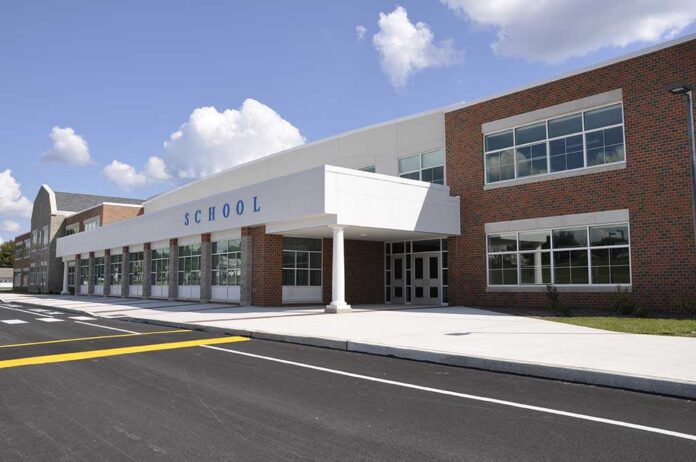
An adult illegal immigrant accused of repeatedly groping girls inside a Virginia high school has exposed how “sanitized” school messaging, soft charging decisions, and sanctuary-style policies can collide—right where parents expect maximum protection.
Story Snapshot
- Fairfax High School junior Israel Flores Ortiz, 18, faces nine counts of assault and battery after about a dozen girls reported repeated hallway groping over months.
- Parents say the conduct involved grabbing girls’ genital areas and buttocks, while a school email described it more mildly as “touching students’ buttocks.”
- A judge denied bail, citing public-safety concerns, even though prosecutors did not oppose the defense bail proposal.
- ICE issued a detainer, but ICE says Fairfax County is not honoring it—fueling renewed debate over local cooperation with federal immigration enforcement.
What Police and Parents Say Happened at Fairfax High School
Fairfax High School in Fairfax County, Virginia became the center of a public safety and accountability dispute after Israel Flores Ortiz, an 18-year-old 11th grader, was arrested and charged with nine counts of assault and battery. Multiple reports describe about a dozen girls alleging Ortiz approached them from behind in hallways, placed his hand between their legs, grabbed their genital area, then moved to their buttocks. Parents stress the acts were repeated, not isolated.
Soft-on-Crime Fairfax Strikes Again: Officials Defend Illegal Alien Accused of Groping High School Girls
https://t.co/pp1X66JGkV— Townhall Updates (@TownhallUpdates) March 16, 2026
Because the allegations describe a pattern across many victims, the case has triggered questions that go beyond one student’s conduct. Families are demanding clarity on when school officials first learned of the incidents, what safeguards were put in place while complaints accumulated, and why the behavior allegedly continued “throughout the school year,” as a prosecutor stated in court. Available reporting does not provide a full public timeline of each report to administrators, only that frustration grew as details emerged.
Charging Decisions and a Bail Fight That Split Prosecutors and the Court
The criminal case has drawn attention because Ortiz was charged under Virginia law with assault and battery rather than a sexual assault offense, despite parents’ descriptions of genital-area groping. The reporting available does not fully explain why those particular counts were selected, leaving a critical gap in public understanding. What is clear is that pretrial risk became a major issue: at a March 13 hearing, Ortiz sought release on bail, and prosecutors did not oppose the defense proposal.
Judge Dipti Pidikiti-Smith rejected the requested release, stating the proposed conditions did not adequately protect public safety. That ruling kept Ortiz jailed and underscored a structural reality many voters have watched for years: judges can act as a backstop when prosecutors agree to terms the court finds insufficient. For parents focused on immediate safety in a school setting, the bail denial was a tangible decision—especially amid concerns Ortiz could return to campus if released.
Parents’ Anger Focuses on “Sanitized” Communication and School Climate
Fairfax High School’s parent communication became its own flashpoint. Reporting says Principal Georgina Aye emailed families more than two weeks after the initial reports, describing the conduct as “inappropriately touching other students” and “touching students’ buttocks while they were transitioning in the hallways.” Parents argue that wording downplayed what their daughters reported and made it harder for the community to grasp the seriousness. They also say the framing fueled rumors, harassment, and bullying directed at victims.
Immigration Enforcement Dispute: ICE Detainer vs. Local Non-Cooperation
Immigration status added another layer to a case already inflaming parents. Ortiz was described in reporting as an illegal immigrant from El Salvador who crossed the southern border in 2024 and was released under then-current federal policy. After the March 7 arrest, ICE issued a detainer seeking custody for removal. ICE says Fairfax County is not honoring that detainer, consistent with sanctuary-style limits on local cooperation absent additional legal process.
That dispute matters because it shapes what happens after the criminal case—and whether federal authorities can take custody if local officials decline to hold a removable non-citizen. ICE’s public comments criticize Virginia and Fairfax leadership, arguing that non-cooperation policies result in more victims. The reporting does not include a detailed response from Fairfax County defending its detainer stance in this specific case, so readers are left with an unresolved policy conflict: local rules versus federal enforcement priorities.
With President Trump back in office in 2026, cases like this are likely to become pressure points for renewed federal-state friction on immigration enforcement, especially in jurisdictions that restrict cooperation with ICE. The immediate facts remain local: alleged repeated groping of multiple girls, delayed and disputed school messaging, charges that parents question, and a judge who declined to release the defendant. The larger question is whether Fairfax’s institutions adjust policies to prevent the next crisis—or treat this as just another news cycle.
Sources:
Adult Illegal Alien Student Accused of Groping Girls at Virginia High School
Illegal immigrant student accused of groping girls in Fairfax High School