
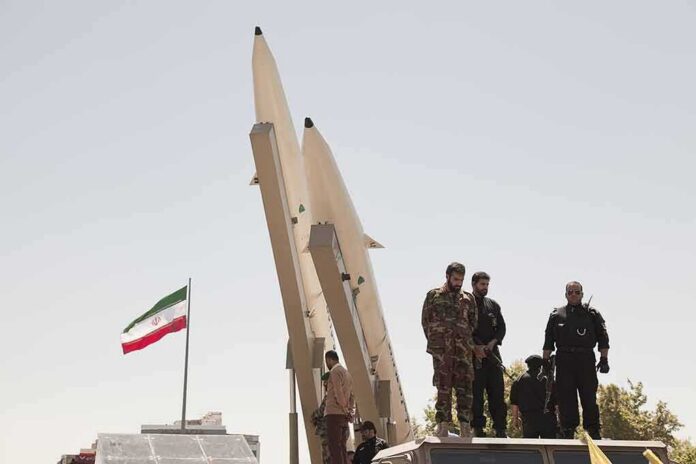
An influential Iranian lawmaker just urged leaders to authorize “deterrent weapons, including nuclear weapons” if the United States attacks—an open signal that some in Tehran want to rewrite the rules of the nuclear game.
Story Snapshot
- Iranian hardliners are openly tying nuclear weapons to regime survival and deterrence.
- Iran’s government still says its nuclear program is peaceful and under inspection rules.
- United Nations inspectors say they have not seen a current structured bomb program.
- Rising “build the bomb” talk raises risks of miscalculation and a wider regional war.
Hardliners Link the Bomb to Deterrence
Iranian parliament Internal Affairs Committee chair Mohammad-Saleh Jokar urged authorities to permit use of “deterrent weapons, including nuclear weapons,” if the United States strikes Iran, framing it as national defense, not provocation. Other members of parliament have argued that a possible attack on Iran’s nuclear sites would justify shifting doctrine toward weapons, echoing a broader hardline view of deterrence amid war with the United States and Israel. This rhetoric suggests some elites see a bomb as insurance against regime change and further strikes.
Reports indicate a growing chorus among hardliners who argue Iran has paid the political and economic costs of its nuclear advances without reaping true deterrence benefits. Some have publicly floated withdrawing from the Non-Proliferation Treaty, which would remove a key guardrail and heighten fear of a dash to a weapon. Such public talk matters. It can shape expectations at home and abroad, and it can push adversaries to assume worst-case plans are already underway.
Tehran’s Official Line: Peaceful Program, Religious Ban
Iran’s Foreign Ministry says the nuclear program is peaceful, that nuclear weapons have no place in defense policy, and that activities follow the Non-Proliferation Treaty and safeguards rules. Officials also point to a religious decree by the late Supreme Leader Ali Khamenei that called building, stockpiling, and using nuclear weapons a sin and banned them for Iran. This official stance aims to assure the world that, despite the loud hardline calls, state policy has not changed.
The International Atomic Energy Agency has said it has not seen a structured program in Iran to manufacture nuclear weapons and has not found evidence of diversion of nuclear material to military use, according to its published reports and public comments attributed to the agency’s director general. That finding does not settle every question, but it sets the current baseline. Inspectors’ views carry weight because they rest on access, data, and a mandate to verify compliance with safeguards.
Why the Escalating Talk Raises Real-World Risks
Security scholars warn that when a state faces external threats, leaders may see nuclear capability as protection, while rivals see the same move as a reason to strike first. This loop can become a trap. Advocates in Tehran say public backing for a bomb could stop attacks. Adversaries might read that as proof Iran will sprint to a weapon, making early military action feel urgent. Even if neither side wants full war, this logic can push both toward it.
There is also a difference between building a bomb, building the option to make one, and using political talk as leverage. Some governments build advanced enrichment and keep timelines short, without crossing the line, to gain bargaining power. Analysts note Iran’s hardline calls to reconsider doctrine and treaty ties could be aimed at signaling and pressure rather than an immediate build decision. But those signals still raise tensions and can misfire in a crisis.
What It Means for Americans Watching at Home
Americans across the spectrum see a pattern: leaders talk tough, wars drag on, and the public pays the price. Some conservatives view Iran’s hardline turn as proof that past diplomacy and “globalist” deals failed to stop bad actors. Some liberals see rising war talk as a warning that hard power alone cannot deliver safety or lower costs at home. Both sides worry elites will make choices that risk a wider war while basic needs go unmet here.
🇮🇷 🇺🇸 🇮🇱 🇾🇪
Iranian parliamentary committee chair Mohammad Saleh Jokar urged authorization to use nuclear weapons and suspend NPT cooperation if the US attacks Iran. His comments to ICANA are a legislator’s advocacy, not adopted policy or evidence Iran possesses nuclear weapons.…— Nuclear-ID (@NuclearID68) October 23, 2026
For citizens, two facts stand out. First, key Iranian officials are now publicly tying nuclear weapons to survival, which narrows room for compromise. Second, inspectors still say they do not see a current structured weapons program, which leaves a window—however narrow—for pressure, clarity, and off-ramps. The danger is the space between those facts. Words can change realities fast, and missteps can force choices no one can easily undo.
What to Watch Next
Watch for any formal Iranian move to restrict inspections or leave treaty rules, which would mark a sharp turn. Track whether Iran’s top leadership echoes or reins in the hardline calls; that will show if this is noise or policy. Monitor whether the United States, Israel, and partners adjust red lines or strike thresholds. And keep an eye on inspections and timelines, because the world’s ability to measure risk depends on what inspectors can see and verify.
Sources:
zerohedge.com, iranintl.com, eurasiareview.com, understandingwar.org, iaea.org, economictimes.indiatimes.com
© unitedfrontnews.com 2026. All rights reserved.