

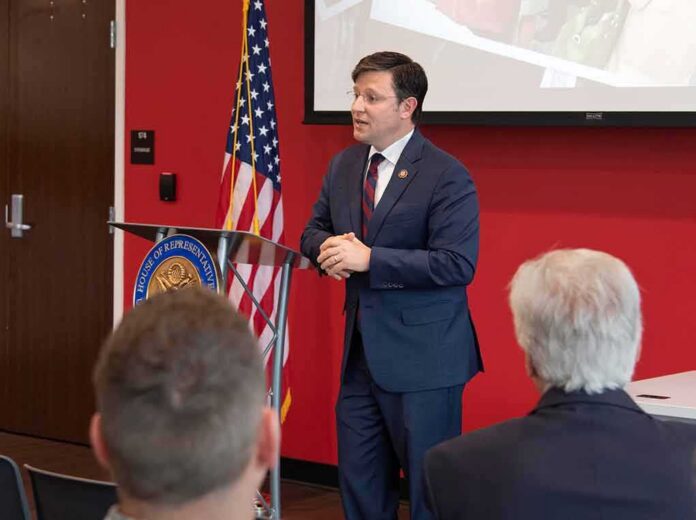
Sen. Elissa Slotkin urged “signature cases” to hold people and institutions accountable for alleged abuses of taxpayer funds and government power, signaling a plan to deter repeat misconduct through high-profile enforcement.
Story Snapshot
- Sen. Slotkin outlined a deterrence strategy built on targeted accountability “signature cases”.
- Her office cited letters seeking guardrails against election-related military involvement, and received formal replies.
- She accused the administration of weaponizing government against perceived adversaries, including herself.
- No verified record shows she called for targeting staff tied to a White House ballroom project.
What Slotkin Said In Her Carnegie Remarks
Sen. Elissa Slotkin delivered prepared remarks at the Carnegie Endowment on September 30, 2026. She said the country must “hold accountable the people and institutions who stole billions of our taxpayer dollars and weaponized the government.” She called for “signature cases” that target the “most obvious and harmful abuses of taxpayer dollars.” Her argument centered on deterrence: visible enforcement can discourage future abuses by officials and private actors who might consider crossing legal lines.
Slotkin framed her plan as a response to what she described as a pattern of institutional misuse. She said the administration had “weaponized the U.S. government against at least 20 of his perceived adversaries, myself included.” She also argued that accountability should focus on conduct, not party. Her remarks placed taxpayer protection and limits on executive power at the core of the approach, while signaling that named officials could face scrutiny where evidence supports it.
Documented Steps Toward Guardrails And Oversight
Slotkin’s office highlighted prior letters to key national security leaders seeking assurances on election-related issues. She wrote to the Secretary of Defense, the Chairman of the Joint Chiefs of Staff, the Secretary of Homeland Security, and the Attorney General. The Chairman of the Joint Chiefs and an Assistant Secretary of Defense replied that they had not been asked to deploy forces for elections and that interference with ballots or voting machines would be illegal. Those exchanges formed part of her case for formal guardrails.
Her broader public message has warned about using federal law enforcement or other levers of power for political aims. In a prior network interview, Slotkin said the president was trying to weaponize the Department of Justice. That claim, while contested in wider debate, supports her through-line that institutions should resist political use and that Congress should spotlight abuses if they occur. The Carnegie remarks continued that emphasis on process and enforcement to protect taxpayers and legal norms.
The Disputed “Go After Staffers” Framing And What We Know
Recent online chatter tied Slotkin to calls for targeting staff linked to a White House ballroom project. The available record does not provide the text of such a call. The Mediaite tag page exists, but it does not supply a transcript, audio, or verified quote that shows she singled out ballroom-related staff. The primary documents on hand address alleged weaponization, taxpayer misuse, and election-related guardrails, not the ballroom project or its personnel.
𝐒𝐋𝐎𝐓𝐊𝐈𝐍 𝐖𝐀𝐍𝐓𝐒 𝐓𝐑𝐔𝐌𝐏 𝐒𝐓𝐀𝐅𝐅𝐄𝐑𝐒 𝐏𝐑𝐎𝐒𝐄𝐂𝐔𝐓𝐄𝐃 𝐓𝐎 𝐒𝐂𝐀𝐑𝐄 𝐎𝐅𝐅 𝐓𝐇𝐄 𝐍𝐄𝐗𝐓 𝐆𝐄𝐍𝐄𝐑𝐀𝐓𝐈𝐎𝐍 𝐅𝐑𝐎𝐌 𝐖𝐎𝐑𝐊𝐈𝐍𝐆 𝐅𝐎𝐑 𝐇𝐈𝐌
Sen. 𝐄𝐥𝐢𝐬𝐬𝐚 𝐒𝐥𝐨𝐭𝐤𝐢𝐧 (D-MI) told a Carnegie Endowment audience this month exactly what a… pic.twitter.com/F4lyZceYPd
— M.A. Rothman (@MichaelARothman) October 17, 2026
The difference matters. Accountability focuses on proven misconduct under law, with facts, jurisdiction, and due process. Retaliation targets people for where they worked or who they served. Slotkin’s prepared remarks argue for the former, through “signature cases” with clear evidence. Without a primary record tying her to a ballroom staffing call, the narrow claim remains unsupported by the materials reviewed. Readers should separate verified remarks from headline spin and judge the conduct-based standard on its merits.
Why This Fight Resonates Across The Spectrum
Many Americans see powerful people using government to protect their own interests. Conservatives point to partisan law enforcement and waste. Liberals point to crony deals, favoritism, and selective punishment. Both sides worry about a system that punishes whistleblowers and rewards insiders. The debate over Slotkin’s proposal fits that shared concern: if “signature cases” target clear abuses with evidence, they may restore trust; if they become partisan score-settling, they will deepen the sense of a rigged game.
What To Watch Next
Watch for concrete steps, not just speeches. Clear case selection criteria, named jurisdictions, and public evidence will show whether this effort is about law, not revenge. Look for inspector general inquiries, subpoenaed records, and referrals that focus on misuse of funds or authority. Also track whether any proposal defines protections for civil servants who followed the law. Transparent standards can deter misconduct while guarding against punishing people for doing a legal job.
Sources:
mediaite.com, politico.com, abcnews.com
© unitedfrontnews.com 2026. All rights reserved.