
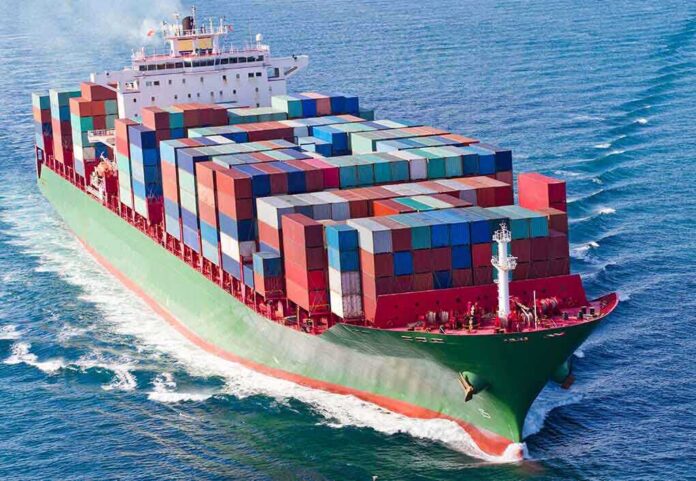
A single projectile strike that forced a commercial ship’s crew to abandon vessel in the Strait of Hormuz is a reminder that America’s energy lifeline can be threatened overnight when the Middle East ignites.
Quick Take
- The Maltese-flagged containership Safeen Prestige was hit by an unknown projectile on March 4, 2026, triggering an engine-room fire and an abandonment near Oman.
- Authorities reported no injuries and no immediate environmental damage, but the vessel’s condition and attacker remain unclear.
- Maritime security monitors elevated the regional threat level to “CRITICAL” after multiple incidents clustered around the UAE and Hormuz approaches.
- The crisis lands on a global chokepoint that carries roughly one-fifth of the world’s oil, raising stakes for prices, shipping insurance, and supply reliability.
Projectile Strike Forces Abandonment in a Global Chokepoint
Security reports said the Safeen Prestige, a 1,740-TEU containership owned by Safeen Feeders (part of AD Ports Group), was struck around 1109 GMT on March 4, 2026 while transiting eastbound roughly two nautical miles north of Oman in the Strait of Hormuz. The impact reportedly landed just above the waterline and sparked a fire in the engine room. The crew abandoned ship, and investigators began assessing the incident.
Cargo Vessel Erupts in Flames in Strait of Hormuz After Being Struck by Unknown Projectile Amid Escalating Middle East Conflict https://t.co/MLLRYpTS52
— The Gateway Pundit (@gatewaypundit) March 11, 2026
Official incident reporting indicated the crew was safe, with no injuries reported and no immediate environmental impact cited in early updates. Later reporting said the crew had been rescued, but details about the vessel’s final status and the extent of fire damage were still not clearly established. The lack of public, verified attribution matters: the projectile was described as “unknown,” meaning conclusions about who fired it should remain cautious until evidence is presented.
Threat Level Raised as Attacks Cluster Around the Gulf
The strike did not occur in isolation. Maritime monitors and risk analysts pointed to multiple incidents in a short span, including a bulk carrier hit near Fujairah on March 2, a product tanker reporting a near-miss and explosion debris on March 3, and another containership reporting a projectile splash on March 4 west of Dubai. With several episodes packed into days, security alerts warned commercial operators that the operating environment had deteriorated fast.
The Joint Maritime Information Center’s move to a “CRITICAL” regional threat level signaled that attacks were assessed as highly likely, not theoretical. That warning tends to ripple instantly through the private sector: operators revise routing, slow or pause transits, and place crews on heightened watch. Even without a formal closure of sea lanes, the practical effect can look similar when shipping companies decide the risk is too high to run on normal schedules.
War-Driven Uncertainty and What’s Verified vs. What’s Claimed
The broader backdrop described in the research is a direct U.S.-Israel-Iran military confrontation in early March 2026, with Iran’s IRGC publicly signaling leverage over the Strait and threatening oil-tanker restrictions. At the same time, some reports about the strait being “closed” conflict with other accounts indicating no fully enforced blockade yet. The clearest verified point across coverage is intensified danger to commercial vessels, not a confirmed, sustained shutdown of Hormuz traffic.
That distinction matters for public trust. Overheated claims can drive panic—while sober facts drive responsible planning. The research also notes unverified or unevenly sourced details around certain military actions and casualty figures. Readers should separate what is consistent across incident reports—time, location, fire, abandonment, crew safety—from what remains contested, including exact attacker identity, full scope of regional strikes, and whether threats have translated into an enforced maritime blockade.
Economic Shockwaves: Oil, Insurance, and the Cost of Instability
The Strait of Hormuz is narrow, strategically exposed, and central to global energy movement, carrying about 20% of worldwide oil exports by common estimates. When shipping firms reroute or delay, costs rise quickly: charter rates tighten, delivery timelines slip, and insurance premiums can spike. The research cites reports of crude rising and insurers increasing very large crude carrier premiums, which translates into higher costs that can filter into consumer prices.
From a conservative perspective, the lesson is straightforward: energy security and stable trade routes are national-interest issues, not academic debates. The U.S. cannot control every regional flashpoint, but it can prioritize deterrence, clear rules of engagement, and policies that reduce America’s exposure to foreign chokepoints. The public still lacks key facts about who fired on Safeen Prestige and how quickly maritime security can stabilize the corridor, so the most honest takeaway is that the risk remains real and unresolved.
Sources:
Containership Hit by Projectile in Strait of Hormuz as Maritime Attacks Escalate
Crew rescued after container ship attacked in Strait of Hormuz
Cargo ship hit by projectile in Strait of Hormuz, crew evacuates
Cargo vessel hit by projectile in Strait of Hormuz as attack count reaches 17
Cargo ship hit in Strait of Hormuz