

A new Senate bill would brand some parents as “invaders” and deny their U.S.-born children automatic citizenship, testing how far Washington can push the Fourteenth Amendment without changing the Constitution.
Story Snapshot
- Senator Jim Banks’ Citizenship Act targets birthright citizenship for children of illegal immigrants and birth tourists.
- The bill copies President Trump’s 2025 executive order and Justice Kavanaugh’s suggested “legislative approach.”
- Legal precedent and a fresh Supreme Court ruling say the Constitution clearly protects birthright citizenship.
- The fight highlights growing anger at a government seen as serving elites while leaving ordinary Americans behind.
Banks’ bill: redefining “invaders” and birthright citizenship
Senator Jim Banks introduced the “Citizenship Act” on Monday, aiming to end birthright citizenship for children of illegal immigrants and birth tourists by defining their parents as statutory “invaders” under federal law. The bill’s summary says any person who enters the United States without authorization or for birth tourism is considered an invader, and it would change the Immigration and Nationality Act so that children of such “invaders” do not automatically become citizens at birth. Supporters say this closes a loophole they believe encourages illegal immigration.
Banks’ bill closely tracks President Donald Trump’s 2025 executive order, “Protecting the Meaning and Value of American Citizenship,” which instructed federal agencies not to recognize citizenship for babies born to mothers who were unlawfully in the country or here only temporarily on visas when the child was born, if the father was also not a citizen or lawful permanent resident. That order applied only to births after its effective date and left citizenship for earlier births untouched, a forward-looking approach Banks now seeks to write into law for Congress to enforce instead of the White House alone.
Kavanaugh’s playbook and earlier birthright bills
The Fox News report on the Citizenship Act notes that Banks is relying on a statutory path outlined by Justice Brett Kavanaugh, who suggested Congress could create exceptions to birthright citizenship through legislation without directly amending the Constitution. In a recent interview, Banks described Kavanaugh’s view of Trump’s order: that it violated a federal statute, not the Fourteenth Amendment itself, and that Congress could change that statute to add exceptions for children born to foreign citizens who are unlawfully or only temporarily in the country. Banks’ bill is designed as that kind of exception, not as a formal constitutional amendment.
This new push does not come out of nowhere. The “Birthright Citizenship Act of 2025,” introduced as S. 304 in the Senate and H.R. 569 in the House, already proposed limiting birthright citizenship to children born to at least one parent who is a citizen or national, a lawful permanent resident, or a foreign national serving in the U.S. armed forces. That earlier bill explicitly said it would not change the status of anyone born before its enactment, showing a shared strategy of avoiding retroactive changes that would strip citizenship from people who already have it. Banks’ Citizenship Act follows the same forward-looking model but adds the new “invader” label tied to Trump’s border “invasion” declaration.
Standing against a wall of constitutional precedent
The real test for Banks’ bill is not politics in a Republican-controlled Congress but law in the courts. For more than a century, the Supreme Court has read the Fourteenth Amendment’s Citizenship Clause to mean that almost everyone born on U.S. soil is a citizen, no matter their parents’ status, except for narrow cases such as children of foreign diplomats. In 1898, the Court’s landmark decision in United States v. Wong Kim Ark confirmed that the clause covers children of foreigners living in the country, even when those parents themselves cannot become citizens. That case remains the cornerstone for most modern rulings and legal analyses.
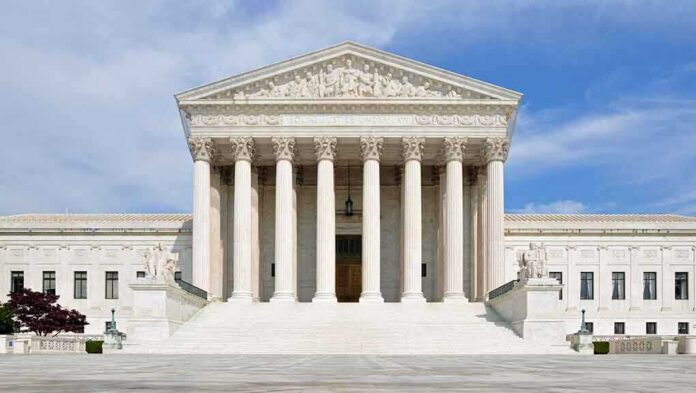
Trump’s 2025 executive order already ran into this wall. Four federal judges around the country blocked the order soon after it was issued, arguing that it clashed with the clear text and long history of the Fourteenth Amendment. On June 30, 2026, the Supreme Court went further in Barbara v. Trump, striking down the order as unconstitutional and stating that children born in the United States to parents who are unlawfully or temporarily present are still “subject to the jurisdiction” of the United States and therefore citizens. Banks’ bill now tries to sidestep that ruling by changing statute, but it cannot change the meaning of the Constitution itself.
Why both sides see the stakes as huge
Conservatives who back the Citizenship Act argue that automatic birthright citizenship acts like a magnet, drawing illegal immigration and birth tourism that drive up costs for schools, hospitals, and social services. They see Trump’s order and Banks’ bill as needed tools to protect the value of American citizenship and to restore fairness for citizens who feel the system favors people who break the rules over those who follow them. Many also believe the federal government has long ignored the strain on communities, while elites in Washington and big cities benefit from cheap labor and higher populations.
🇺🇸 Senator Jim Banks has introduced legislation that would end birthright citizenship for children of illegal immigrants and birth tourists by defining them as children of "invaders" under federal law.
The proposal follows a recent Supreme Court ruling that suggested Congress… pic.twitter.com/lRMt6XyLEh
— NewsForce (@Newsforce) July 13, 2026
Opponents, including civil rights groups and most constitutional scholars, warn that the bill could throw millions of families into chaos and open the door to government questioning the citizenship of people who have lived their whole lives as Americans. They argue that redefining “subject to the jurisdiction” in ordinary law to exclude children of undocumented or temporary visitors is an attempt to override the Constitution with a statute, a move courts have repeatedly rejected. For many on the left and some on the right, this looks like another example of political leaders using immigration fears to score points while doing little to fix deeper problems like wage stagnation, housing costs, and a broken legal immigration system.
A deep-state worry both sides share
Behind the legal fight is a broader mood of distrust. Many Americans on the right see a “deep state” blocking any serious change on borders or citizenship, while many on the left fear the same entrenched system will use new rules to target minorities and immigrants. The birthright battle feeds both worries: it suggests a government that can suddenly question who is “really” American, yet also appears unable to solve everyday problems like inflation, health care costs, or job security. Whether Banks’ bill passes or fails, it reinforces the feeling that the rules of citizenship are being written and rewritten far above the heads of ordinary people.
Sources:
noticias.foxnews.com, congress.gov, nationalaffairs.com, heritage.org, acslaw.org, forumtogether.org, gibsondunn.com, lgraham.senate.gov, brennancenter.org, whitehouse.gov, constitutioncenter.org, fwd.us, scotusblog.com, americanimmigrationcouncil.org, frankel.house.gov
© unitedfrontnews.com 2026. All rights reserved.