

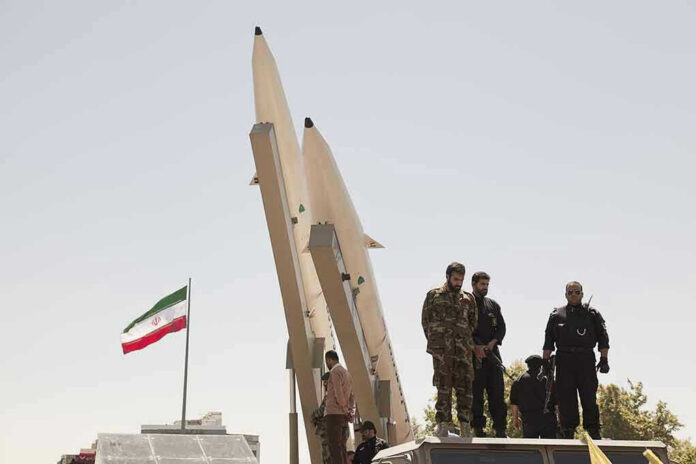
President Trump declared the Iran ceasefire “over” at the NATO summit — but independent experts say the nuclear sites he called “completely and fully obliterated” are damaged, not destroyed.
Story Snapshot
- Trump declared the U.S.-Iran ceasefire agreement finished at the NATO summit in Ankara, Turkey on July 8, 2026.
- Trump said U.S. strikes “completely and fully obliterated” Iran’s key nuclear sites, but the International Atomic Energy Agency, leaked U.S. intelligence, and satellite imagery tell a more complicated story.
- Trump threatened to cut off all trade with Spain over its failure to meet NATO’s defense spending target.
- NATO’s Secretary General pushed back, pointing to $215 billion in increased allied defense spending since 2024.
Trump Declares Iran Deal Dead at NATO Summit
Speaking at the NATO summit in Ankara, Turkey, President Trump announced that the Memorandum of Understanding with Iran — the ceasefire agreement that followed U.S. strikes on Iranian nuclear sites — is finished. Trump called Iranian leaders “scum” and “sick people.” He also said peace talks with Iran are a “waste of time,” though he added that U.S. negotiators could keep talking if they chose to. Iranian officials called his words “disgusting.”
Trump also addressed the strikes themselves, saying the U.S. military conducted “significant, precise strikes” on three Iranian nuclear sites: Fordo, Natanz, and Esfahan. He declared all three were “completely and fully obliterated.” The remarks came amid reports of new tit-for-tat strikes in the Strait of Hormuz, raising fears of a broader conflict in the region.
What Independent Experts Actually Found
The picture from outside the White House is more mixed. The International Atomic Energy Agency (IAEA) confirmed the three sites were hit and found “extensive additional damage” at Esfahan — but stopped short of calling any site totally destroyed. A leaked U.S. Defense Intelligence Agency battle damage assessment found that some centrifuges remained intact and that lower structures at Fordo and Esfahan were still operational despite caved-in entrances.
Israeli intelligence, also leaked, concluded that Natanz’s aboveground facilities were “completely destroyed” — but that Fordo suffered only “major damage,” and the full scope of damage at Isfahan’s underground tunnels was still being assessed. Satellite imagery analysis by the Institute for Science and International Security found the main sites were “largely destroyed” but noted that key parts of Iran’s nuclear supply chain likely survived. Iran’s own government spokesperson said the sites were “seriously damaged” — not obliterated — and left the door open to future talks.
Spain Trade Threat and NATO Spending Fight
Trump also took aim at Spain at the summit, threatening to cut off all trade with the country over its refusal to meet NATO’s defense spending target. The threat fits a pattern Trump has used before — economic pressure as a lever to force allies into higher military budgets. Spain has been one of the slowest NATO members to reach the alliance’s spending goals.
🇺🇸 PRESIDENTIAL SECURITY
President Trump referenced alleged Iranian threats against him during remarks at the NATO Summit, saying he "may be gone" because Iran is trying to assassinate him. The comments are drawing renewed attention to ongoing security concerns.
— Warwatch (@warwatchh) July 8, 2026
NATO Secretary General Mark Rutte pushed back on Trump’s broader criticism of the alliance. Rutte pointed to $215 billion in increased defense spending by NATO allies between 2024 and 2026 as proof that Europe is stepping up. The exchange highlights a tension that has defined Trump’s relationship with NATO since his first term — allies say they are paying more; Trump says it is still not enough. For Americans watching their tax dollars fund global commitments, the debate over who pays what is unlikely to go away anytime soon.
Sources:
cbsnews.com, apnews.com, instagram.com, rev.com, youtube.com, nuclearnetwork.csis.org, isis-online.org, pbs.org
© unitedfrontnews.com 2026. All rights reserved.