

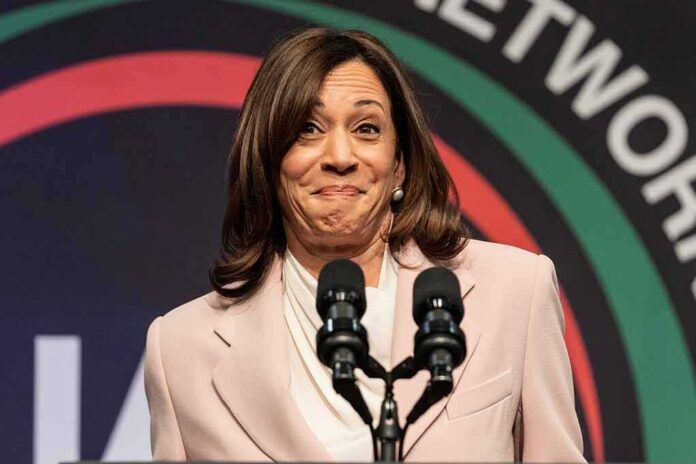
Vice President Kamala Harris’s team tied her Michigan visit with Abdul El-Sayed to flipping the Senate, lower prices, and higher turnout — putting a hot-button health issue at the center of hardball politics.
Story Snapshot
- Harris and El-Sayed scheduled a Michigan roundtable on Black maternal health with an explicit turnout goal.
- Both campaigns linked the stop to Senate control and cost-of-living concerns facing voters.
- El-Sayed called Harris a respected voice in Detroit and framed the topic as shared leadership.
- Michigan’s battleground status made the event a clear strategic play for November.
What Happened: A Targeted Michigan Stop With Clear Stakes
Vice President Kamala Harris planned to join Michigan Senate candidate Abdul El-Sayed for a roundtable on Black maternal health, a defined policy topic with campaign value. Harris’s spokesperson said she aimed to help turn out voters and flip the Senate, linking the visit to lower prices and standing up to President Trump. El-Sayed’s team confirmed the focus on maternal health and healthcare costs. Reports placed the appearance on a Tuesday in Michigan, underscoring urgency in a key state.
El-Sayed welcomed Harris as an “inspirational” figure for Detroit communities and said both have led on the maternal health issue. The visit followed Harris’s August endorsement of El-Sayed, which emphasized building a Democratic Senate majority. That endorsement also tied the race to everyday costs like housing, gas, groceries, and child care, drawing a contrast with Republican tax policies for the wealthy and powerful, according to campaign materials and coverage.
Why This Issue: Black Maternal Health As Policy And Politics
Campaigns pick issues that signal priorities and can unite parts of their coalition. Black maternal health has that profile for Democrats and for Harris in particular, who has emphasized it in past work, according to coverage. The roundtable frame lets the campaign talk about life-and-death care gaps and costs while avoiding more divisive topics. That strategy fits common practice: surrogate visits aim to mobilize turnout and show unity in battlegrounds where small shifts matter.
Research on surrogate appearances suggests such visits can move vote share by modest amounts when the messenger fits the audience and issue. One study found surrogate stops can increase a candidate’s county vote share by about 1.7 percentage points in observational data, with context and timing shaping results. That is not a guarantee for Michigan, but it explains why national figures are deployed in close races. The event’s design matched that playbook.
How It Fits 2026: Senate Control, Prices, And Voter Frustration
Harris’s message linked Senate control to lower prices, a core pain point for many families facing high costs for basics. El-Sayed’s framing tied the event to improving maternal outcomes and cutting healthcare costs, which are pocketbook concerns as well as health concerns. Michigan’s role as a battleground raises the stakes for both parties. The stop aimed to show momentum, unify Democrats, and speak to Detroit voters whose turnout could shape the outcome.
Kamala Harris Backs Abdul El-Sayed in Michigan as Senate polling lead grows https://t.co/9vedECvb01 pic.twitter.com/3hL8J5MexG
— Newsweek (@Newsweek) September 23, 2026
The record is strongest on what both campaigns announced and why they said it mattered. Outlets reported the date, the roundtable format, and the focus on maternal and infant health disparities in Black communities. What remains outside these reports are turnout counts, full transcripts, and measured effects on the race. That is normal for campaign stops. The documented fact remains: Harris stepped in as a high-profile surrogate to boost El-Sayed around a defined health issue in a must-win state.
Sources:
insiderpaper.com, abcnews.com, detroitnews.com, politico.com, foxnews.com, washingtontimes.com, abdulforsenate.com, blackmamasmatter.org
© unitedfrontnews.com 2026. All rights reserved.