

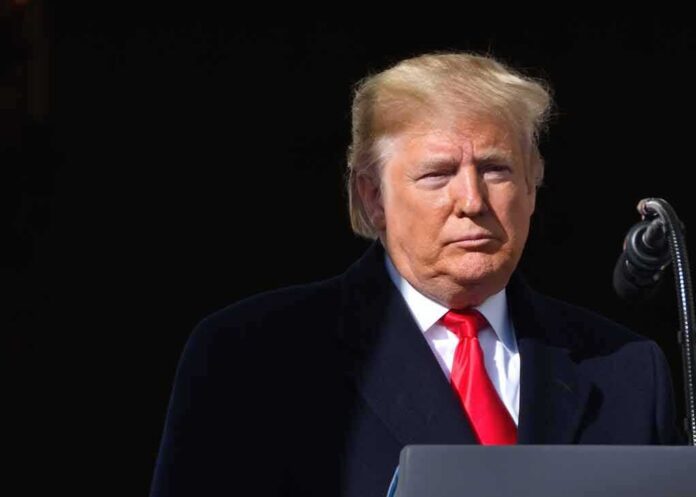
A primetime fact-check meant to puncture President Trump’s United Nations speech instead stumbled on key numbers and fed a bigger trust problem in American media.
Story Snapshot
- MS NOW’s on-air check of Trump’s claims drew fire over disputed figures and framing.
- Major outlets said Trump’s address included false or misleading claims on multiple topics.
- The White House posted its own transcript to lock in the record and highlight achievements.
- The clash shows how fact-checks can clarify truths but also inflame partisan doubts.
What Triggered The On-Air Backlash
MS NOW host Stephanie Ruhle challenged two headline claims from President Trump’s United Nations speech. She said Trump’s boast of “$21 trillion” in foreign investment commitments conflicted with a White House web tally closer to $11.2 trillion and described them as pledges, not binding deals. She also cited Reuters-based vessel counts to question Trump’s shipping claims in the Strait of Hormuz. The segment drew criticism for precision and context gaps despite its corrective aim.
The White House released the speech under the banner “While Others Have Talked, I Have Acted.” That publication set the administration’s preferred narrative and allowed direct comparisons between Trump’s words and media reviews. Having the official transcript matters because it fixes the exact language used, which is essential for testing numbers, verbs, and scope against public data and agency records.
What Independent Fact-Checks Actually Found
The New York Times, the Public Broadcasting Service, the Associated Press, and CNN each published reviews that flagged several Trump lines as false, exaggerated, or misleading. These checks focused on items like war claims, oil and shipping figures, and domestic milestones. CNN highlighted Trump’s repeated claim that he had “settled eight wars” as a significant overstatement based on available records. The Associated Press and others reached similar judgments across multiple claims.
Those outlets differed in tone and emphasis but agreed that parts of the speech leaned past the facts. CNN noted that Trump largely stuck to prepared remarks, which can limit the scope of error yet still leave notable misstatements. Public Broadcasting Service and The New York Times offered point-by-point assessments that weighed context and definitions. These pieces are not perfect, but they give readers clear anchors to judge big claims against public evidence.
Why Audiences On Both Sides Felt Burned
Viewers who distrust partisan media saw MS NOW’s segment as more performance than proof. Critics argued that mismatched baselines and partial data invited pushback, even if the intent was to correct the record. Supporters of fact-checking said the network did the job newsrooms must do when power makes sweeping claims. This tension echoes a yearslong pattern where watchdogs try to check leaders while each side suspects the other of spin and selective editing.
😂😂😂😂 He is too good
A fact check by Grok indicates “Shehbaz Sharif’s official address at the 81st UN General Assembly is scheduled for 25 September 2026. He attended the opening session on 22 September (the day of the tweet) while Trump spoke. The clip in the video is from… https://t.co/eX7rNjvPH7— Vaidya Ji वैद्य जी Rag Darbari से (@sk5146) September 23, 2026
Americans frustrated with elites in both parties read this fight as more evidence that institutions protect their own stories. The White House posted a glowing transcript. Major outlets issued sharp dissections. The network hosted rapid counterpoints that later drew their own corrections. When the referees and the players all look political, trust sinks. That hurts citizens trying to weigh risks on wars, trade, energy, and the economy in a noisy, high-stakes world.
Sources:
townhall.com, nytimes.com, pbs.org, cnn.com, idahostatejournal.com, ground.news
© unitedfrontnews.com 2026. All rights reserved.