

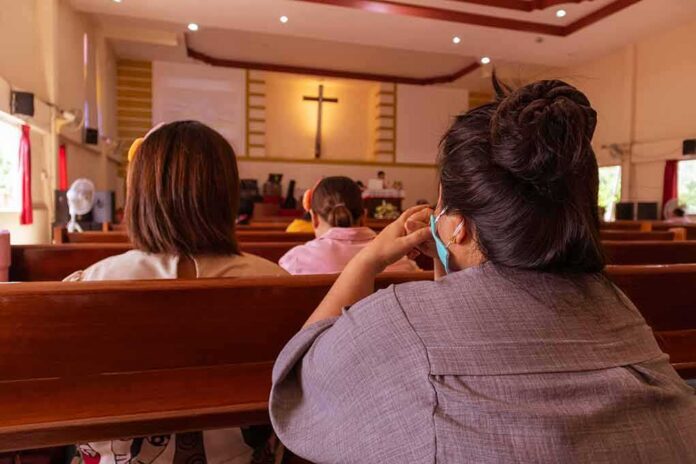
A 2020 sermon where Kansas Democrat Adam Hamilton spoke of “benefits” from being “educated, White and male” has re-emerged weeks before Election Day, reshaping a critical Senate race.
Story Highlights
- A June 2020 sermon by Adam Hamilton about “white privilege” has resurfaced in Kansas.
- Published excerpts show Hamilton linking recognition of privilege to listening and repentance.
- A political action committee circulated edited snippets to voters after his primary win.
- The race could help decide Senate control, heightening the clip’s impact.
What The Sermon Said And Why It Matters Now
News reports say Hamilton, then a megachurch pastor, preached “Jesus, Protests and Repentance” in June 2020, soon after George Floyd’s death. In the sermon, he said, “I have certain benefits by virtue of being educated, White and male,” and described a process of recognizing privilege, listening, and repenting. Multiple outlets, across the spectrum, attribute these words to Hamilton and place the sermon in that time frame, which establishes the core facts driving this week’s attacks and defenses.
Coverage indicates the language circulated again during Hamilton’s 2026 Senate run against Republican Senator Roger Marshall. Reports say a political action committee pushed out spliced clips from church messages after Hamilton won the Democratic primary. The clips highlight his references to white privilege and repentance from the 2020 sermon, as well as other topics, framing them for a campaign audience. The distribution timing suggests a targeted effort to shape voter views late in the cycle.
How Different Outlets Framed The Same Words
Right-leaning and mainstream outlets presented similar quotations but used different headlines. One described “repentance over White privilege,” while others focused on Hamilton’s first-person phrasing about being “educated, White and male,” and on his call to “repent” after listening and self-examination. The Atlantic said a campaign clip included an ellipsis, signaling edits. The Kansas City Star reported that snippets came from more than one sermon, not a single continuous talk.
Fox News cited the sermon’s title and timing, quoted Hamilton’s remarks, and tied the resurfacing to the Senate race. The outlet described Hamilton as a “megachurch pastor” and a Democratic nominee. The account aligned with other reporting on the sermon’s content, which helps confirm key details of what he said and how he framed his remarks in 2020. That shared factual base now anchors the campaign debate in Kansas.
The Campaign Stakes In Kansas
Kansas voters rarely elect Democrats to the Senate, but Hamilton is running as a moderate who has broken with national party leaders in interviews. He told national media he would not back Senator Chuck Schumer for party leader if elected, a signal meant to appeal to independents and Republicans open to a split ticket. Attention to the sermon tests whether his faith-based language from 2020 matches the image he presents in 2026.
Analysts say both parties treat this race as important to Senate control. If Republicans hold Kansas, they protect a seat in a year when both parties are fighting for narrow margins. If Democrats flip it, they gain ground in a chamber that sets rules on judges, spending, and foreign policy. In a high-stakes environment, late-breaking cultural issues often become proxy fights over identity, fairness, and power.
Edited Clips In Modern Campaigns
Media researchers describe a common tactic known as “cheap fakes,” where real footage is clipped or rearranged to change emphasis without using advanced tools. Fact-checkers at major outlets have tracked this method for years, noting that short edits can leave out balancing context and still be highly persuasive. The approach thrives in polarized times because many people see what they already expect to see.
Kansas Senate candidate Adam Hamilton once called on his megachurch congregation to repent for their white privilege during a sermon delivered days after George Floyd's death in 2020. The sermon, titled "Jesus, Protests and Repentance," is now resurfacing as Hamilton challenges… pic.twitter.com/7Xj833Awbp
— Jason Scott (@jasonscott4510) October 15, 2026
In the Kansas race, reports that snippets came from multiple sermons and included ellipses fit this broader playbook. The question for voters is not whether Hamilton said the quoted lines, which reporting supports, but how those lines functioned inside a longer message about sin, repentance, and social duty. That is a harder story to tell in a 15-second clip than in a full service, yet the clips may reach more voters than any sermon ever did.
How Voters Across The Spectrum May Read It
Conservatives often hear “white privilege” as blame aimed at ordinary people who did nothing wrong. Liberals often hear it as a call to notice patterns that advantage some and burden others. Hamilton’s sermon tried to frame the idea inside a faith practice: see, listen, turn, and repent. In today’s climate, many citizens on both sides feel cultural debates distract from rising prices, border stress, and distrust in leaders who seem to protect their own power first.
What Is Still Unclear From Public Reporting
Reports do not include the full official video or a verified transcript of the entire sermon. The exact date in June 2020 is also not firmly pinned down in the stories. Those gaps do not change the quoted lines, but they limit how fully the public can test the edits against the original flow of the message. Hamilton’s most current, direct response to the resurfaced sermon has not been widely documented in cited coverage.
Sources:
thegatewaypundit.com, abcnews.com, cnn.com, 100percentfedup.com, poynter.org
© unitedfrontnews.com 2026. All rights reserved.