

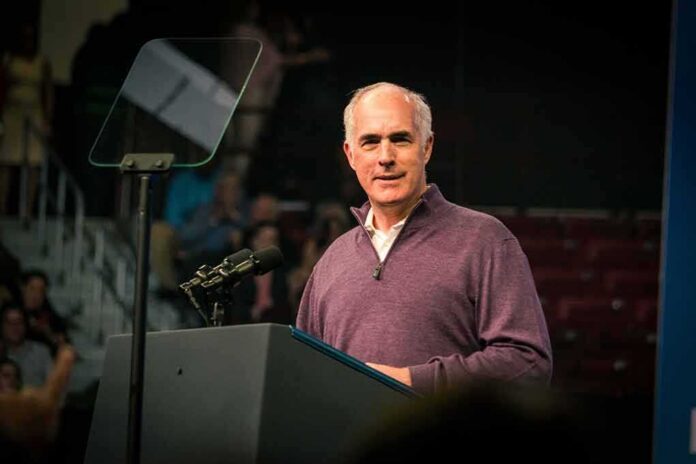
A routine illness sidelined a Senate candidate for days, then morphed into a battle over truth in the middle of a high-stakes race.
Story Highlights
- James Talarico said urgent care diagnosed him with the flu and he went virtual to avoid spreading it.
- Republican critics framed his absence as suspicious and mocked the timeline.
- Talarico reappeared in public and said he was back meeting voters after recovering.
- Conservative influencers pushed unconfirmed claims about a mental-health stay, which his campaign denied.
What Talarico Said About His Absence
James Talarico told the U.S. Hispanic Business Council on September 30 that urgent care in Dallas diagnosed him with the flu. He said he had a fever and was contagious, so he moved to a virtual format to keep people safe. A campaign spokesperson said he came down with the flu and would return soon. This account stayed consistent across outlets that quoted him and his campaign during the absence.
Coverage noted that Talarico kept working online while sick. Reports said he appeared virtually instead of attending in-person events, which matched his infection-control explanation. No medical records or doctor statements have been released. That gap leaves room for questions about severity, but does not contradict his public claim of influenza and a short pause from the trail.
How Opponents Turned Illness Into a Campaign Weapon
Republican critics used the lull to question his reliability. President Trump and Texas Attorney General Ken Paxton highlighted the absence at events and on social media, casting it as a political problem rather than a health one. Several reports and critics said he was gone for about eleven to twelve days. The campaign said it was closer to nine days because he had a Zoom appearance on September 30.
Media incentives also played a role. Stories that stress conflict and doubt tend to spread faster, especially late in a campaign. That pattern pushed a simple flu break into a larger fight over accountability and transparency. Voters who already distrust Washington or the press saw more evidence that the system runs on spin and pressure, not straight answers and basic grace when people get sick.
The Return To The Trail And What Is Still Unclear
After the layoff, Talarico reappeared at Austin City Limits and resumed public campaigning. Local coverage quoted his campaign saying he was back talking to voters following recovery from the flu. That public return supports a short-term illness explanation. It also reduced the political space for “missing” claims, even as partisan outlets kept debating the exact length and cause of the break.
🚨 President Donald Trump mocks Democrat James Talarico at a rally for a reported 14-day flu that kept him out of commission and for still wearing a mask. Trump says it was the longest flu ever recorded and that he does not believe it was the flu. He tells the crowd the illness…
— Morse Report (@MorseReport) October 10, 2026
Conservative influencers pushed an alternative story, citing audio they said came from an Ohio mental-health facility. Those claims remain unverified in the public record. The campaign called them a lie and restated the flu diagnosis. Without named medical confirmation either way, the strongest on-record facts are Talarico’s urgent-care claim, his virtual appearance while sick, the public absence window, and his later return to in-person events.
Why This Episode Resonates Beyond One Candidate
This dispute shows how fast today’s political machine can turn a normal life event into a trust crisis. Both right and left see a government and media culture that rewards attacks over answers. Campaigns chase attention. Commentators push dramatic claims. Voters end up sorting rumor from reality on their own phones. Clear documentation and timely updates can help, but the incentive to doubt often wins clicks over patience.
What To Watch Next
Watch for any release of medical documentation that confirms the diagnosis and dates. Look for a day-by-day event record to settle nine versus twelve days. Track whether mainstream outlets keep the story tied to flu and recovery, or if speculation continues to drive coverage. Most of all, judge all claims by named sources and verifiable facts rather than emotion and shares. That is how citizens keep power focused on results, not rumor.
Sources:
mediaite.com, nbcdfw.com, cnn.com, foxnews.com
© unitedfrontnews.com 2026. All rights reserved.