

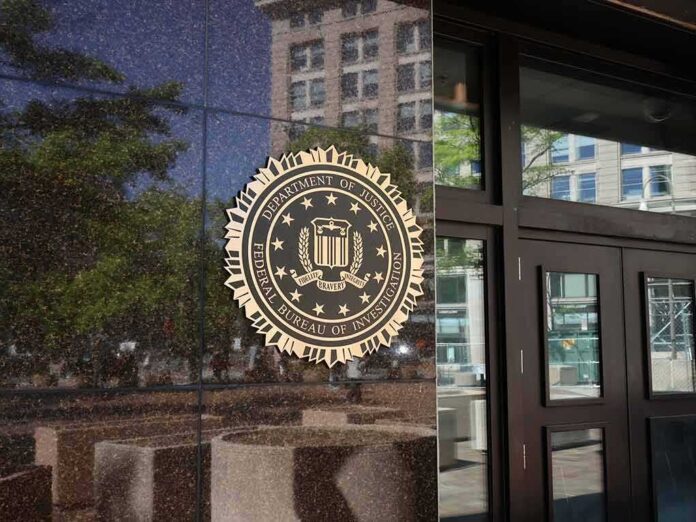
Federal agents searched Rep. Ilhan Omar’s Washington-area home under a judge-approved warrant tied to an ongoing criminal probe — only 22 days before Election Day.
Story Snapshot
- Justice Department confirmed a judicially approved search in the D.C. area as part of an active criminal investigation.
- Reporting links the probe to possible false statements and immigration-document fraud tied to Omar’s family paperwork.
- Homeland Security leadership said investigators have a “strong case” and served multiple warrants.
- No charges have been filed, and officials have not released the warrant affidavit or evidence.
What Federal Authorities Did And Confirmed
The Department of Justice said Homeland Security Investigations executed a judicially authorized search warrant in the Washington, D.C. area as part of an ongoing criminal investigation. The statement did not name the target or outline the alleged conduct. Major outlets reported the search occurred at Rep. Ilhan Omar’s residence. Officials have not released the affidavit or the inventory of items seized. No criminal charge or indictment has been announced in connection with the search.
Public confirmation of a judge-approved warrant matters. A federal judge found probable cause to allow a search. That does not prove a crime. It shows investigators presented enough facts to justify looking for evidence. The Justice Department often withholds details during active cases to protect witnesses and methods. That silence can fuel rumors, but it also helps keep the process clean and focused on facts that can stand up in court.
What Reporting Says About The Focus Of The Probe
The New York Times reported that the investigation centers on immigration paperwork submitted for Omar or her family when she was a child. The report said the warrant identified potential offenses, including false statements, immigration-document fraud, and conspiracy, citing a person familiar with the document. That suggests agents are looking at several records and possible coordinated conduct. The paper also noted the timing close to Election Day and the risks of political blowback.
Separately, national outlets described the search as part of a broader look at her family’s documents. These accounts rely on unnamed sources because the underlying forms and the affidavit are not public. That gap makes it hard for voters to judge the strength of the evidence. The confirmed facts remain the judge-approved search and the ongoing federal investigation. Everything beyond that flows from media sourcing, not released court filings.
Homeland Security Leaders Say The Case Is “Strong”
Homeland Security Secretary Markwayne Mullin said investigators had a “strong case,” said multiple warrants were served the same day, and said they expect to present the case to a grand jury. Those claims suggest the probe is active and far along. But they do not reveal the evidence, dates, or how prosecutors would prove knowledge and intent. Until documents or charges appear, these are official characterizations, not proof that will hold in court.
How strong is the evidence against Ilhan Omar? The warrant to search her home was granted by a judge in Washington DC, where more than 91% of the electorate voted for Kamala Harris!
The evidence presented by the DOJ to the court included family text messages from a phone seized… pic.twitter.com/x6Bw8uvO8r— AmericanYankee (@AmericanYank123) October 18, 2026
The phrase “strong case” can land differently across the spectrum. Some hear overdue accountability for possible fraud. Others hear politics, since Omar is a high-profile critic of the administration. Both reactions reflect a wider worry: Americans think powerful people play by different rules. Clear records and public filings, when available, are the best way to settle this. For now, a judge allowed the search, but the evidence remains sealed and untested in court.
How This Fits A Larger Immigration-Enforcement Trend
Fraud-based denaturalization is real but used sparingly in past decades. Recent Justice Department releases say the government has stepped up civil denaturalization filings since 2025 under existing law. The agency points to cases involving serious crimes and fraud. Supporters say this protects the value of citizenship. Critics warn it can create fear and be used in political fights. The Omar probe sits inside that broader enforcement push and the country’s sharp divide over immigration.
Fair process protects everyone, no matter their party. If agents seized records that show lies on important forms, the public should see that evidence in due time. If the documents clear Omar or show honest mistakes, that should be clear too. Rushed leaks, social-media rumors, and partisan spin only add heat, not light. The next real markers will be court filings, grand jury action, or a decision to close the case without charges.
What To Watch Next To Cut Through The Noise
Watch for an unsealing of the search-warrant affidavit or the return and inventory that lists what agents took. Look for any grand jury activity or a charging document that lays out elements of fraud, materiality, and intent. Track whether investigators obtain original immigration files and sworn statements linked to who said what and when. These steps would move the story from claims and counterclaims into verifiable records the public can judge.
Timing also matters. The search landed just weeks before voting. Agencies say they enforce the law year-round, but close calls feed distrust on both the right and the left. The best guardrails are sunlight and standard process. Evidence should speak louder than politics. Until then, the only firm facts are a judge-approved search, an active federal investigation, and no charges on the public record.
Sources:
facebook.com, abcnews.com, dw.com, axios.com, yahoo.com, ground.news
© unitedfrontnews.com 2026. All rights reserved.