

Mexico filed a formal complaint after a U.S. drug agency asked people in Sinaloa to anonymously report cartel members and corrupt officials, turning a security fight into a sovereignty clash.
Story Snapshot
- Mexico lodged a formal complaint over a U.S. Drug Enforcement Administration tip line focused on Sinaloa.
- The Drug Enforcement Administration sought anonymous tips on cartel members, corrupt officials, and money launderers.
- President Claudia Sheinbaum said cooperation must be “coordination, not subordination”.
- Evidence does not yet show the tip line broke law or led to arrests; consultation remains unclear.
What Triggered Mexico’s Formal Complaint
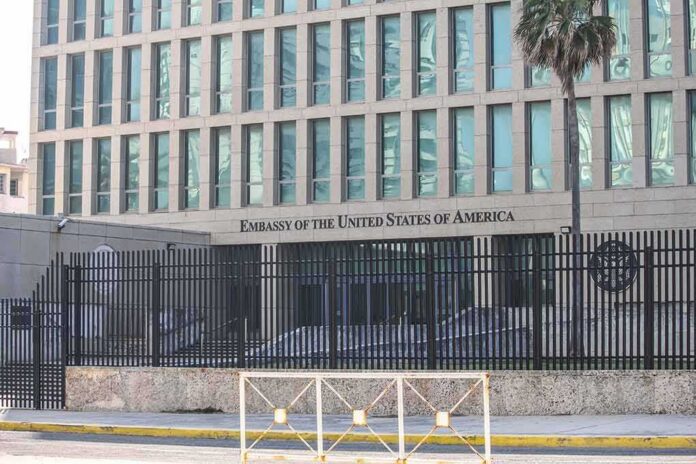
The Drug Enforcement Administration announced new ways for people in Sinaloa to send anonymous tips. Administrator Terry Cole said the agency wanted information on alleged members and associates of designated terrorist groups, corrupt officials aiding them, and networks laundering money to fund violence. Mexico reacted the next day. President Claudia Sheinbaum said her foreign minister contacted the U.S. ambassador to file a formal complaint over interference in internal affairs.
President Sheinbaum framed the move as a matter of national dignity and process. She said ties with the United States must be based on coordination, not subordination, and argued the Drug Enforcement Administration should not solicit reports about Mexican officials and networks inside Mexico without a joint plan. The ambassador reportedly said he would examine the issue, but neither government released full details of the complaint or any timeline for a resolution.
What The Drug Enforcement Administration Says It Is Doing
The Drug Enforcement Administration described the tip line as a safety tool. The agency said people could report sensitive information without revealing their identity. The channels listed included secure messaging apps and email. The public call linked cartel activity to corrupt officials and money laundering hubs, not only to street-level crime. Reporting also indicated the program could expand beyond Sinaloa to other states facing cartel threats.
At least one Sinaloa-based journalist messaged the WhatsApp line after the announcement, showing that some residents saw it as a usable channel. However, none of the reports document confirmed arrests, validated intelligence, or false tips tied to the hotline. The record mainly shows the announcement and the political backlash. That leaves open key questions about how tips are vetted, how many are passed to Mexican authorities, and how privacy is protected.
The Bigger Fight: Cooperation Rules And Sovereignty
This clash revives a long-running question: who sets the rules for cross-border enforcement. Past U.S.–Mexico programs stressed respect for each country’s sovereignty and legal systems, even as both sides shared tools and training. That partnership has often strained when U.S. agencies act first and seek buy-in later, or when Mexico demands tighter control over foreign operations on its soil. The current dispute fits that pattern and could harden mistrust if not managed quickly.
For Americans watching rising drug deaths and border violence, the Drug Enforcement Administration’s move may look like action after years of drift. For Mexicans wary of outside reach, it can look like an agency trying to run operations from abroad. The facts so far show a real complaint, a public U.S. initiative, and thin detail on the legal basis and results. Both governments could lower the temperature by releasing consultation records and a plan for joint handling of any tips.
Why This Matters For Readers In The United States
Cartels exploit weak spots on both sides of the border. Money laundering often happens through U.S. banks and businesses, while violence and corruption hit Mexican communities hardest. When agencies work at cross-purposes, criminals win. Clear rules for data sharing, referral to local prosecutors, and protection for whistleblowers can help. Without that, anonymous channels risk rumors, political payback, and bad leads that waste time and erode trust. The public deserves transparent guardrails and measurable results.
Open Questions We Will Track
Did the Drug Enforcement Administration consult Mexican authorities before launch, and if so, how. What legal grounds does Mexico cite in its complaint, and what remedy does it seek. How will tips be verified, shared, and secured to avoid harm to innocent people. Will the United States and Mexico publish joint metrics on seizures, arrests, and money-laundering cases tied to this effort. Answers will show whether this is smart cooperation or another chapter in a failing status quo.
Sources:
foxnews.com, reuters.com, washingtonpost.com, apnews.com, wjhl.com, inquisitr.com
© unitedfrontnews.com 2026. All rights reserved.