

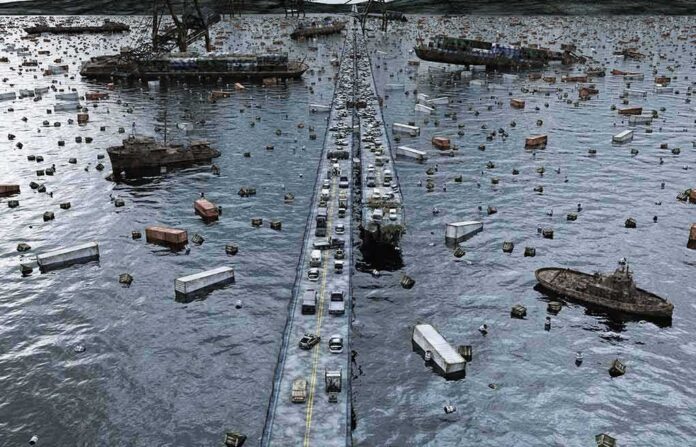
More than 836,000 customers lost power on Thanksgiving as fierce winds and flooding battered multiple states, straining aging infrastructure and holiday plans alike.
Story Highlights
- Peak outages topped 836,000 customers nationwide during the Thanksgiving storm.
- Wind gusts up to 70 miles per hour toppled trees and power lines, cutting service.
- Macy’s Thanksgiving Day Parade was postponed due to wind, rain, and flooding threats.
- Flights were canceled or delayed along the East Coast during peak travel.
Severe Winds and Flooding Drive Widespread Power Loss
Reuters reported that more than 836,000 U.S. utility customers lacked power at about 4:06 p.m. Eastern on Thanksgiving, with the largest shares in Virginia, Maryland, and Pennsylvania. The New York Times described torrential rain and strong winds knocking out power to more than half a million customers from North Carolina to New Jersey. Reported gusts reached up to 70 miles per hour. Those winds pushed down trees and power lines, creating a clear path from weather to outages across the region.
Officials also warned about coastal flooding that hit low-lying areas during high tide cycles. Local coverage highlighted risks for tree limbs and shallow-rooted trees in saturated soil, raising the chance of scattered outages as the ground loosened. The combination of soaked terrain and strong gusts is a known trigger for broken lines and blocked roads. Crews worked in dangerous conditions, slowing repairs while winds remained high and rivers and bays stayed elevated.
Holiday Traditions and Travel Plans Disrupted
Event organizers postponed the Macy’s Thanksgiving Day Parade for safety because of wind, rain, and flooding threats in New York City. That decision marked a rare break in a century-old tradition and underscored how weather hazards can shut down even well-planned public events. The call followed high wind warnings and city advisories. The storm also disrupted flight operations, with hundreds of cancellations and more than 1,000 delays during the peak travel window.
Travel problems extended beyond airports. Slick roads, ponding, and blocked lanes slowed drivers along key corridors on the Eastern Seaboard. Rail and transit systems fielded weather advisories and localized delays. Families trying to gather faced long detours and shifting schedules. For many, the larger frustration came from the lack of resilient systems that could keep basic plans intact during a known holiday crunch.
Impacts Reached Into the Midwest, Showing Uneven Severity
The storm pushed inland with snow and outages in parts of the Midwest. Reports noted about 120,000 customers without power in Missouri and thousands in Illinois as heavy snow and wind stressed lines and trees. These impacts were smaller than those along the coast but still significant for local communities. Crews focused on clearing downed limbs and restoring feeders while temperatures fell and daylight hours were short.
Here is the latest detailed infographic and storm summary from our Thanksgiving 2026 Coastal storm. #mawx #riwx #ctwx pic.twitter.com/lvXWoCpQXW
— SNE Amateur Radio Skywarn (@WX1BOX) November 27, 2026
National numbers came from an outage-tracking website at a specific time, which offers a useful snapshot but not a final tally after all repairs and corrections. Still, the broad picture is consistent: strong winds, flooding, and heavy rain or snow led to large service losses, delayed trips, and costly setbacks. Different outlets mixed forecasts and observed damage, but they aligned on the main point: weather hazards hit wide areas and exposed weak points in power and travel systems.
Why This Matters Beyond One Holiday
Climate Central’s review found that four out of five major U.S. outages from 2000 to 2023 were weather-related, and those events roughly doubled in the last decade compared with the 2000s. That trend frames the Thanksgiving storm as part of a larger pattern. The Energy Information Administration has also tracked long outage durations in recent years, showing how “major events” drive most of the pain for customers and small businesses.
When storms hit, the people who suffer first are often those with the least cushion. Families lose food in fridges. Small shops miss sales they count on. Elderly and medically fragile neighbors need steady power for health gear. This is where left and right agree: basic systems should work. Stronger grids, smarter tree management, and faster clear communication would help. So would clear, unified data that shows what failed and how to fix it next time.
Sources:
facebook.com, nytimes.com, newsobserver.com, wthitv.com, lbc.co.uk, abc7ny.com, nhpr.org, amp.dw.com
© unitedfrontnews.com 2026. All rights reserved.