
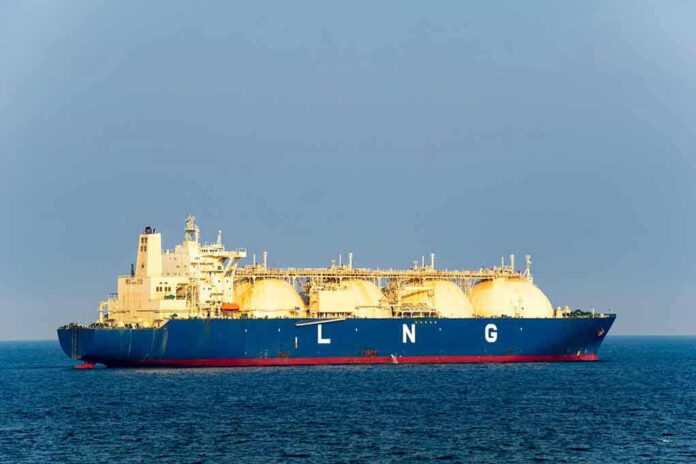
U.S. forces just carried out an extraordinarily rare seizure of an oil tanker off Venezuela’s coast, signaling that President Trump is tightening the screws on Nicolás Maduro’s regime in a way Washington has almost never seen before.
Story Snapshot
- U.S. forces seized a merchant oil tanker off Venezuela, an unusually aggressive step in maritime enforcement.
- The operation is part of Trump’s broader campaign to ramp up pressure on Nicolás Maduro, already charged with narcoterrorism in the U.S.
- The move targets Maduro’s oil lifeline, aiming to cut off cash that props up his socialist dictatorship.
- The action reflects Trump’s return to hard-power foreign policy after years of weak, muddled Venezuela strategy under Biden.
Unusual Use of U.S. Forces Against a Merchant Ship
Using U.S. forces to take control of a merchant ship is incredibly unusual and underscores how serious the Trump administration is about choking off Maduro’s remaining lifelines. Traditionally, Washington has relied on sanctions, diplomatic isolation, and covert actions to pressure hostile regimes, especially in the Western Hemisphere. Deploying military power to seize an oil tanker marks a step change, signaling that the White House is done tolerating shell games on the high seas that move sanctioned Venezuelan crude into global markets.
Targeting Maduro’s Oil Lifeline and Narcoterror Ties
The tanker seizure directly hits Maduro where it hurts most: Venezuela’s beleaguered oil sector, the last functioning source of hard currency for his socialist regime. Years of mismanagement, corruption, and cronyism have already crippled state oil giant PDVSA, but covert shipments and flag-of-convenience tankers have kept enough money flowing to sustain the dictatorship’s security apparatus. Maduro has been charged with narcoterrorism in the United States, and the tanker action fits a broader law-and-order strategy that treats his regime more like a cartel than a normal government.
By moving on a merchant vessel, U.S. forces are signaling that sanctions evasion will carry real consequences, not just sternly worded press releases. The message to shippers, insurers, and foreign buyers is simple: if you help Maduro move his oil, you are stepping into the crosshairs of American power. For conservative Americans who value the rule of law, constitutional accountability, and a hard line on narcoterror groups, this operation aligns with a vision of using limited, targeted force to defend U.S. security without endless nation-building.
Contrast With Past Weakness and Biden-Era Drift
Under previous administrations, including Biden’s, policy toward Venezuela too often settled into symbolic sanctions and rhetorical condemnation, even while backdoor negotiations and half-measures left Maduro entrenched in Caracas. Human rights abuses continued, opposition leaders were persecuted, and millions of Venezuelans fled socialism’s collapse, many eventually showing up at America’s southern border. That failed mix of soft talk and muddled enforcement frustrated conservatives who saw it as one more example of globalist appeasement and moral posturing without real consequences.
Trump’s renewed pressure campaign marks a clear break from that drift, echoing his earlier record of leveraging economic and military power to defend American interests while avoiding open-ended wars. For families already angry about illegal immigration driven by Latin American instability, choking off the cash that sustains regimes like Maduro’s is not abstract geopolitics; it is directly tied to reducing refugee flows, cartel activity, and cross-border crime. Instead of writing checks to international NGOs, Washington is using hard leverage to confront the source of the chaos.
What the Tanker Seizure Signals for U.S. Strategy
The decision to seize a merchant ship off Venezuela broadcasts several strategic messages at once: to Maduro, that his days of freely moving oil under the radar are ending; to regional allies, that the United States is again willing to lead from the front; and to adversaries worldwide, that maritime sanctions are no longer optional guidelines. The operation also showcases how targeted uses of force can reinforce economic pressure without dragging American troops into occupation or regime-change quagmires that voters across the spectrum have rejected.
For conservatives watching inflation, border chaos, and foreign policy drift under Biden, this kind of focused, decisive action offers a different model of American strength. Rather than subsidizing globalist “engagement” or tolerating criminal regimes for the sake of diplomatic theater, Trump is leaning on the tools that protect U.S. sovereignty and economic stability: control over sea lanes, enforcement of sanctions, and a refusal to let narcoterror-linked dictators profit from America’s financial system. Limited data is available on operational specifics, but the core signal is unmistakable: the era of consequence-free sanctions evasion is closing.