

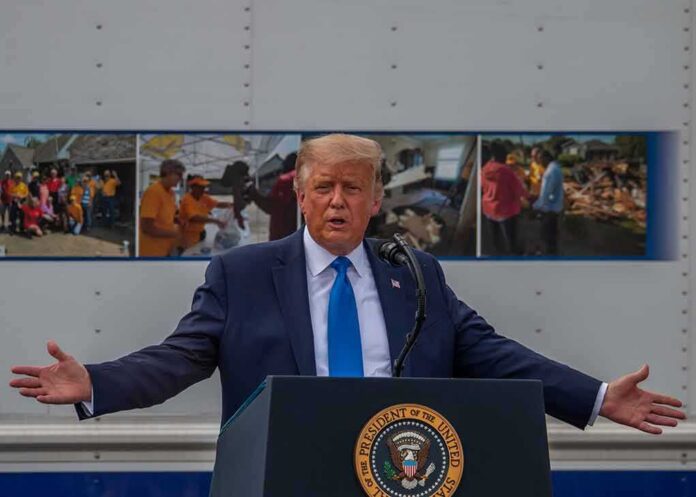
President Trump ends the longest partial government shutdown in U.S. history after 76 grueling days, exposing deep federal dysfunction that left millions without pay and critical services in limbo.
Story Snapshot
- Trump signed legislation Thursday, funding most of the Department of Homeland Security (DHS) and halting the record 76-day shutdown that began February 14.
- House passed the bill via voice vote earlier that day; Senate approved it last month, averting missed paychecks for TSA and other workers.
- Key agencies like FEMA, Secret Service, and TSA regain funding, but ICE and Border Patrol remain unfunded amid Democratic objections.
- Furloughed workers, including Coast Guard personnel, endured severe hardships; back pay now assured but timing uncertain.
Shutdown Timeline and Resolution
President Donald Trump signed the funding bill on Thursday, November 13, 2025, formally ending the 76-day partial government shutdown at DHS. The lapse started February 14, 2025, triggered by congressional failure to pass appropriations. House Republicans advanced the measure through a swift voice vote, bypassing recorded tallies that might expose divisions. Senate passage occurred last month, reflecting bipartisan pressure to resolve the crisis before emergency funds depleted. This marked the longest such event in U.S. history, surpassing prior records and amplifying public frustration with Washington’s gridlock.
Federal agencies wasted no time notifying furloughed employees to return Thursday. Transportation Security Administration screeners and air traffic controllers, operating without pay, now stabilize operations. The bill restores funding for FEMA, Secret Service, and most DHS components, easing immediate risks to national security and disaster response. Republicans control both chambers yet required this compromise, underscoring structural limits on unified governance despite electoral mandates.
Political Compromise and Bipartisan Breaks
Democrats blocked full DHS funding unless changes targeted ICE and Border Patrol, agencies central to immigration enforcement. Republicans opted for budget reconciliation to fund those separately, prioritizing broader reopening. Eight Democrats crossed lines in prior votes, calculating shutdown costs—lost wages, service disruptions—outweighed policy disputes. Speaker Mike Johnson navigated narrow House margins, with two Republicans opposing in related tallies. Senate Majority Leader John Thune promised future health care tax credit votes, deferring fights to avert collapse.
This resolution highlights power dynamics where filibuster rules demand 60 Senate votes, forcing cross-aisle deals even under GOP majorities. Trump’s second-term agenda faced obstruction, mirroring elite entrenchment that frustrates conservatives weary of fiscal chaos and liberals demanding welfare protections. Both sides decry a system prioritizing reelection over citizen needs, from high energy costs to growing inequality.
Immediate and Lingering Impacts
Over 42 million SNAP recipients saw benefits suspended; restoration now extends through September 2026, funded separately. Federal workers, including Coast Guard families, endured two months without checks, sparking widespread hardship. Airlines faced delays from understaffed controllers; travelers bore cancellations and economic losses. Small businesses reliant on government contracts suffered payment halts, hitting vulnerable communities hardest.
Funding lasts through January 30, 2026, setting up potential repeat crises if health care credits and border funding stall. Experts note unresolved tensions could trigger shutdowns early next year, perpetuating instability. This cycle reinforces shared distrust: conservatives blame overspending and open borders; liberals decry welfare cuts and inequality. Yet bipartisan exhaustion reveals a deeper truth—federal failures erode the American Dream for millions seeking stability through hard work.
Sources:
Trump signs bill ending longest government shutdown in US history
Trump signs bill ending longest government shutdown in US history