
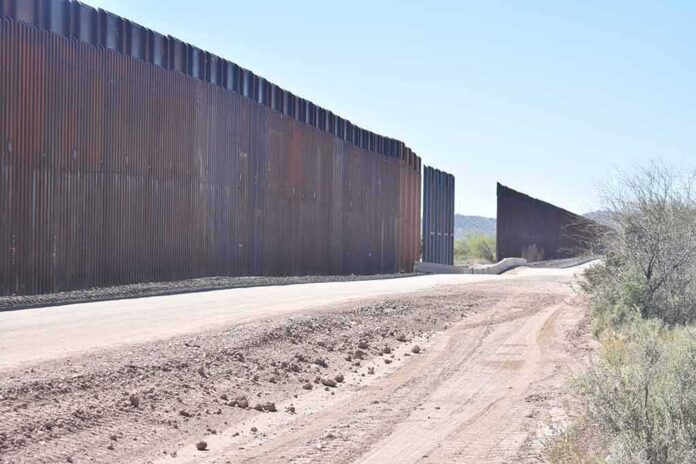
A federal judge’s ruling cleared the way for 62 miles of new Arizona border wall work to proceed despite a tribal government’s objection that it cuts into their homeland.
Story Snapshot
- A judge denied the Tohono O’odham Nation’s bid to pause the Tucson 5 Wall Project.
- The court cited national security and a 1907 federal land reservation near the border.
- The tribe argues the project invades its land and threatens sacred sites and practices.
- The ruling allows planning and pre-construction to continue while the lawsuit proceeds.
What The Court Decided And Why It Matters Now
U.S. District Judge Richard J. Leon denied the Tohono O’odham Nation’s request for a preliminary injunction. The order lets the federal government keep moving on a 62-mile wall segment known as the Tucson 5 Wall Project while the case continues. The judge found the Nation had not shown the work was on reservation land and cited border security and foreign policy as reasons to defer to the government at this stage. The ruling does not end the lawsuit.
The Nation’s filing asked the court to block “any steps in furtherance of construction” by federal border agencies on the reservation. The complaint named the Department of Homeland Security, United States Customs and Border Protection, and Border Patrol leaders, showing this is a formal federal project, not a rogue operation. The government has described the plan as part of a defined Tucson sector build, including pre-construction work and access roads. The court’s decision keeps those steps on track for now.
The Disputed Strip Of Land At The Border
Reporting on the ruling says the judge leaned on a 1907 proclamation that set aside the first 60 feet north of the border for federal use, often called the Roosevelt Reservation. That history is central to whether the wall stands on federal land or tribal land. The judge rejected, for now, the claim that the project would shrink the reservation’s boundary. The precise line still matters, and the case could surface surveys, easements, and maps the public has not yet seen.
The record offered to the public is thin on some details. It does not include the full federal land surveys, right-of-way grants, or a final environmental study for this exact route. Without those, people on both the left and right may see another example of agencies advancing a major project with limited transparency. That fuels distrust in institutions, especially where property rights, faith practices, and community safety intersect. The court’s deference today does not answer every question about impact tomorrow.
What The Tribe Says Is At Risk
The Tohono O’odham Nation argues the wall would unlawfully encroach on tribal lands and damage sacred and burial sites. Leaders warn it would split communities whose homeland spans the border and hinder religious and cultural practices tied to places like Quitobaquito Springs. Public reports earlier this year described damage to an ancient site in the area, intensifying fears about further harm if heavy construction resumes nearby. The Nation maintains that it did not consent and wants all work halted.
The tribe’s stance has drawn support from some elected officials who say the government is moving the line without Congress and risking irreparable harm to sacred places. Federal officials argue Congress has ordered stronger barriers where needed and that the project sits within a long-recognized federal border strip. That clash is not only legal; it is moral and practical. Voters see a choice between border control and respect for sovereign rights, and many worry Washington will again fail at both.
What Comes Next And Why It Affects More Than Arizona
The case now moves toward fuller briefing and evidence. The most helpful documents would be precise land-status records, engineering plans, and cultural resource reviews. Those could show if the route stays within federal land and how crews plan to avoid sacred and sensitive areas. Until then, construction planning can continue, and any on-the-ground misstep could inflame tensions and harden views across the country that the government serves itself, not the people living with its decisions.
Sources:
nativenewsonline.net, azcapitoltimes.com, archaeologysouthwest.org, tucsonsentinel.com, tonation-nsn.gov, sacredland.org, grijalva.house.gov, humanrightsresearch.org
© unitedfrontnews.com 2026. All rights reserved.