

Top surveillance CEOs skipped a Senate hearing on mass monitoring, deepening fears that powerful tech is watching Americans with little accountability.
Story Snapshot
- Senators opened a formal probe into Flock Safety’s nationwide license-plate tracking network.
- Flock and several competitors declined to testify at a hearing titled “Always Watching”.
- Lawmakers from both parties pressed privacy, security, and constitutional concerns.
- Flock says customers control data, searches are logged, and sharing is opt-in.
Senate Probe Targets Scope of Flock’s Data Network
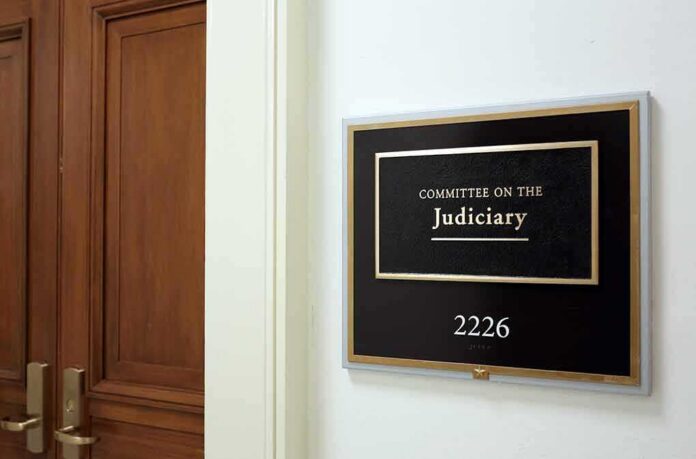
Senator Josh Hawley, who chairs the Senate Judiciary Subcommittee on Crime and Counterterrorism, opened a formal investigation into Flock Safety on August 26, 2026. His letter to Chief Executive Officer Garrett Langley asked for details on how the company collects, keeps, and shares data from its artificial intelligence cameras. Hawley framed the system as a national surveillance web that can track people across cities. He said that kind of reach raises privacy, security, and constitutional issues that Congress must examine.
The subcommittee scheduled a hearing set for September 23, 2026, under the title “Always Watching: Flock’s Nationwide AI Surveillance Network”. Senators invited the top executives from Flock, Axon, Motorola Solutions, and Verkada to testify. The companies did not appear. Their absence drew sharp comments from lawmakers and advocates who want answers about data access, sharing with other agencies, and how errors get fixed. The hearing proceeded with outside witnesses and focused on risks to civil liberties.
What Flock Says About Control, Sharing, and Safeguards
Flock says its customers, like cities and neighborhoods, own their camera data and choose who can see it. The company says it does not sell data and does not share it without customer approval, unless the law or an emergency requires it. Flock says every search is tied to a named user and logged, and that no search is anonymous. The company also says sharing across jurisdictions is never automatic and requires an agency to opt in with clear rules.
Flock points to encryption and a default retention period to show it designed guardrails for privacy. The company says footage and metadata are encrypted in transit and at rest and that information used by law enforcement follows strict rules. A recent update created a public Transparency Portal where communities can see an agency’s policy, how long data is kept, who can access it, and records of search activity, in the agency’s own words. These steps aim to answer critics who warn about mission creep and weak oversight.
Why The Stakes Go Beyond One Company
Senators and experts say the core issue is scale. One camera reading one plate is common police work. A dense web of cameras that stores and shares hits across many places can reveal a person’s patterns and beliefs over time. That is where courts start to ask harder questions. The Fifth Circuit recently said periodic, public-road license-plate hits are not a search. But courts also flag that widespread use and long retention can change the analysis.
That tension now drives the policy fight. Supporters call automated readers a fast way to find stolen cars and missing people. Skeptics warn that national networks can become location-tracking systems by default. The Brennan Center for Justice and other legal sources describe this split. They note that “mere observation” is usually allowed, while mass aggregation can trigger constitutional concerns. Lawmakers from both parties showed interest in where Flock’s system sits on that line.
Public Frustration Over Accountability and Errors
Americans across the political spectrum want safer streets and respect for the Constitution. Many also fear that large, unaccountable systems will watch the many to protect the few at the top. Wrongful hits and delayed fixes add to that anger. Senators asked who can correct bad data and who pays when a false match leads to an arrest or a search. They also asked whether federal agencies can get access through partner sharing, even when companies deny direct access.
“I did not know if I would ever get out of jail,” said Lindsey Isaacs, a Florida woman who testified before Congress about being wrongly accused in a deadly crash and jailed on vehicular homicide charges after data from a Flock Safety automated license-plate recognition system… pic.twitter.com/CLgQtLPREv
— CBS News (@CBSNews) September 24, 2026
Flock says it added keyword blocks for sensitive areas where state law forbids searches, like civil immigration or reproductive health terms, and that agencies set offense-based sharing rules to narrow use. Critics answer that policy tweaks do not change the core risk of building a nationwide, searchable map of daily life. They say communities need short retention, tight warrants for broad queries, and full, public audits that cannot be turned off when pressure fades.
What To Watch Next
Congress can demand documents, compel testimony, and write rules. Expect more letters and potential subpoenas if companies keep declining to appear. Cities and states may also pass clearer guardrails: strict retention limits, hard audits, public portals, and bright-line bans on certain search types. Courts will keep weighing scale, duration, and sharing. Until then, the clash will remain the same: is this a narrow tool to solve crimes, or a nationwide monitor that is always watching?
Sources:
zerohedge.com, hawley.senate.gov, cnbc.com, judiciary.senate.gov, politico.com, thehill.com, independent.org, govtech.com, reason.com, law.cornell.edu, news.northeastern.edu
© unitedfrontnews.com 2026. All rights reserved.