

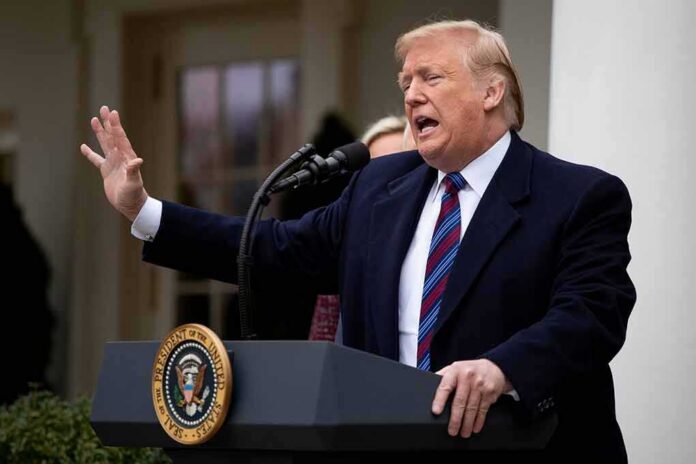
Fox News commentator Jessica Tarlov acknowledged she misread President Trump’s 2017 “very fine people” remarks after hearing the full exchange, reviving a long-running fight over what those words meant.
Story Snapshot
- Jessica Tarlov said she accepted claims about Trump’s 2017 words until hearing the full context.
- The official transcript shows Trump said neo-Nazis and white nationalists should be condemned “totally”.
- Fact checks and transcripts confirm both the “very fine people” quote and the explicit exclusion.
- Debate now centers on meaning and impact, not on whether the words were spoken.
What Tarlov Said And Why It Matters
Jessica Tarlov discussed Trump’s 2017 comments during a podcast and said she had not listened to the full audio before. She said that hearing the entire exchange changed her view of what Trump meant. Coverage of her remarks spread quickly across partisan outlets, since the quote has fueled years of claims about Trump’s stance on extremism. Her shift highlights how short clips can harden opinions before people review source material.
The moment matters because it touches a broader public worry: that leaders, media, and even we as citizens jump to quick takes. Many Americans on the right and left feel key facts get buried when stories serve a tribe. Tarlov’s change of mind does not end the argument. But it reminds us that checking the record beats echoing the loudest headline. That is a basic standard many feel Washington and big media too often ignore.
What The Transcript Actually Shows
The full August 15, 2017 press exchange shows two key points. First, Trump said there were “very fine people on both sides” of the clash. Second, he added, “I’m not talking about the neo-Nazis and the white nationalists, because they should be condemned totally.” That disclaimer appears in the official transcript of the event and has been cited by fact-checkers reviewing the dispute over what he meant, and whom he was describing.
Independent reviews have since reproduced the “very fine people” line and the explicit exclusion of extremist groups. Fact-checkers concluded the quote is real, and the exclusion is also real. The fight then moves to interpretation. Some say Trump meant people who opposed tearing down statues; others say the setting made any talk of “fine people” on both sides unacceptable. Both views look at the same text but draw different lessons from it.
Why The Dispute Still Divides Voters
Reporters and commentators who fault Trump argue that the rally’s leaders and chants tied the event to hate, so praising “both sides” blurred a moral line. Supporters counter that he condemned extremists in the same exchange and tried to separate them from some who opposed removing monuments. The gap is less about the words on the page and more about which context to center: the literal transcript, or the broader scene and impact on the public.
This split feeds a deeper concern shared by many Americans. People feel institutions reward fast outrage over careful truth. They worry the political class uses edited clips to score points while big problems go unsolved. When a high-profile pundit concedes she got a core detail wrong, it strengthens the call for everyone—citizens, press, and leaders—to slow down and check primary sources before drawing lines that tear communities apart.
How To Read Claims Like This Going Forward
Start with the record. Read the full transcript or watch the full video when possible. Note what was said and what was not. Then weigh the context. Ask who organized the event, what happened there, and how a leader’s words could land with the public. That two-step—text and context—keeps debates grounded. It also reduces the chance that a viral clip, or a talking point, drives our view more than the facts do.
Fox News Liberal Jessica Tarlov FINALLY Admits Trump Wasn’t Calling Neo-Nazis “Very Fine People” After Listening to Full Charlottesville Remarks (VIDEO) https://t.co/c3UzFCQHZn #gatewaypundit via @gatewaypundit
— Debra Dosch (@DebraDosch) November 23, 2026
For citizens tired of spin from all sides, this case offers a simple fix: insist on receipts. Demand original documents for claims about what someone said. Reward people who correct the record, even if late. Hold leaders and media to the same rule. That is not partisan. It is how a free people guard truth in a noisy age—and how we stop elites from gaming us with half-stories that fuel division and dodge real work.
Sources:
pjmedia.com, politifact.com, snopes.com
© unitedfrontnews.com 2026. All rights reserved.