
President Trump’s explosive election-security speech turns a long-running fight over voter fraud and “deep state” cover‑ups into a fresh test of how much Americans can trust their own government.
Story Snapshot
- Trump used a rare primetime address to unveil declassified election intel and demand sweeping voting changes.
- Intelligence and law enforcement reports say there is no evidence foreign powers changed votes or controlled voting systems.
- Democrats warn the speech “weaponizes” intelligence to justify new restrictions on voting before the 2026 midterms.
- Years of fraud claims from both sides have already weakened public trust in elections and in Washington itself.
Trump’s Primetime Push on Election Security
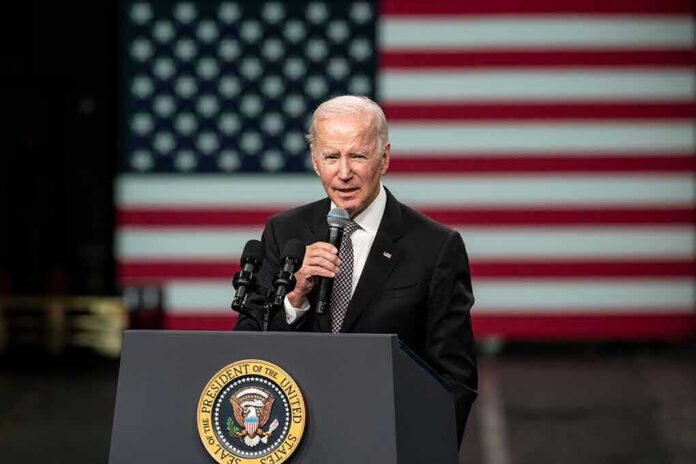
President Donald Trump chose a rare primetime address to put election security at the center of national debate again, tying it to his broader claims that his administration rescued the economy and is defending ordinary Americans from corrupt elites. In the speech, he highlighted what the White House calls newly declassified intelligence on foreign interference and voting machine vulnerabilities, promising “shocking” details about weak election systems. Trump framed the issue as a fight between patriotic reformers and a “deep state” that has allegedly hidden the truth from voters. That language fits years of his rhetoric about rigged systems, globalist insiders, and forgotten workers.
White House aides told reporters ahead of the speech that Trump would say adversaries like China, Russia, and Iran were able to target voting infrastructure and access voter information after the 2020 election. Supporters argue that Americans deserve to see this intelligence and that secrecy only protects corrupt officials and foreign enemies. The address also served a political goal: Republicans face tough midterm races, and Trump is trying to rally skeptical voters by promising to “secure” elections the way he says he has “secured” the border and revived the economy. For many on the right and the left, the bigger question is whether anyone in Washington is telling the full truth.
What Official Reports Say About 2020 Election Interference
Key intelligence and law enforcement documents tell a calmer story than Trump’s speech. A 2021 assessment from the United States Intelligence Community concluded there were “no indications that any foreign actor attempted to interfere in the 2020 US elections by altering any technical aspect of the voting process,” meaning they found no proof that outsiders changed votes or broke voting machines. A joint summary from the Department of Justice and the Department of Homeland Security said there was no evidence foreign government‑linked actors prevented voting, changed votes, or blocked counting or reporting of results. That report did confirm that Russian and Iranian campaigns hacked into some networks tied to election operations, but it said those breaches did not materially affect voter data, the ability to vote, or vote counting.
House Intelligence Committee Democrats pressed this point in a public warning before Trump’s address, telling the Director of National Intelligence that “no intelligence to the contrary has ever been provided to the Committee,” despite repeated requests for updates. They argued that the president was using cherry‑picked or mis-framed information to build support for new election laws that would tighten identification rules and limit certain types of ballots. At the same time, federal experts say voting technology does carry real cyber risks. A report from the National Academies notes there is no realistic way to make computer systems used for casting and counting votes completely safe from hacking and calls for strong, transparent post‑election audits in every state. That means there is room for serious security reforms, but not for wild claims that votes were secretly changed on a massive scale.
Claims of Fraud, “Deep State” Cover‑Ups, and the Save America Debate
Trump’s address fits a wider pattern of using dramatic fraud claims to justify tighter voting laws. Research shows that repeated, unproven claims of voter fraud by political leaders reduce people’s confidence in election integrity, even when there is little hard evidence of cheating. Since 2016, Trump has promoted theories about rigged machines, fake mail ballots, and votes cast in the names of dead people, which helped fuel the broader election denial movement after his 2020 loss. Many conservatives feel these warnings match their lived experience of a system run by elites who ignore them, while many liberals see the same claims as part of a push to block certain voters and hold onto power. In this speech, Trump tied new intelligence claims to a proposed “Save America Act” adding strict voter identification rules and tighter controls on mail and early ballots.
🚨 BREAKING: President Donald Trump has ordered the immediate declassification and release of intelligence documents, which he claims reveal "shocking vulnerabilities" in U.S. election infrastructure.
During a primetime address on Thursday, July 16, 2026, the President stated…
— Amy Leigh (@IAmyLeigh) July 17, 2026
Democratic lawmakers and some election observers say this is exactly the problem. They worry that “weaponized” intelligence will be used not only to clean up true vulnerabilities but also to cut legal voting, especially among poorer and minority citizens who already feel locked out of the American Dream. At the same time, many Americans across the political spectrum now suspect that government insiders, big media companies, and wealthy donors shape which facts reach the public. When major outlets treat Trump’s claims as “false” or “misleading” before all documents are public, that can deepen the sense on the right that the system is rigged. When the administration fires election officials or weakens cybersecurity agencies while talking up security, that can deepen the sense on the left that leaders care more about control than about honest votes. The result is rising distrust in elections and a shared fear that the people in charge, in both parties, are serving themselves first.
Sources:
youtube.com, politico.com, reuters.com, npr.org, stylemagazine.com, trumpwhitehouse.archives.gov, wbaltv.com, intel.gov, int.nyt.com, gottheimer.house.gov, 2021-2025.state.gov, pmc.ncbi.nlm.nih.gov, misinforeview.hks.harvard.edu, eipartnership.net, en.wikipedia.org, brennancenter.org
© unitedfrontnews.com 2026. All rights reserved.