

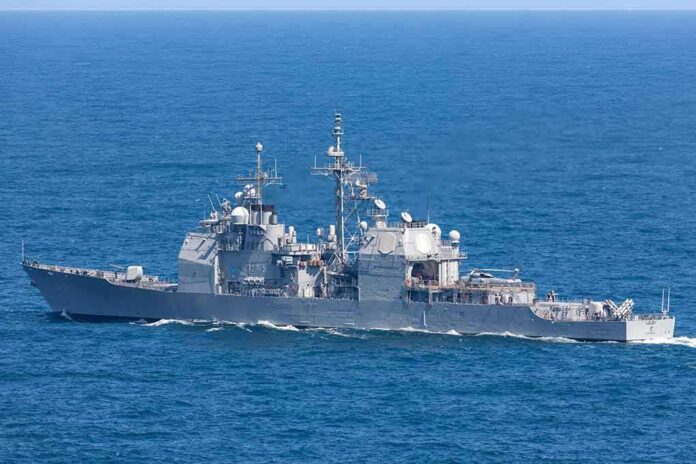
U.S. forces struck Iranian launchers on Larak Island to stop a mine threat, and Iran vowed payback that could squeeze a vital trade artery.
Story Highlights
- U.S. Central Command said it hit launchers tied to sea mines near the Strait of Hormuz.
- Iran’s Revolutionary Guard said the strike was aggression and promised retaliation.
- Iran claimed to target U.S. sites in Jordan; Jordan said it intercepted missiles.
- Both sides link the clash to control of a chokepoint for global energy and shipping.
What The U.S. Military Says It Did And Why It Matters
U.S. Central Command said American forces carried out “limited, precise action” against two Iranian launchers on Larak Island. The command said it acted after detecting preparations to deploy sea mines into the Strait of Hormuz, which could threaten civilian ships and global commerce. Officials rejected claims that mines had already hit ships, calling those statements false. This matters because one fifth of the world’s oil trade normally passes near this narrow waterway.
The Pentagon’s message framed the move as self-defense and protection of maritime traffic. A Central Command spokesperson confirmed the strike location and the target type, stressing that the goal was to prevent an imminent threat rather than escalate the conflict. That framing fits past U.S. actions in the region, where the military uses limited strikes, naval patrols, and warnings to keep shipping lanes open and deter new attacks.
How Iran Framed The Strike And The Risk Of Retaliation
Iran’s Islamic Revolutionary Guard Corps, quoted by state media and major outlets, called the strike an act of aggression. The Guard said the attack killed and wounded Iranians and promised a response to punish those responsible. After the Larak strike, Iran claimed it launched missiles at U.S. installations in Jordan. Jordan’s army reported intercepting several missiles, showing how fast local skirmishes can spread across borders. These dueling claims raise the odds of more tit-for-tat actions.
Iranian officials and allied media linked the clash to broader control over the Strait of Hormuz. Their message warned that interference by outside forces would bring more consequences and that Tehran could tighten control of the waterway until demands are met. Reports over recent weeks describe a cycle: Iranian pressure on maritime traffic, a U.S. strike in reply, and then Iranian fire on U.S. positions or partners. This pattern fuels fears that each round edges both sides closer to a wider fight.
Why This Flashpoint Hits Home For Americans
Energy and shipping costs rise when the Strait of Hormuz is at risk. Insurers charge more. Ships reroute and burn more fuel. These costs can push up prices, from gas to groceries, back home. Analysts have long called the strait a “maritime flash point” because a small number of mines or missiles can disrupt a huge share of global trade. That reality angers citizens on the left and right who see leaders talking tough while family budgets absorb the hit.
Many readers are tired of government spin from any side. Here, both Washington and Tehran delivered fast, sharp messages through official channels. The U.S. said it acted to stop an imminent mine threat. Iran said civilians and fighters were hit and vowed revenge. Independent proof of casualties has not been shown in the reports available so far, and access to the site is limited. In crises like this, early narratives harden before full facts emerge, which deepens public distrust.
What To Watch Next: Escalation Ladders And Off-Ramps
Watch for three signals. First, any new mine discoveries or successful strikes on ships would change the risk picture fast. Second, continued Iranian missiles aimed at U.S. or partner sites could trigger broader U.S. responses. Third, quiet talks on maritime rules or limited deconfliction could hint at an off-ramp. Recent coverage shows that both sides often test limits, then look for leverage at the bargaining table. That cycle may repeat unless a clear deal resets the rules.
🇺🇸🙏Our forces started hitting IRGC targets inside Iran today around noon Eastern.
After Iran tried to mess with commercial ships in the Strait of Hormuz and go after American troops in the region, we hit back. That’s what you do when you threaten our people and the waterways… https://t.co/7H2ftAUNUJ— ⚔ X⃨C⃨A⃨L⃨I⃨B⃨E⃨R⃨ ⚔ (@XCaliberCEO) September 1, 2026
For now, the facts are clear on the core event: the U.S. hit Iranian launchers on Larak Island to stop an alleged mine threat. Iran called it aggression and threatened payback. The stakes reach far beyond the Gulf. When a chokepoint like Hormuz shakes, the global economy feels it. Americans see higher prices while leaders trade statements and missiles. That gap between cost and accountability feeds the belief that elites play geopolitical games while regular people pay the bill.
Sources:
thehill.com, jpost.com, reuters.com, aljazeera.com, politico.com, nytimes.com
© unitedfrontnews.com 2026. All rights reserved.