

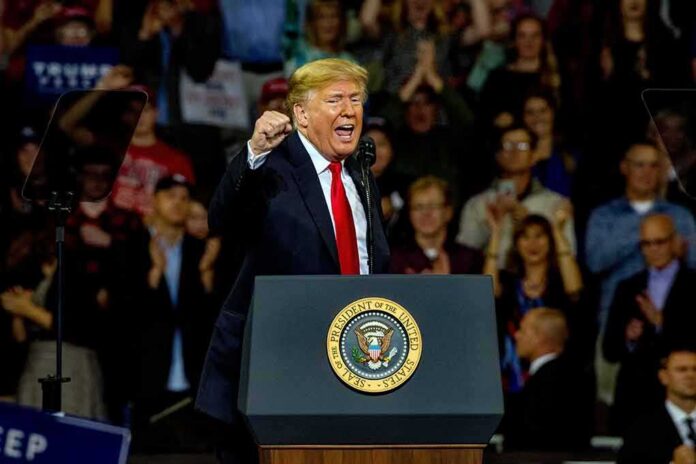
The White House says violent crime fell by a record amount in 2025, and murders hit a 125-year low, reshaping the safety debate nationwide.
Story Snapshot
- The White House cites a 9.3% drop in violent crime and an 18.1% drop in murder in 2025.
- Officials say stronger support for police and joint operations drove the decline.
- Independent analysts agree crime fell sharply, while credit for the drop is debated.
- Both parties see proof for their views, but most Americans mainly want safer streets.
White House Reports Record Crime Declines
The White House released figures claiming 2025 saw the largest single-year decline in violent crime on record. Officials reported a 9.3 percent drop in violent crime and an 18.1 percent drop in murder, describing the nation as safer than in generations. A separate White House summary said the murder rate fell to its lowest level in at least 125 years, with broad declines across major categories like robbery and aggravated assault. These claims anchor the administration’s “law and order” message.
President Trump and senior aides linked the drop to strong backing for police and tougher enforcement. They highlighted expanded federal arrests, closer work with local departments, and a focus on repeat violent offenders. The administration also pointed to public data that big cities led the improvement, which they argue shows policy pressure and support for officers can change outcomes quickly. The message targets voters who want stability after years of rising anxiety about crime.
What Public Data and Analysts Say About the Trend
Major outlets and researchers also reported a sharp decline in violent crime. The British Broadcasting Corporation said data through October 2025 showed about a 10 percent drop from the prior year, in line with earlier downward movement in 2023 and 2024. The New York Times noted that analysts agreed 2025 marked a remarkable year for safety, with historically low murder rates across many places. These outside reads match the basic direction in the White House numbers.
Analysts, however, warned against simple credit claims. FactCheck.org reported that experts view the reasons for the decline as many and not easy to assign to one set of federal actions. They noted the downward turn began before 2025, which makes clean attribution hard. That does not erase the drop. It means several forces may be at work at once, including local policing shifts, courts, the economy, and community efforts, alongside federal support.
How Politics and Policy Intersect With Safety
Attorney General Todd Blanche and other officials have framed the numbers as proof that support for police works, citing federal-local crackdowns and high-profile arrests. Speeches at party events have stressed deterrence and a message to “hold you accountable,” signaling a return to order for many worried about repeat crimes. Supporters say clear backing boosts officer morale and community confidence, which helps reduce violence.
Critics counter that leaders often claim wins when the curve was already bending down. They point to the multi-year trend and remind that crime patterns move with many factors outside Washington’s control. Both sides agree on one core point that spans the political divide: people want safer streets, fair policing, and less chaos. Where Washington argues over credit, families judge by what they feel at home, at school, and on their block.
What This Means for Communities
For citizens, the headline is simple: crime fell a lot last year. That is good news for parents, shop owners, and officers who carry the risks every day. The deeper question is how to keep the gains. Local leaders can build on what works: focused enforcement on the small share driving violence, steady community ties, and swift, fair justice. Federal leaders can keep resources flowing without turning public safety into a tug-of-war over talking points.
Voters across left and right share a worry that the system often serves insiders first. Clear, public metrics can help rebuild trust. Publish city-level goals, track repeat offender outcomes, and report response times and case clearance rates. Keep the focus on results that people can see on their street. If 2025 was a turning point, the test now is staying power, not spin. The data will show if the drop is real and lasting.
Sources:
youtube.com, foxnews.com, whitehouse.gov, dallasnews.com, ground.news, okmagazine.com, ianslive.in
© unitedfrontnews.com 2026. All rights reserved.
![🇺🇸 Charlie Kirk Memorial by Turning Point USA at Utah Valley University [LIVE]](https://unitedfrontnews.com/wp-content/uploads/sites/16/2026/09/maxresdefault-10-100x70.jpg "Conservative Legacy Takes Center Stage")