
The United States publicly warned of a “mass casualty” threat at a named Moscow site on a specific date, and Russia moved to respond.
Story Snapshot
- The U.S. Embassy in Moscow named Tsaritsyno Museum Reserve as a target on October 31.
- American officials said they were working with Russian authorities on a response.
- Russia’s Federal Security Service said it received U.S. information and took measures.
- Open sources did not show who planned the attack or what method was expected.
What the Embassy Said and Why It Stands Out
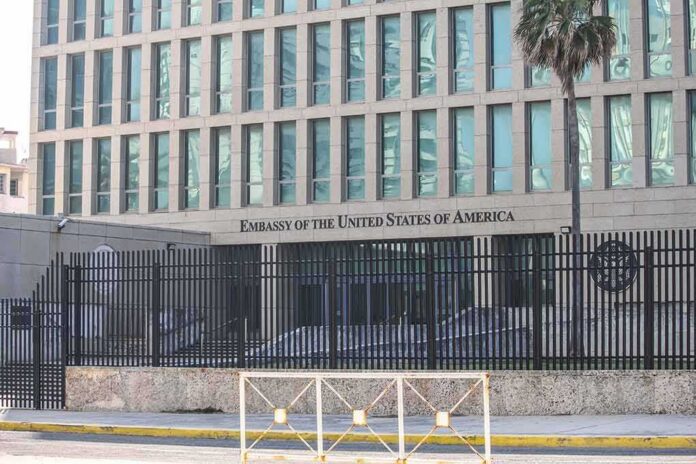
The U.S. Embassy in Moscow issued a rare, specific alert naming the Tsaritsyno Museum Reserve and the date October 31. The alert used the phrase “credible threat of a mass casualty event” and gave practical steps for safety, like avoiding the site, staying alert, and keeping phones charged. The message also said the U.S. government was coordinating with Russian authorities. That level of detail and cross-border coordination is unusual and signals a serious concern.
Russian and international outlets reported that the named site was temporarily closed and access restricted as police took precautions. Russia’s Federal Security Service said it received information from the United States through established channels about preparations for an attack and was taking measures. These statements show that both governments treated the warning as real enough to justify action, even as they kept the underlying intelligence secret.
What We Know—and What We Do Not
Officials did not share who was behind the threat, what attack method was feared, or what evidence supported the “credible” label in public reporting. Reuters, The Moscow Times, and other outlets documented the alert and the Russian response, but none provided the raw intelligence, a suspect list, or a device description. A later check of reports showed no confirmed attack at the time those stories were published, so the public cannot judge whether the warning stopped a plot or flagged a false alarm.
Some coverage questioned whether the warning fit a broader wave of alarming notices. One analysis asked if governments were stoking fear or sharing limited but real threat data across allies. That claim did not present specific proof against the embassy’s facts, only skepticism about timing and context. Such doubt is common when officials protect sources and methods. Without released evidence, the public must weigh track records, not guesses.
Why This Matters Across the Aisle
Americans on the right and left often doubt that Washington is honest or effective. This case cuts both ways. On one hand, a named site and date show officials can warn clearly when they choose. On the other, the lack of disclosed evidence feeds fears that elites withhold facts and expect blind trust. People remember the 2024 Crocus City Hall attack, where an earlier U.S. warning proved prescient, which shapes how many now read this alert.
Russian security authorities have stepped up precautionary measures after the United States warned of a credible threat of a possible terrorist attack at a popular museum and park complex in Moscow.
The US Embassy in Moscow issued an alert on Saturday, 31 October 2026, warning… pic.twitter.com/VVUi4AfJnF
— Daily Tribune (@tribunephl) November 1, 2026
Adversaries cooperating on security also raises tough questions. When the United States shares threat data with Russia, some see practical duty-of-care. Others see a secretive security club that crosses political lines while citizens get few answers. Clear after-action reports could help. Officials could say whether the threat was disrupted, disproven, or still under review. That simple step would build trust without burning sensitive sources, if done with careful redaction.
What to Watch Next
First, watch for any official after-action updates from the U.S. Embassy or Russian authorities. A statement about searches, arrests, or seized materials would firm up what happened. Second, look for a declassified summary that explains why the threat was called “credible.” Even a high-level note on confidence levels and corroboration would help. Third, track whether similar alerts become more frequent. A pattern of specific warnings without outcomes will test public patience.
How to Read Future Warnings
Specifics like a named place and date usually mean officials saw something they judged concrete, even if they cannot show it right away. Coordination between rival governments also suggests they believed speed mattered more than politics. But the burden shifts after the window passes. If there is no attack and no explanation, distrust grows. A healthy standard is simple: give the public the safety heads-up now, then a factual scrub later that says what proved true and what did not.
Sources:
zerohedge.com, newsweek.com, themoscowtimes.com, rmb.reuters.com
© unitedfrontnews.com 2026. All rights reserved.