

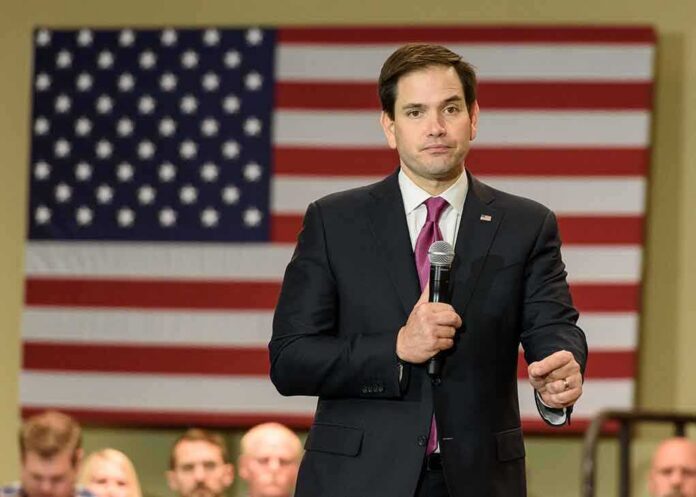
Standing in Manila, Secretary of State Marco Rubio said there is “no imminent threat” to Washington, even as detailed reports described Iranian dirty-bomb planning.
Story Snapshot
- Rubio said he is not concerned about an imminent attack on Washington and cited confidence in U.S. intelligence systems.
- CNN reported U.S. intelligence saw Iranian planning for a possible dirty bomb, but sources framed it as “options,” not an imminent attack.
- The White House said there were no credible threats to the homeland at that time.
- Iranian officials publicly denied the allegations and called the report fabricated.
Rubio’s On-Camera Denial Of Imminent Danger
On November 18 in Manila, Secretary of State Marco Rubio answered a direct press question about an “imminent attack on Washington.” Rubio said, “I am not” concerned and added, “I don’t think there’s any imminent threat.” He framed his view around daily “threat streams,” most of which do not pan out, and expressed strong confidence in U.S. intelligence and detection systems to flag real dangers early. His remarks aimed to steady nerves after a wave of alarming headlines.
CNN reported two days earlier that U.S. intelligence indicated Iran was developing plans to potentially detonate a dirty bomb in Washington. The story cited seven U.S. officials and listed specific locations and targets. Yet the same sources said the activity looked like giving Tehran options, not an indicator of imminent attack. Officials reportedly debated whether Iran had personnel in place or intent to act. The article also noted no known decision by Tehran to proceed.
White House Posture And Intelligence Disagreement
The White House told CNN it was monitoring “any and all potential threats,” but that there were “no credible threats to the homeland” at that time. That matched Rubio’s core point on imminence. Still, the reporting described disagreement among U.S. intelligence personnel about capability and intent. Such disputes are common with early signals. Specifics can trigger contingency planning while analysts still doubt timing or feasibility. The tension between detail and doubt can unsettle the public conversation.
Iran rejected the claims outright. Iranian officials called the story baseless and described it as propaganda. Separate coverage highlighted that CNN’s account did not provide public proof and that some dramatic elements, like alleged materials inside the United States, lacked independent verification. Denials from an accused state are expected, but they add to the cloud of uncertainty when the underlying intelligence remains classified.
Why “Not Imminent” Can Still Feel Urgent
U.S. agencies handle many threat reports every day. Most never become real attacks, but a few do. History shows the hardest calls sit in that gray zone. Policymakers must weigh sketchy clues without overreacting or missing a real strike. Past reviews by the Central Intelligence Agency and scholars describe how false alarms erode trust, while missed warnings carry terrible costs. That is why officials can reject imminence today yet still raise posture or ask for vigilance tomorrow.
The “cry-wolf” effect is real. Repeated alerts that do not materialize can numb the public and leaders. Later, a valid warning may be ignored. On the other hand, loud alarms can spark fear, feed political fights, and distract from daily needs. Many Americans across the spectrum already feel the system works for insiders, not for them. When anonymous leaks collide with official reassurances, people see a familiar pattern: secrecy, spin, and a demand for trust without proof.
What This Means For Regular People
For families in and around Washington, the signal right now is steady but alert. Rubio and the White House say there is no credible, imminent threat. Agencies remain on watch. That balance is normal for national security work. It also shows a recurring failure of our public system: leaders ask the country to “trust the process” while the facts stay locked away. That gap feeds fear on the right and left that elites manage narratives more than risks.
US Secretary of State Marco Rubio said early Wednesday that he does not believe there is an imminent threat of an attack on Washington, DC, dismissing concerns following a CNN report about an alleged Iranian plot targeting the US capital. https://t.co/JMtSfhjhka
— ANews (@anews) November 18, 2026
Here is what would build confidence. First, brief Congress and release an unclassified summary stating what was learned, what was not, and how confident analysts are. Second, explain whether any protective steps changed, and why. Third, if leaks were wrong, say so with evidence; if they were partly right, say what changed the risk. Clear updates, not spin, help people prepare without panic. Until then, the fairest reading is this: be calm, stay aware, and demand sunlight over secrecy.
Sources:
mediaite.com, washingtonexaminer.com, iranintl.com, cnn.com, amp.dw.com, nsarchive.gwu.edu, ciaotest.cc.columbia.edu
© unitedfrontnews.com 2026. All rights reserved.