

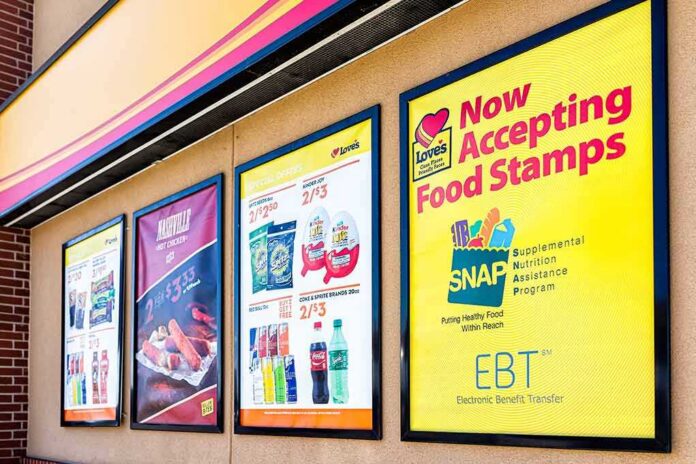
A sweeping SNAP rule change expanded who must work to keep benefits, and millions have since fallen off the rolls according to outside analyses.
Story Snapshot
- Federal guidance confirms broader work rules and narrowed exemptions under the new law.
- Adults ages 18–64 now face a three-month time limit unless they meet work standards.
- Independent reports say national SNAP enrollment dropped sharply after the changes.
- Maine reports show added steps and thousands fewer recipients statewide.
What changed in federal SNAP rules and who is affected
United States Department of Agriculture guidance shows that the One Big Beautiful Bill Act widened the group of adults who must work or join qualifying programs to keep Supplemental Nutrition Assistance Program aid. Covered adults now span ages 18 to 64, up from 18 to 54 before. The law also removed or narrowed several exemptions. These shifts come with a three-month time limit on benefits in a 36‑month window if people do not meet work standards of about 20 hours per week.
Under the guidance, the time limit is separate from general work rules that many states already had. Adults subject to the limit must average 80 hours a month of work or approved activities. If they do not, they can only receive three months of aid in three years unless they qualify for another exemption. The Department’s notices describe the new scope and clarify that some past exceptions were reduced or removed, which can pull more people into the rules.
How the policy shift shows up in states like Maine
Maine’s human services page explains that many applicants must register for work, respond to job referrals, and avoid quitting without good cause. Maine also requires certain people ages 16 to 59 to keep an active Maine JobLink account. These steps can affect eligibility if people miss notices or deadlines. State rules and processes, layered on top of the new federal time limit, create more points where a case can close even if need has not changed.
Maine Public reporting says more than 18,000 people in the state, including about 5,000 children, are no longer receiving help. The report also says work rules tightened and proof steps increased, and it highlights that more than half of recipients are in families with children, older adults, or people with disabilities. That mix means policy changes can ripple through households that include vulnerable members, even if the work rule directly targets another adult in the home.
What the numbers say—and what they do not
An Associated Press report said national SNAP enrollment fell from 42.2 million in May 2025 to 36.6 million in May 2026, a drop of about 5.6 million. National Public Radio reported that the Congressional Budget Office estimated the work‑rule changes would, on average, lower participation by 2.4 million people per month over 2025 through 2034. These figures are striking, but federal guidance documents do not themselves publish that enrollment series or breakouts by reason for exit.
The gap matters because numbers alone do not tell us why each case closed. Some people may have found work that raised income above limits. Others may have met the work rule but missed a form, an interview, or a notice. The Department’s guidance confirms broader coverage and fewer exemptions. It does not prove that exits reflect better household finances. Without detailed case data, we cannot sort need-based exits from paperwork losses.
Why this fight resonates across the political divide
Supporters of stricter rules argue that tying aid to work protects taxpayers and keeps help focused on those who try to meet clear standards. They point to the new age range and the 20‑hour benchmark as firm goals that should reduce improper participation. Critics answer that many recipients already work or cycle in and out of unstable jobs, and that added steps can knock off eligible families. They warn that losing SNAP can raise food hardship while grocery prices remain high.
Both views reflect a deeper worry that the system is not working for regular people. Conservatives see a program that drifted from personal responsibility. Liberals see red tape that screens out needy families. Many Americans now see a machine that serves insiders, not citizens. When the rules expand and exemptions shrink, but the government cannot show who left and why, trust erodes. People read the same drop and see either waste cut or dinner lost.
What to watch next to judge outcomes, not spin
Key tests are straightforward. First, states and the federal government should publish monthly participation and exit reasons that match the timeline of the changes. Second, they should link exits to wage records to show if people who left saw steady jobs and higher pay. Third, they should report how often closures stem from missed paperwork and how often people rejoin soon after. Clear, shared facts can show whether this policy is a push to work or a cut to food.
Sources:
thegatewaypundit.com, fna.usda.gov, usda.gov, maine.gov, urban.org
© unitedfrontnews.com 2026. All rights reserved.