

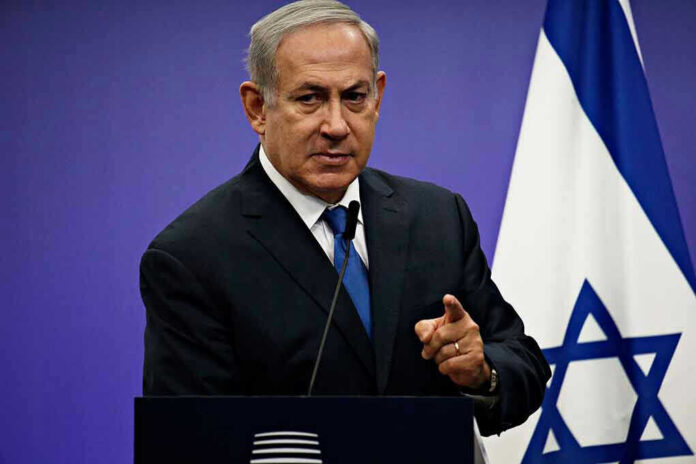
Behind the headlines about Hezbollah and Lebanon, the Trump–Netanyahu clash is less a clean break than a revealing glimpse of how powerful leaders argue in private while insisting in public that everything is “under control.”
Story Snapshot
- Trump and Netanyahu had a confirmed tense, expletive-laced dispute over Israel’s Lebanon campaign and Iran diplomacy.
- Both leaders still publicly insist they share the same goal: disarming Hezbollah and demilitarizing Lebanon.
- The fight reflects deeper tension between American diplomatic timelines and Israeli military calculations.
- The episode fuels left–right concerns that decisions about war, peace, and lives are being bartered in opaque, elite backrooms.
What Actually Happened Between Trump and Netanyahu
Media reports from Axios and others describe an hour-long, highly charged phone call in which United States President Donald Trump and Israeli Prime Minister Benjamin Netanyahu clashed over how to proceed with the Iran war and Israel’s operations in Lebanon.[1][4] According to these accounts, Netanyahu pushed for renewed airstrikes to keep pressure on Iran, while Trump argued for giving a new diplomatic initiative a chance.[1][4] U.S. and Israeli sources said Netanyahu was furious after the call, with one saying his “hair was on fire.”[1][4] Trump later publicly confirmed in a New York Post interview that he called Netanyahu “effing crazy” and said the Israeli leader would be in prison without him, acknowledging the confrontation rather than denying it.[3]
At the same time, Trump maintained a united public front on the broader Iran strategy, telling reporters that Netanyahu would ultimately “do whatever I want him to do” on Iran while also stressing they had a good relationship.[1] Reports indicate Trump was especially worried that Israel’s strikes in Lebanon and the civilian death toll could derail a fragile effort, mediated by Qatar and Pakistan, to secure a letter of intent between Washington and Tehran that would end the war and open a 30-day negotiation window over the nuclear program and sanctions relief.[1][4] Netanyahu, by contrast, reportedly saw the pause in airstrikes as a strategic mistake that risked letting Iran regroup militarily.[1][4]
Public Talk of ‘Tactical Disagreements’ and Shared Goals
After the fight became public, Netanyahu worked to cool talk of a rupture, using a CNBC interview to frame the dispute as a family-style argument over tactics, not a divorce over strategy.[3][5] He said that he and Trump sometimes have “tactical disagreements” but “always find a way to work them out” as “great friends,” adding that they can “disagree in the morning” and have “common actions” by afternoon.[3][5] On the core policy issue, Netanyahu explicitly stated that he and Trump share the goal of disarming Hezbollah and demilitarizing Lebanon as part of any eventual Israeli–Lebanese peace, arguing that removing the militia’s heavy weapons is essential to “save Lebanon” and secure long-term stability.[1][2][5] That language of shared objectives has been repeated in multiple outlets, and social media clips show Netanyahu stressing alignment with Trump on disarming Hezbollah even amid reports of personal tension.[1][2]
Regional reporting underscores why both leaders keep insisting on shared goals even as they clash on timing and pressure. Hezbollah’s rocket arsenal and entrenched positions in southern Lebanon and Beirut’s Dahiyeh district are widely seen in Israel as a long-term threat that must be neutralized, not merely contained.[2][4] At the same time, the ceasefire and a pilot program for disarming Hezbollah inside Lebanon are tied into a wider diplomatic effort that also affects Iran’s standing and sanctions relief.[4] Israeli analysts note that Netanyahu has a history of pushing hard on military options when he doubts diplomacy, while American presidents, including Trump in this episode, tend to balance battlefield leverage with concerns about global opinion, energy markets, and domestic fatigue with endless wars.[1][3][4]
Pattern: Public Unity, Private Fury, and Elite Deal-Making
Commentary in the Israeli press describes Trump’s outbursts at Netanyahu as part of a recurring pattern rather than proof of a permanent break.[3] According to this analysis, Trump periodically vents in harsh, even profane terms when he believes Israeli actions are undermining a diplomatic initiative he cares about; pundits then predict an alliance crisis, only for cooperation to resume once the immediate flare-up passes.[3] Netanyahu himself pointed to this cycle, arguing that the relationship has repeatedly absorbed “temporary disagreements on Iran” while remaining “closely coordinated throughout the war.”[1][3] In the same interview where he admitted calling Netanyahu “crazy,” Trump also emphasized that he has a “very good relationship” with him and has “worked very well with him,” reinforcing the theme of durable partnership despite sharp words.[3]
BREAKING – Netanyahu says he and Trump share goal to disarm Hezbollah, demilitarise Lebanon https://t.co/gnhDsgpt0b pic.twitter.com/nEEg1FhN1F
— Insider Paper (@TheInsiderPaper) June 3, 2026
For many Americans on both the right and the left, episodes like this deepen a broader unease about how national security decisions are actually made. Reports of mediators in Qatar and Pakistan drafting letters that could end or restart wars, combined with leaders trading insults behind closed doors and then presenting a united front, feed the perception that an unaccountable elite – in Washington, Jerusalem, and beyond – is managing war and peace with minimal transparency.[1][3][4] Conservatives skeptical of globalism see foreign mediators and secret drafts shaping U.S. policy; liberals wary of militarism see high-stakes decisions about airstrikes, sanctions, and civilian lives hashed out in private phone calls between two men whose political survival is always in the background. Both sides can look at the Trump–Netanyahu clash and conclude that, once again, the public only learns about the fight after the real choices have already been made.
Sources:
[1] Web – Trump and Bibi Are Fighting
[2] Web – Netanyahu downplays row with Trump, says both agree on … – CNA
[3] Web – Netanyahu says he and Trump share goal to disarm Hezbollah …
[4] YouTube – Netanyahu Rushing To Dismantle Hezbollah Before Trump Makes …
[5] Web – Israel-Lebanon ceasefire weakens Iran’s standing in the Middle East
© unitedfrontnews.com 2026. All rights reserved.