

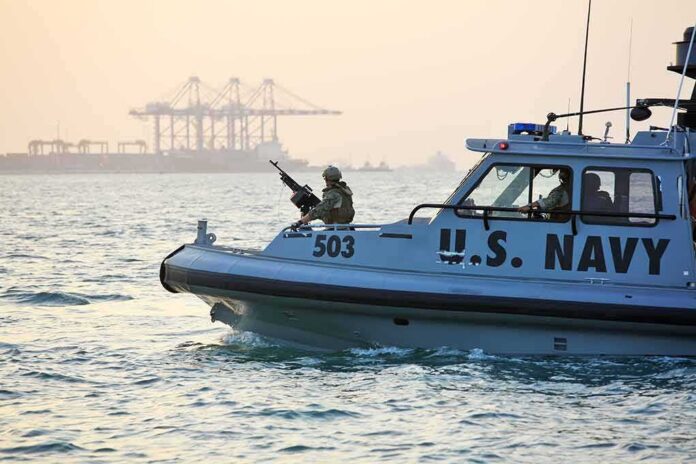
Armed Somali pirates are once again roaming key global shipping lanes, using a hijacked cargo ship as a floating base to hunt other vessels off the Horn of Africa.
Story Snapshot
- Somali pirates have turned a captured cargo ship into a “mothership” to launch new attacks in the Indian Ocean.
- Several tankers and cargo vessels have been hijacked since April, marking a clear resurgence in Somali piracy.
- Security experts link the new wave of attacks to Middle East conflicts, weak patrols, and long‑ignored instability on shore.
- The trend exposes how global elites let vital trade routes drift back into chaos while ordinary people bear the costs.
Pirates Turn Captured Cargo Ship into a Mobile Attack Base
Intelligence sources say Somali pirates seized the general cargo ship MV Sward on April 26 near the Somali coast and then began using it as a mobile base to stage new attacks. The ship, flying the flag of Saint Kitts and Nevis, was taken with its crew of 15 Syrians and two Indians on board. Pirates reportedly launched skiffs from the hijacked vessel to capture at least two Iranian fishing boats on July 16, treating the cargo ship as a “mothership” for raids. This tactic mirrors methods used during the 2008–2011 piracy peak, when pirates used larger captured vessels to operate far from shore and overwhelm weaker security at sea.
The use of a mothership shows planning and organization, not just one‑off robbery. Pirates can stay at sea longer, move into busy shipping lanes, and pick targets that matter to global trade. Reports say the MV Sward operated off Garacad and other coastal towns in Somalia’s Puntland region, an area with limited state control and high youth unemployment. This suggests the same mix of lawlessness, poverty, and absent government that fueled past piracy is again turning armed gangs into small sea armies. While rich countries rely on this sea route for oil, gas, and goods, local communities still see few legal options for work.
Cluster of Hijackings Signals a Real Piracy Comeback
Recent attacks around Somalia and Yemen show this is not an isolated case but part of a broader pattern. A threat circular from maritime‑security firm Ambrey reports three hijackings since April 21, including the Palau‑flagged oil tanker Honour 25 and the Saint Kitts and Nevis‑flagged MV Sward, plus another merchant vessel that came under attack. The French navy’s Mica Center has logged at least 18 piracy incidents and hijackings in the region since April, with at least three vessels still held for ransom. Deutsche Welle likewise notes that three ships — Honour 25, Eureka, and Sward — remained under pirate control within three weeks, calling it a “notable resurgence in piracy.”
Detailed reports describe how pirates seized the Honour 25 tanker about 30 nautical miles off the Somali coast before anchoring it near Puntland between coastal communities like Xaafun and Bander Beyla. The Eureka tanker was hijacked off Yemen and steered toward Somalia, while another report says pirates used a hijacked Emirati dhow, Fahad‑4, in an attempted attack on the tanker Minerva Pisces. Together, these cases show pirates are again holding ships for ransom and experimenting with launch platforms, from dhows to larger cargo vessels. European Union naval forces and the United Kingdom Maritime Trade Operations center have treated the incidents as confirmed hijacks, warning ships to transit with caution and noting the increased risk near Mogadishu and Garacad.
Global Crises, Weakened Patrols, and Neglected Governance Fuel the Threat
Analysts link the new Somali piracy wave to wider turmoil that global leaders have not contained. The Telegraph reports that regional intelligence sources believe pirates are “fuelled by Iran war,” taking advantage of naval attention locked on missile and drone threats in the Red Sea and Persian Gulf instead of Somalia’s coast. El País likewise notes that Houthi attacks in Yemen forced many shipping companies to reroute around Africa, pushing more vulnerable ships past Somalia and increasing targets for pirates. With more traffic and fewer patrols, the math shifts in favor of criminal gangs.
Research on piracy off Somalia shows this pattern is not new. When international forces reduce their presence and local governance stays weak, pirates test the waters again, often using old tactics such as mother ships to extend reach. Experts at the Institute for Security Studies say Somali pirate activity in late 2025 was already the most serious cluster of incidents since mid‑2024, warning that only real cooperation between navies and coastal states can keep the problem from growing. Yet Somalia remains deeply unstable, and global attention swings from crisis to crisis, leaving ordinary sailors, traders, and coastal villagers exposed while elites debate strategy in distant capitals.
Why This Matters for Ordinary Americans and the Global Economy
Somali piracy directly threatens major trade routes that carry oil, fuel, and goods to the United States, Europe, and Asia. Past waves of attacks forced ships to sail longer routes or pay higher insurance costs, which fed into higher prices at the pump and at the store. Today, similar pressure on shipping — on top of inflation, energy shocks, and wars — can make life even harder for families already squeezed by rising costs. Yet this renewed danger has appeared while Western and regional governments spend billions on overseas conflicts and bureaucracies, but struggle to keep core sea lanes safe and stable.
Somali Pirates Are Back, Using a Hijacked Cargo Tanker as a 'Mothership' to Attack Other Vessels off the Horn of Africa https://t.co/WwbvP0f7Ic #gatewaypundit via @gatewaypundit
— Mary Louise (@MaryLou77130934) July 27, 2026
For many conservatives and liberals alike, the story fits a deeper worry: global and national elites protect their own interests while letting basic systems break down. Long‑standing problems in Somalia — corrupt politics, poor local policing, and lack of real economic development — never got solved, even as foreign powers used the region for their own security games. Now armed gangs are again holding ships and crews hostage, using a hijacked cargo vessel as a mothership, and shaking a key artery of world trade. Ordinary workers, small business owners, and coastal communities pay the price in unstable markets, higher costs, and growing danger, while the so‑called “deep state” struggles to show it can still do the simple job of keeping the sea routes open and secure.
Sources:
thegatewaypundit.com, aljazeera.com, bbc.com, usnews.com, latimes.com, youtube.com, instagram.com, arise.tv, facebook.com, en.wikipedia.org, independent.co.uk, abcnews.go.com, safety4sea.com
© unitedfrontnews.com 2026. All rights reserved.

![🇺🇸 Charlie Kirk Memorial by Turning Point USA at Utah Valley University [LIVE]](https://unitedfrontnews.com/wp-content/uploads/sites/16/2026/09/maxresdefault-10-100x70.jpg "Conservative Legacy Takes Center Stage")