
Markets cooled after Washington said the United States and China would stretch their fragile trade truce only two more months, to January 10.
Story Snapshot
- The United States and China extended their trade truce to January 10, according to Treasury Secretary Scott Bessent.
- The move keeps current tariff and export-control pauses in place while talks continue, not a broad new deal.
- Bessent linked the extension to talks with Chinese Vice Premier He Lifeng, ahead of the Trump–Xi summit.
- Analysts called the short extension tactical and narrower than many expected.
What Washington Announced And What It Means
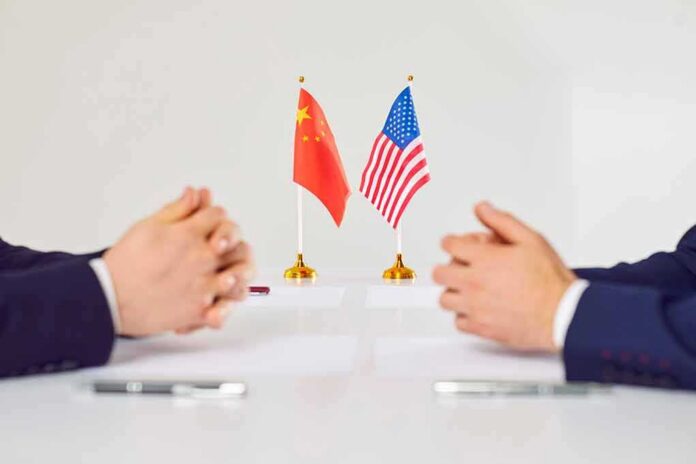
U.S. Treasury Secretary Scott Bessent said the United States and China agreed to extend their trade truce by two months, pushing the deadline to January 10. He made the statement in a Fox News interview, and major outlets reported the same timeline. The extension keeps the current pause on new tariffs and some export controls while negotiators keep talking. It does not create a wider settlement or end the disputes that sparked the trade war in the first place.
Bessent tied the extension to his talks with Chinese Vice Premier He Lifeng earlier in the week. He framed the step as a way to buy time on the economic front before and around the meetings between President Trump and China’s leader, Xi Jinping. Bloomberg reported that the two-month window preserves the “Busan Agreement” framework while both sides test paths to a larger trade accommodation without adding fresh economic pain now.
Why The Extension Is Short And Tactical
Analysts quoted by Bloomberg said the two-month move was shorter than expected and aimed at keeping pressure on both sides to keep working. It delays hard choices on tariffs, export controls, and access to key materials such as rare earths. This kind of short pause fits a pattern in U.S.–China trade fights over the last several years. Leaders have often used temporary truces to prevent sudden shocks while they explore bigger deals that remain hard to close.
The pattern has repeated since the first rounds of tariffs, including a 2018 Group of Twenty pause and later extensions. These truces lower near-term risk but leave core disputes in place. Each government can claim it avoided immediate damage while holding leverage for later. That dynamic helps explain why many of these pauses look thin. They manage tensions but do not settle disagreements over industrial policy, technology limits, or market access.
What Stays The Same For Now
The new end date means factories, farmers, and shippers get two more months under the current rules. No fresh tariff hikes are expected during this period under the existing détente. Companies can plan holiday shipments with a bit less fear of sudden policy shifts. But leaders in both parties, along with business groups, still face the same questions on costs, supply chains, and national security. The extension does not answer those questions. It only holds the line temporarily.
𝐁𝐄𝐒𝐒𝐄𝐍𝐓 𝐂𝐎𝐍𝐅𝐈𝐑𝐌𝐒 $𝟑𝟎 𝐁𝐈𝐋𝐋𝐈𝐎𝐍 𝐂𝐇𝐈𝐍𝐀 𝐓𝐀𝐑𝐈𝐅𝐅 𝐂𝐔𝐓—𝐅𝐎𝐔𝐑 𝐓𝐑𝐔𝐌𝐏-𝐗𝐈 𝐌𝐄𝐄𝐓𝐈𝐍𝐆𝐒 𝐀𝐋𝐑𝐄𝐀𝐃𝐘 𝐋𝐎𝐂𝐊𝐄𝐃 𝐈𝐍
Treasury Secretary Scott Bessent (@SecScottBessent) confirmed this weekend that China has agreed to remove $𝟑𝟎… pic.twitter.com/CF9bJF8glW
— M.A. Rothman (@MichaelARothman) September 28, 2026
For families and small firms, a short pause can feel like a shrug from the political class. People want stable prices, steady jobs, and clear rules. They watch leaders delay while bills rise and savings get squeezed. Supporters of tougher trade rules argue that pressure on China protects American industry and jobs. Critics argue that long fights and mixed signals raise costs and make it harder to plan. Both sides can agree that stopgaps are not a long-term fix.
What To Watch Before January 10
Watch for any formal readouts from the U.S. Treasury, the White House, or China’s Ministry of Commerce that spell out the terms of the pause. Look for signs of progress on sensitive areas like technology exports, data rules, agricultural purchases, and rare earths. Markets will also track whether negotiators set milestones instead of another last-minute delay. If talks stall, pressure could return fast, and with it the risk of new tariffs or tighter controls after the deadline.
Sources:
tradingview.com, cnbc.com, reuters.com, bloomberg.com
© unitedfrontnews.com 2026. All rights reserved.