

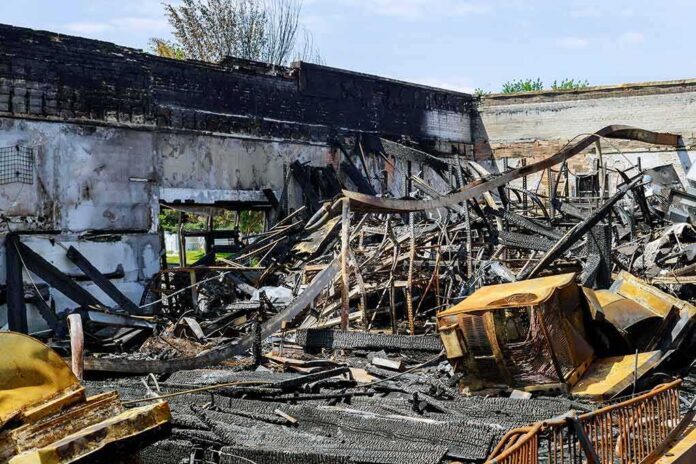
Russian drones struck a McDonald’s-linked food warehouse near Kyiv twice in one day, torching the storage area and testing a city’s supply lines.
Story Snapshot
- McDonald’s confirmed a logistics partner’s warehouse in Kyiv region was hit; no injuries reported.
- Ukrainian officials said the civilian food site in Brovary district was struck twice, with a fire after the second hit.
- President Volodymyr Zelenskyy and Reuters reported a McDonald’s-used warehouse was among Friday’s targets.
- The attack fits a wider pattern of strikes on civilian logistics aimed at daily life and the economy.
What Happened in the Kyiv Region
McDonald’s Ukraine said a warehouse used by its logistics partner in the Kyiv region was struck by Russian drones on September 25. The company said the most important fact was that no one was hurt. Regional officials identified the site as a civilian food warehouse with refrigerated storage in the Brovary district. They said drones hit the location twice, first before dawn and again during the day, with a fire breaking out after the second strike.
President Volodymyr Zelenskyy said a warehouse used by McDonald’s was among the facilities hit that day. Reuters reported his remarks and noted the attack came during a broader drone barrage on the capital area. That same wave included a deadly strike in central Kyiv that killed a child and injured others, underscoring the scale of the operation around the city on Friday. These facts place the warehouse hit inside a confirmed, wider assault.
Damage, Supply Impact, and What We Do Not Know
Local reports said the section of the warehouse used to store food burned after the second hit and suffered heavy damage. Some accounts described the storage area as completely destroyed, but a formal engineering assessment was not published in the sources provided. McDonald’s did not name the logistics partner or the warehouse owner. That gap leaves the exact corporate details unclear, though the basic link to McDonald’s supply chain is confirmed by the company’s statement.
No injuries were reported at the warehouse, which matters in a crowded region under regular alarms. Still, a fire at a refrigerated site can ripple through daily life. Food storage losses can disrupt stocking, raise prices, and strain delivery routes. Kyiv and nearby cities have faced repeated hits on logistics sites since 2024, with grocers, parcel hubs, and fuel depots all targeted in cycles that push costs onto families and small shops trying to stay open.
Why Civilian Logistics Are Being Targeted
Security analysts and public reports describe a shift in Russia’s war approach. Strikes do not only hit front lines. They often hit logistics, energy, and storage across Ukraine’s cities and regions. The goal is to raise economic pain, slow services, and pressure leaders by making daily life harder and costlier. Research from the Center for Strategic and International Studies details the focus on urban and industrial areas since 2023, including ports and distribution hubs.
Independent monitors have tracked this pattern over time. They report increases in attacks on civilian sites, including warehouses and transport links, since 2025. That makes a hit on a well-known brand’s supply node both symbolic and practical. It sends a message while also choking a food network many people use each week. It is one more sign that modern war often targets the places that keep the lights on and the shelves stocked, not just bases or depots far from towns.
What This Means for Consumers and Businesses
Consumers in and around Kyiv may see short-term menu gaps, slower restocking, or higher prices if supply routes need workarounds. McDonald’s has experience rerouting goods during past strikes and may adjust quickly. But every detour adds cost and time. For local carriers, fires at cold storage sites mean lost inventory, new rental needs, and insurance strain. For small businesses nearby, repair crews and safety checks can delay normal operations and cut into already thin margins.
The Bigger American Takeaway
Americans should see this as a warning about how fragile supply chains can be in a crisis. A single warehouse can feed dozens of restaurants and jobs. When it burns, people far from the front still feel it in their wallets. Voters across the spectrum worry that leaders ignore real-world basics like food, fuel, power, and safe roads. This strike shows how fast those basics can be shaken when critical links are unprotected or targeted in a sustained campaign.
Sources:
twitchy.com, kyivpost.com, en.interfax.com.ua, ground.news, csis.org, press.un.org
© unitedfrontnews.com 2026. All rights reserved.