

Federal prosecutors built a presidential-threat case around an Instagram photo of seashells, then consulted a former mob underboss to parse its meaning — a striking snapshot of how power now polices online speech.
Story Highlights
- Justice Department charged James Comey over an “86 47” Instagram image as a threat to President Trump.
- Investigators interviewed mob figure Salvatore “Sammy the Bull” Gravano about the number “86”.
- Comey denied violent intent, said he saw a political message and deleted the post.
- The case tests the line between “true threats” and protected political speech under Supreme Court rules.
What Prosecutors Say the Seashells Meant
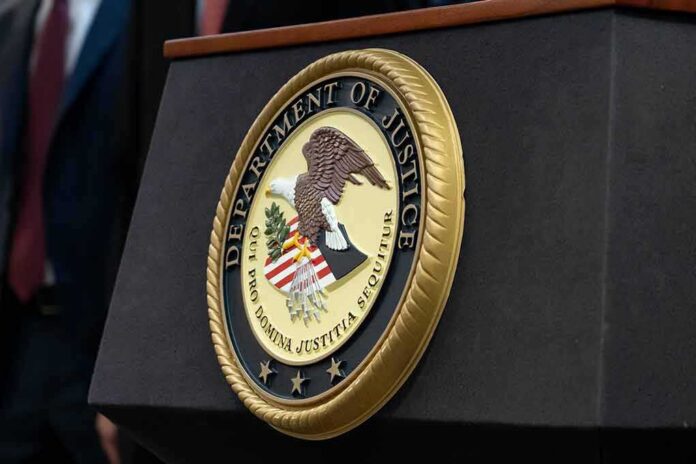
The Justice Department announced that a federal grand jury indicted former Federal Bureau of Investigation (FBI) Director James Comey for posting an image of seashells reading “86 47,” which prosecutors say a reasonable person would read as a serious intent to harm President Trump. The image appeared on Instagram in May 2025. The number “47” refers to Trump as the forty-seventh president. Prosecutors argue “86” is slang for eliminate. The charges allege Comey knowingly issued a true threat online.
Prosecutors framed the post as a criminal threat to the president’s life under federal law, emphasizing how ordinary readers could interpret the numbers as violent. The indictment centers on intent and perception at the time of posting. The government’s theory turns on whether the post crossed the First Amendment line into a “true threat.” That standard punishes serious expressions of planned violence. It does not require plans to carry it out, only the communicated threat itself.
How Investigators Reached for an Unusual Expert
Federal investigators did something uncommon. They contacted Salvatore “Sammy the Bull” Gravano, the former Gambino underboss, to ask about the meaning of “86” in criminal circles. Court filings and news reports say agents sought his view on whether the post signaled violence. The outreach shows how far officials went to build proof of intent. It also fed public concern that elite cases get treated with special tools that ordinary people would never see.
Accounts of Gravano’s input vary across filings and reports. One filing described him saying Comey “had to know” what “86” meant, pointing to law enforcement awareness of the term. Other reporting said Gravano suggested real mobsters would avoid such obvious code, and that he did not view the shells as a personal threat to Trump. These differences underscore how slippery context and slang can be when law meets online speech.
Comey’s Response and the Free Speech Line
Comey publicly denied any violent intent. He wrote that he saw shells on a beach walk and assumed they formed a political message. He added that he did not realize some people link the numbers to violence and said he opposes violence of any kind. He then deleted the post. His team also noted that “86” is widely used in restaurants to mean an item is out, showing the term’s nonviolent uses in daily life.
Federal Judge Delays Comey’s Trial for Threatening Trump Until Early 2027 | Matt Margolis, PJ Media
A federal judge has postponed disgraced former FBI Director James Comey’s trial on charges of threatening the life of President Donald Trump until early 2027, granting the defense… pic.twitter.com/LC56aZghN9
— Owen Gregorian (@OwenGregorian) September 28, 2026
The Supreme Court’s modern cases set the stakes. In Counterman v. Colorado, the Court said true threats can be punished, but intent matters in online speech cases. In Watts v. United States, the Court treated a crude remark about a president as political hyperbole based on context, not a literal threat. The Comey case will force a court to decide whether a reasonable person, knowing the background, would read “86 47” as violence — and what Comey meant when he posted it.
Why This Case Hits Nerves Across the Spectrum
Many Americans see this as proof that powerful insiders play by different rules. Supporters of President Trump say the image crossed a bright red line and demanded action. Critics warn that aggressive prosecutions of ambiguous posts can chill political speech and hand more power to the government to police meaning. Both sides worry that elites inside justice agencies bend tools to fit politics, not principle — and that the public pays the price when trust erodes.
What to Watch Next
Watch three things. First, how the court defines a “reasonable reader” for a coded image online. Second, whether evidence of Comey’s intent, including his quick deletion and public denial, sways a jury. Third, how the government’s reliance on a former mob underboss lands with judges who value clear, reliable proof of state of mind. The outcome will guide how future cases treat symbols, numbers, and memes as potential threats.
Sources:
abcnews.com, politico.com, silive.com, cnbc.com, techtimes.com, washingtonexaminer.com, cbc.ca, newsobserver.com, nbcnews.com
© unitedfrontnews.com 2026. All rights reserved.