
President Trump flew into Kansas for a rare late-campaign rally in a Senate race that both parties now treat as genuinely competitive.
Story Snapshot
- Trump urged Kansans to “pretend” he is on the ballot while backing Sen. Roger Marshall.
- Reports described the race as tight, prompting a presidential visit in a usually safe Republican state.
- The rally drew both overflow crowds and loud protesters, fueling dueling narratives.
- Democrat Adam Hamilton welcomed Trump’s visit and cast himself as willing to work with anyone.
Why Trump Went To Kansas Now
Reporters in Kansas and Washington said the Senate race tightened enough to warrant a presidential stop. President Trump told supporters he wanted to make sure Roger Marshall won, and he framed the contest as close. CNN described the race as unexpectedly tight for Kansas, a state that rarely sees close Senate contests. That context helps explain the timing: high stakes, a narrow margin, and a chance to rally loyal voters late in the cycle.
Senator Marshall and Kansas Republicans cast the visit as a turnout push. They argued that Trump’s voters are essential and that some Kansans engage only when Trump is on the ballot. By bringing Trump in, the campaign aimed to turn national attention into local energy. In that frame, the rally was less about persuasion and more about making sure core voters show up in a midterm environment that can depress participation.
How The Rally Played: Cheers, Hecklers, And A Clear Message
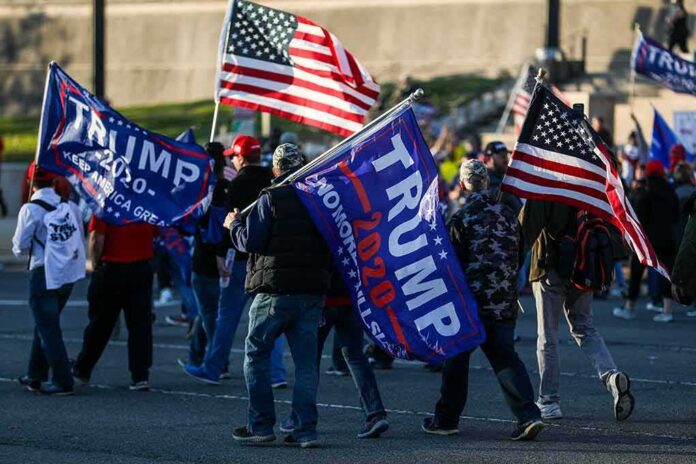
Coverage showed two pictures at once: overflow crowds and sharp heckling. Local outlets highlighted large, enthusiastic attendance. At the same time, Mediaite and others noted repeated interruptions and a striking shout of crude opposition. Those images fed rival claims about momentum and backlash. Trump also told voters to “pretend” he is on the ballot, which put his own brand front and center in a state fight and aimed to boost intensity among his base.
Democrat Adam Hamilton welcomed Trump’s arrival. He said he would work with anyone to improve life for Kansans and that Trump voters have a place in his campaign. That answer tried to flip the script. Rather than attack the visit, Hamilton presented himself as pragmatic and open to cooperation. The move also let him imply that Marshall needed Trump to close the deal, while Hamilton would try to broaden his own coalition.
What We Know—and What We Do Not
Reports cited multiple polls showing a close race, and at times a small Hamilton edge. But those accounts did not include full poll details like sample size or margin of error. There is no reliable before-and-after series proving the rally changed support. The evidence shows a tight contest, a presidential intervention, visible pushback, and large crowds. It does not show that Trump’s visit helped or hurt Marshall’s vote share in a measurable way.
President Trump touches down in Kansas for a midterm campaign rally with Election Day just weeks away.
Trump is set to take the stage at Heartland Credit Union Arena in Wichita, addressing supporters as the November elections draw closer.
pic.twitter.com/yDPmKYxY41— Maria Bartiromo RV Q 🇺🇸 (@MariaBartiRQ) October 20, 2026
Research on rallies offers a caution. A National Bureau of Economic Research study found Trump events boosted support for Trump himself for a short time and raised turnout intent among strong Republicans, but did not show consistent gains for other candidates. In practice, that means a rally can fire up loyalists and still leave down-ballot effects unclear. That fits Kansas: the event likely raised energy, but the net ballot impact remains uncertain.
Why This Matters Beyond Kansas
This fight shows how national politics can swallow local races. When a sitting president asks voters to act as if he is on the ballot, the contest turns into a wider referendum. That can energize some and alienate others. Voters on both right and left see familiar patterns: big personalities, sharp labels, and little attention to the hard fixes on cost of living, health bills, and farm inputs. People want results, not theater—and they will judge both parties on that.
What To Watch Next
Watch for any late, high-quality polling that releases full methods. Look for changes in early-vote pace in Republican-leaning areas that mirror rally locations. Track whether news coverage shifts from Marshall’s record to Trump’s themes, or back to Kansas issues like farm costs and medical debt. Finally, note whether Hamilton’s “welcome” message draws any cross-party endorsements. These signs will tell us if the visit moved votes or mainly stirred the faithful.
Sources:
mediaite.com, kansas.com, kmbc.com, kmuw.org, edition.cnn.com, kshb.com
© unitedfrontnews.com 2026. All rights reserved.