

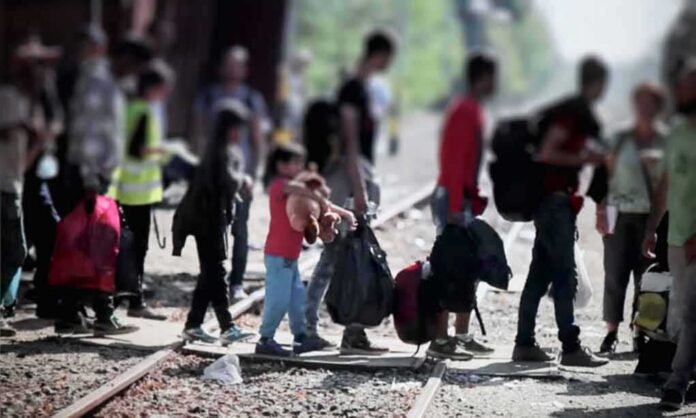
A new migrant caravan of several hundred people is moving north through Mexico, with participants saying they aim for the United States and hope to find safety, work, and family reunions along the way.
Story Snapshot
- Several hundred migrants left Tapachula and are moving north through Mexico toward the United States.
- Reports describe mixed groups of men, women, children, and older adults traveling together.
- Participants cite economic need, safety, and family ties in the United States as main reasons for moving.
- Some migrants reportedly voiced hopes that Democrats would win the midterm elections.
Documented Movement From Southern Mexico
Local outlets in Chiapas reported that around 500 people departed Tapachula on October 20, 2026. The group included men, women, children, adolescents, and older adults. The caravan moved along roads used by past groups. Some participants aimed first for central Mexico to rest and organize. Others said they planned to keep heading north. The movement followed weeks of smaller gatherings and planning in city parks and shelters in and around Tapachula.
Separate coverage described another contingent, labeled “Sin Fronteras,” that formed in Tapachula in mid-October. Organizers and participants said they intended to travel north through Mexico and seek a path to reach the United States. Reports estimated this group at roughly 400 people at the outset. Counts changed as people joined or paused along the route. The aim, as stated by participants, was forward movement despite checkpoints and long distances.
Stated Destinations and Reasons for Leaving
Reporting consistently listed the United States as the destination many travelers had in mind. Participants described leaving due to low wages, poor conditions, and a lack of safety where they came from. Some said they sought to reunite with relatives already living in the United States. Others mentioned prior deportations but wanted another chance to find work and stability. These personal reasons matched patterns seen in earlier caravans across Mexico in recent years.
Local coverage also pointed to aid and brief rest stops in public spaces. In Tapachula’s Bicentennial Park, civil society groups and health workers offered food, water, basic medical care, and hygiene items. Those services aimed to help families and older adults who faced heat and injury after days of walking. The reports did not show aid groups organizing the caravan’s direction or transport. They focused on meeting basic needs during a risky journey.
Route, Labels, and Headcount Variations
Accounts tracked a route that echoed prior caravans. One identified group, the “Fe y Esperanza” caravan, reportedly left San Pedro Sula, Honduras, on September 20. It entered Mexico four days later at the Rodolfo Robles International Bridge and continued toward Tapachula. From there, travelers moved north in stages. City-by-city estimates varied from around 300 to 500 and sometimes over 600 as people joined or split off. Such swings are common in fluid, open-air movements.
Reports used different labels, including “Fe y Esperanza,” “Sin Fronteras,” and similar names. The coverage did not settle whether these were the same stream of travelers at different times or separate groups moving on parallel tracks. The timing and locations overlapped in southern Mexico. That made it hard to match each count to one fixed roster. The shared features were the northbound direction, mixed family makeup, and a goal of safer, more stable lives.
Election Talk and Why It Matters
One outlet reported that some Central American migrants told journalist Julio Rosas they hoped Democrats would win the midterm elections. The report did not name the speakers or show how many people felt that way. Still, it captured a political view voiced on the road. That comment landed in a tense moment in the United States, where migration policy remains a top issue and trust in federal action is low across party lines.
Academic work shows caravans rise and fall with many forces. These include safety concerns, media attention, policy signals, and the cost of moving alone. One study counted at least 30 caravan waves between 2017 and 2022. These patterns suggest migrants respond to both “push” pressures at home and “pull” perceptions about policy in Mexico and the United States. That helps explain why groups form, change size, and keep moving despite long odds.
What This Signals for Policy and Public Trust
President Trump and Congress face pressure to balance border control, labor needs, and humanitarian rules. Many conservatives see caravans as a sign that past policies failed to secure the border and raised costs for communities. Many liberals see the same images and argue the system fails families and workers fleeing danger. Both sides point to a larger problem: a federal system that struggles to enforce clear rules while also setting fair, workable paths for legal entry.
Sources:
thegatewaypundit.com, chiapas.quadratin.com.mx, diariodechiapas.com, elorbe.com, elcongresista.mx, cuartopoder.mx, yournews.com
© unitedfrontnews.com 2026. All rights reserved.