
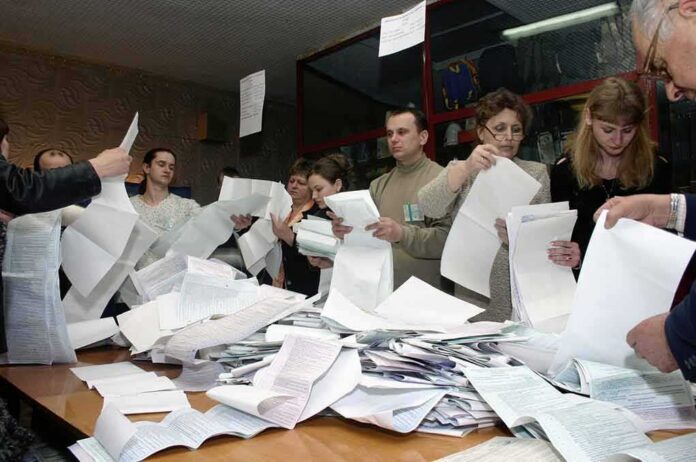
Federal lawyers asked a court to set aside thousands of Los Angeles County mail ballots flagged as “likely” noncitizen, and county officials said they have no independent way to verify citizenship before counting them.
Story Snapshot
- Justice Department delivered a list of more than 20,000 suspected noncitizens and sought to hold their ballots.
- Los Angeles County declined to process the password-protected thumb drive, citing security and evidence gaps.
- Federal agents charged 28 people in separate voting cases, showing the risk exists but not its scale.
- California officials said unverified data cannot block ballots, and past big estimates lacked support.
What Federal Officials Asked Los Angeles County To Do
The Department of Justice (DOJ) sued California and Los Angeles County on October 15, 2026. DOJ said federal records identified more than 20,000 registered voters as likely noncitizens. DOJ asked a judge to require election workers to set aside, not cancel, any mail ballots linked to those names until citizenship could be checked. DOJ had delivered a password-protected thumb drive with names, birth dates, and addresses two days earlier.
Acting Deputy Attorney General Trent McCotter framed the ask as a temporary safeguard rather than a purge. The request aimed to keep flagged ballots from being counted before status checks. DOJ argued that county officials lack a fast, independent way to verify citizenship if a registration is based only on a sworn checkbox. The lawsuit pressed for either independent verification or cooperation with federal records before tallying those votes.
How Los Angeles And California Officials Responded
Los Angeles County Registrar-Recorder Dean Logan said the DOJ list referenced people statewide, not just in Los Angeles County. He said DOJ did not supply the sources, methods, or evidence behind each flag. He added that ballots cannot be withheld based on unverified assertions and that any removal must rely on verifiable information. These limits shaped the county’s refusal to open or process the thumb drive as delivered.
California Secretary of State Shirley Weber called a prior claim of about 190,000 noncitizens on state rolls unsubstantiated. She said state law already restricts registration to United States citizens and requires removing ineligible registrants when confirmed. She and other officials warned that moving on unverified matches could expose lawful voters to harm and suppress turnout through fear or confusion near the election.
Criminal Cases Show Risk Exists, But Not Its Size
Federal prosecutors separately announced charges against 28 people accused of unlawful registration, false citizenship claims, or illegal voting. The set included a Belizean green card holder alleged to have registered and voted in multiple elections. These cases show that improper registration and voting can occur. They do not, by themselves, prove that thousands of flagged voters are noncitizens or that enough illegal votes exist to change outcomes.
Los Angeles County's registrar just told a federal court the county has nothing beyond a voter's own word to prove citizenship.
California Admits in Federal Court: We Have No Way to Verify Voter Citizenship Beyond What the Voter Claimshttps://t.co/kY6BkfhZwF#ElectionIntegrity…
— Profilo politics (@profilopolitics) October 21, 2026
Past reviews of alleged noncitizen voting found that large database matches often include many mistakes. Errors can come from old records, name collisions, or people who later became citizens. Experts warn that even a small error rate can look large when you scan millions of records. That is why officials on both sides often urge careful, person-by-person checks before changing voter status or setting aside ballots.
Why This Fight Hits A Shared Nerve
Voters across the spectrum see a system that fails basic tests: prove who can vote and count every lawful vote on time. DOJ says Los Angeles County cannot quickly confirm citizenship beyond a checkbox, which raises trust concerns for many Americans. County leaders say they cannot stop ballots on a secret list without proof, which raises civil rights and accuracy concerns. Both sides point to real risks—illegal votes and wrongful disenfranchisement—and the law must guard against both.
What Would Reduce Doubt Right Now
Courts can order a narrow, auditable process: securely compare the flagged names to current federal and state records; document each result; and segregate only those ballots still unresolved after a fast check. Officials should publish anonymized counts by category—confirmed citizen, confirmed noncitizen, naturalized since last update, mismatch, unresolved—so the public sees the error rate and scope. That approach respects voting rights while protecting the count from clear, verifiable ineligibility.
Sources:
twitchy.com, usatoday.com, edition.cnn.com, dailynews.com, latimes.com, ctpublic.org, hawaiitribune-herald.com
© unitedfrontnews.com 2026. All rights reserved.