

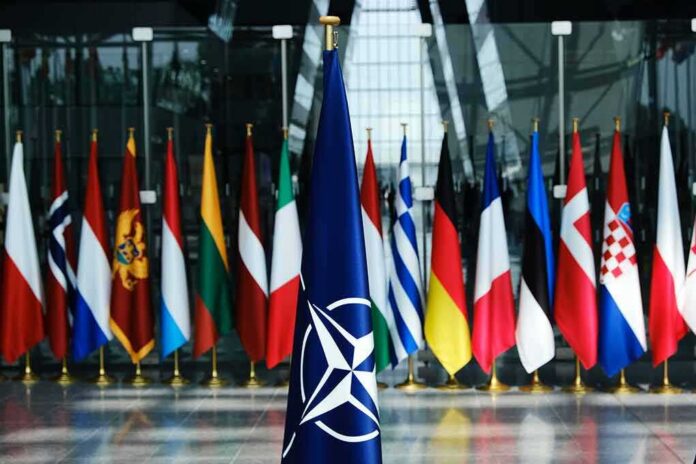
Germany’s defense chief publicly blasted a U.S. warning to Ukraine as “quite a stupid thing,” exposing a sharp split inside NATO over how to end the war.
Story Highlights
- German Defense Minister Boris Pistorius rejected U.S. criticism of Ukrainian strikes inside Russia.
- U.S. policy chief Elbridge Colby argued deep strikes have not helped end the war or blunt Russia’s advance.
- NATO’s leader tied continued support to Ukraine’s strength at the negotiating table.
- The public clash shows allies agree on goals but diverge on risk, tactics, and leverage.
What sparked the rift at the NATO Ukraine meeting
On November 17, top officials met in Brussels for the Ukraine Defense Contact Group. German Defense Minister Boris Pistorius pushed back on the American line that criticized Ukrainian deep strikes in Russia. He said, “Criticizing strikes like that in Russia to destroy strategic military targets is quite a stupid thing,” and urged focus on Russia’s nightly attacks on Ukraine instead. The meeting included NATO leadership, senior U.S. defense officials, and Ukraine’s team, underscoring the stakes of the exchange.
NATO Secretary General Mark Rutte framed the alliance goal in practical terms. He said Western support should keep Ukraine strong enough to defend itself and to negotiate from a position of strength as a sovereign, viable state. He cited U.S. deliveries of Patriot air defenses and air-to-air missiles as key to holding the line and protecting skies. His remarks reinforced funding through NATO mechanisms and steady backing while diplomacy advances.
What the United States says about deep strikes
U.S. Under Secretary of Defense for Policy Elbridge Colby told allies that deep strikes inside Russia have not ended the war or slowed Russian gains. He argued that Ukraine is most effective on the front lines and with mid-range hits on supply lines. He warned that some deep attacks, especially those seen as hitting civilian infrastructure, could harden Russian resolve and raise escalation risks. He stressed this was not about tying Ukraine’s hands.
American officials also said support should aim at what works fastest on the battlefield. That means more tools to blunt Russia at the front and strike logistics that feed the fight. The message tried to draw a line between hits on Russia’s war machine that slow advances and other deep attacks that may backfire. U.S. framing fits a pattern of managing risk while keeping aid flowing and shaping talks.
Why Germany pushed back so hard
Pistorius’s rebuke signaled Berlin’s view that Ukraine must hit strategic military targets wherever they are if it helps stop attacks on civilians. He argued that scolding Kyiv for those strikes misplaces blame when Russia launches repeated attacks on Ukrainian cities and infrastructure. Germany’s stance aligns with allies who believe more pressure increases leverage at the table, echoing NATO’s claim that support strengthens Ukraine’s negotiating position. Still, the quote’s heat risks overshadowing the policy debate.
The clash also reflects a deeper alliance pattern. Democracies often agree on the aggressor but split on risk tolerance, target choices, and how force shapes talks. Geography, domestic politics, and public opinion pull leaders in different directions. These factors explain why allies can share goals yet argue over tactics like deep strikes, weapon rules, and escalation. This debate fits that mold more than a true break in unity.
What this means for U.S. politics and public trust
The dispute lands as Washington says only a negotiated peace can end the killing. That aim resonates with Americans tired of open-ended wars and mixed messages. Many on the right and left doubt the “experts” who shift red lines without clear results. When a close ally calls U.S. guidance “stupid,” it feeds a wider belief that the system is adrift and that elites are not solving real problems or speaking plainly about costs and risks.
On 17 November, the 37th meeting of the Ukraine Defence Contact Group was held in Brussels in the Ramstein format. The meeting was opened by the UK Defence Secretary, Wes Streeting, after which Volodymyr Zelenskyy took the floor.
The President began by addressing air defence:… pic.twitter.com/QVHPLvY0NC
— Denys Shtilierman (@DenShtilierman) November 18, 2026
Yet core facts remain. NATO leaders still back Ukraine’s defense. The United States still supplies key air defenses that protect cities and troops. Germany still funds and arms Ukraine while demanding freedom to hit military targets across the border. The open question is not unity on ends, but how best to get there. The evidence shared so far does not settle whether deep strikes help or hurt leverage, leaving a policy call under uncertainty.
What to watch next
Watch for whether partners narrow differences in written guidance on targets and weapons rules. Look for new funding decisions tied to air defense, artillery, and drones that affect front lines fast. Track whether Ukraine adjusts tactics to emphasize supply lines and air defense duels, or keeps pushing strategic sites inside Russia. Finally, note if public spats quiet down as talks progress, or if more leaders go on record, which could harden positions and test alliance discipline.
Sources:
redstate.com, nato.int, apnews.com, latimes.com
© unitedfrontnews.com 2026. All rights reserved.