

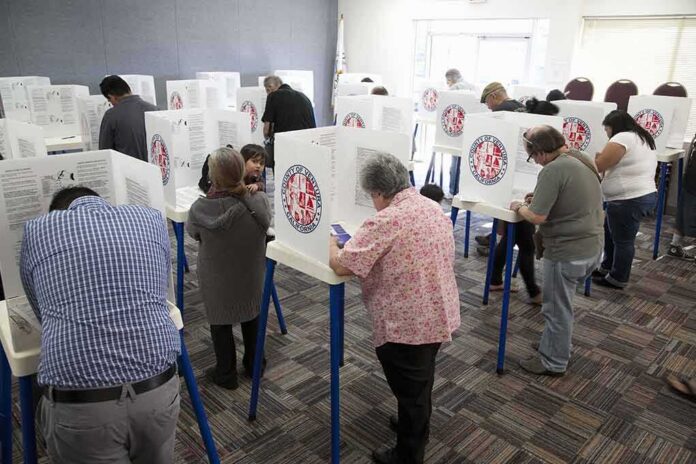
A small, low-turnout slice of young white men is shaping big talk in politics, but the numbers show older, steadier voters still decide most elections.
Story Snapshot
- Under-30 citizens were 20% of eligible voters but only 15% of 2024 voters.
- Voters ages 30-64 made a much larger share of the electorate in 2024.
- White and older voters kept higher turnout patterns in 2024.
- Young white men leaned Republican, but the group is small in vote share.
What the data says about who actually votes
Pew Research Center’s validated-voter analysis found that citizens under 30 made up 15% of voters in 2024, even though they were 20% of the eligible population. Older Americans continued to turn out at higher rates, a pattern seen in past elections as well. This turnout gap means any plan that leans hard on the youngest voters must overcome a participation hurdle first, before winning arguments on issues or candidates can even matter at the ballot box.
Pew’s 2024 eligible-voter profile shows the middle spans of the electorate are larger than the under-30 group. Americans ages 30-49 made up 32% of eligible voters, and those 50-64 were 23%. That size matters. Even small shifts among these groups can outweigh big margins in smaller, low-turnout blocs. Campaigns love headlines about youth surges, but they work with math on Election Day. The math starts with who shows up most often to vote.
The appeal to young men is real, but size limits impact
Some reporting shows white men under 30 backed President Trump by roughly six in ten in 2024. Other coverage put young white voters at 54% for Trump. Republican outreach leaders credit social media, podcasts, and talk about the economy for the movement. Those numbers explain why the party courts young men. But high support inside a small slice does not equal a large share of total votes cast nationwide.
The American Conservative argues the subgroup’s footprint is small. It says white men under 30 were about three percent of midterm voters, and even white men under 40 were under ten percent. The article contends that raising support within that small pool would not have flipped races shaped by bigger margins. The piece does not show the underlying crosstabs or method, so its exact estimate has limits, but its size logic matches the turnout math above.
Turnout patterns still favor older, reliable voters
Pew’s validated-voter report states that white voters and older voters typically turn out at higher rates than other groups, and that this continued in 2024. That does not mean youth outreach is useless. It means a winning plan must weigh certain trade-offs: spend on groups that vote often and can move a few points, and build long-term ties with groups that vote less now but could matter more later. Parties that ignore either side risk wasted effort or missed futures.
Why the GOP Keeps Betraying Young White Men
by Auron MacIntyre – – 11/19/26https://t.co/vYw01FrX7W
The GOP lost ground across the board in the midterm elections, but one of the most dramatic swings in support came from young men. In 2024, Donald Trump won against…— Matt Bracken (@Matt_Bracken48) November 20, 2026
Pew’s 2024 analysis also shows men under 50 were nearly split: 49% for Trump and 48% for Kamala Harris. That wider male-youth picture is more mixed than the narrower “young white men” slice. It shows why broad labels can mislead. A party can win a margin in one narrow subgroup and still lose ground with nearby voters. Real strategy needs precise data, not vibes. It also needs proof on what moves turnout, not just what boosts likes or views.
Why this matters to frustrated voters on both sides
Many Americans think the political class chases flashy trends and easy headlines. The youth-male storyline can feel like that. It grabs attention but may not help fix real problems like high costs, weak wages, or trust in elections. Voters want leaders to focus on results. That means investing where turnout is strong, persuading where minds are open, and telling the truth about limits. Spin does not lower energy bills or raise paychecks. Clear plans might.
What to watch heading into 2028
Watch for campaigns to publish concrete targets beyond social media impressions. Look for validated-voter shifts among the large 30-64 groups, since small swings there often decide outcomes. Track whether youth efforts move actual turnout, not just preference in polls. Finally, demand crosstabs that show age, race, and gender together with clear denominators. If the numbers hold, we will see it in who votes, not in who trends online.
Sources:
theamericanconservative.com, apnews.com, ap.org, pewresearch.org, circle.tufts.edu
© unitedfrontnews.com 2026. All rights reserved.