

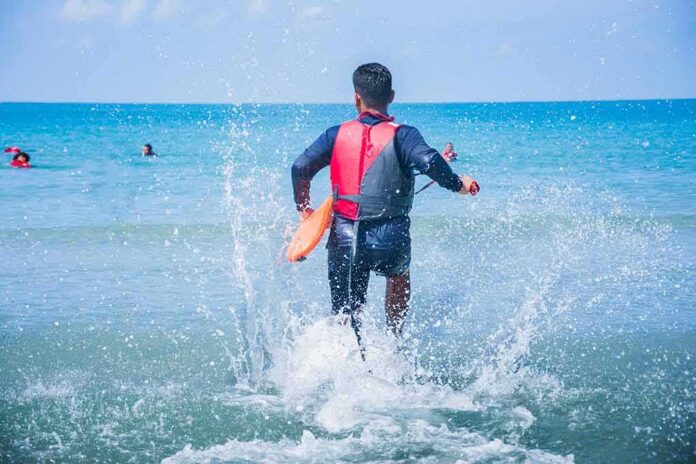
A San Clemente father of five is paralyzed from the neck down after rushing into rip-current surf to help a trapped child at Riviera Beach.
Story Snapshot
- Witness accounts identify 42-year-old Josh Collette as the injured rescuer at Riviera Beach on Aug. 15.
- Doctors told the family Collette is paralyzed from the neck down after a suspected neck fracture.
- The child escaped the rip current safely, while bystanders helped pull Collette from the water.
- Family fundraising says a long recovery lies ahead and asks for help with medical costs.
What Happened At Riviera Beach
On August 15, San Clemente resident Josh Collette entered the Pacific Ocean at Riviera Beach after a child became trapped in a rip current, according to contemporaneous reporting. The child was described as about seven years old. Collette collided with either rocks or a sandbar and feared he broke his neck. Medical staff later told the family he is paralyzed from the neck down. The child made it out safely, while others helped bring Collette to shore.
Local community coverage later confirmed a father of five suffered a spinal cord injury that Saturday and that the family is seeking support. The family’s posted message says the road ahead will be long. It highlights expected costs for hospital care, therapy, and daily support during recovery. That account aligns with the earlier reporting on the timing and severity of Collette’s injury and the need for sustained medical care.
Why Rip Currents Turn Rescues Dangerous
City marine-safety guidance warns that rip currents are a serious threat at San Clemente beaches. Officials urge swimmers to stay calm, float, and swim parallel to the shore to escape the pull. The guidance matches the scene described in reports from Riviera Beach. Many rip-current events involve bystanders trying to help. Those attempts can turn tragic when powerful surf meets hard hazards like rocks, shallow bars, and shore-break impact zones.
National research shows rip currents cause most rescues at surf beaches. A long-term analysis found they account for about 81.9 percent of rescues across United States coasts. The share stays high on the West Coast. These numbers explain why one emergency can escalate quickly, even for strong swimmers. They also explain why safety groups warn people not to rush in without help from trained lifeguards when possible.
Safety Lessons For Families And Communities
Beach experts share simple steps that save lives. First, choose guarded beaches when possible and swim near a lifeguard tower. Second, learn how to spot rip currents by looking for channels of churning, choppy water or a gap in breaking waves. Third, if caught, do not fight the current. Float to breathe, then swim parallel to the shore to break free. For bystanders, call for a lifeguard, throw a float, and avoid becoming the next victim.
JUST IN: California father Josh Collette, 42, was paralyzed from the neck down after diving into the ocean at Riviera Beach in San Clemente on Aug. 15 to rescue a child caught in a rip current, his sister said. pic.twitter.com/fhF1Rb8H4r
— JUST IN (@justinnews67) August 24, 2026
This case also shows how one rescue can leave a family facing long medical and financial strain. The family’s message describes months or years of therapy and specialized care. That burden often falls on local friends, faith groups, and donors, especially when insurance leaves gaps. Communities can prepare by boosting water-safety education, supporting lifeguard staffing, and making rescue gear like throw flotation more available at popular beaches.
Sources:
© unitedfrontnews.com 2026. All rights reserved.