
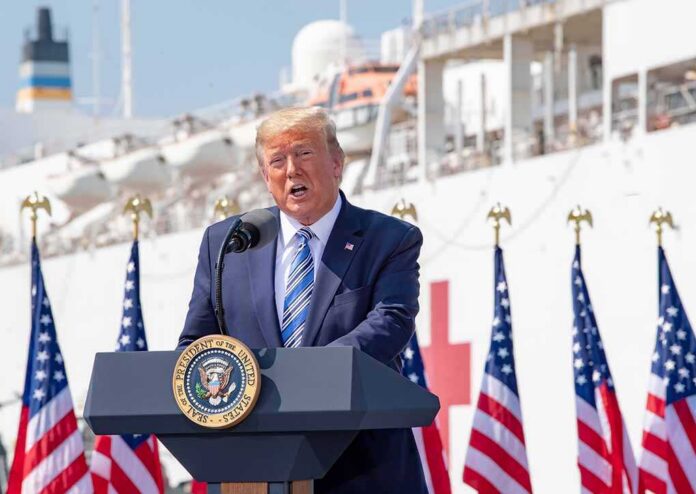
Facing bipartisan pushback over taxpayer-funded TV spots, President Trump said he will shift payment for the ads to his super political action committee, moving the cost off the public dime.
Story Highlights
- Trump said his super political action committee will fund the controversial TV ads going forward.
- The White House has called the ads public service announcements, not campaign spots.
- Lawmakers in both parties questioned using federal money for ads that praised Trump.
- Reports said up to $20 million from Homeland Security was set aside for the ad effort.
What Changed: From Taxpayer Funds To Private Dollars
President Trump announced he will stop using government money for the pro-Trump ad blitz and will have his super political action committee cover the costs instead. He framed the move as a response to criticism that taxpayers should not fund the spots. The announcement came after weeks of attention on the ads, which ran nationwide and highlighted Trump’s agenda. The shift suggests the ads will continue, but the bill will no longer land on taxpayers.
ABC News reporting said the federal government had already aired several ads and allocated up to $20 million from the Department of Homeland Security for the effort. Ad tracking firms estimated at least millions in airtime already purchased. The spending drew scrutiny because the ads looked like campaign messages while carrying a government funding tag. The switch to private funding follows that budget focus and mounting concerns over the original source of money.
Why The Ads Sparked Bipartisan Backlash
Reuters reported that the ads ended with “Paid for by the U.S. Government,” which set off alarms for ethics experts and members of both parties. Critics argued the timing and tone could boost a political figure near midterm elections. They said taxpayer funds should not underwrite what private groups normally pay to promote. The White House said the spots were public service announcements that promote patriotism and policy understanding, not electoral advocacy.
ABC News detailed the administration’s defense, saying the ads were educational public service announcements. But ethics watchdogs and several Democrats, along with some Republicans, called the ads inappropriate. They pointed to laws that bar using appropriated funds for “publicity or propaganda.” The debate centered on whether the content served a public purpose or mainly burnished the president’s image. That line can be thin, but it matters when federal money is used.
The Legal And Governance Questions At Stake
Past fights over government messaging show a recurring tension: officials say they are informing the public; critics say it is promotion. Appropriations riders and ethics laws try to block propaganda by banning the use of taxpayer money for partisan aims. Experts cited by national outlets argued these ads risk crossing that line because they closely echo campaign-style themes rather than pointing viewers to a clear public service or program benefit.
The heart of the public frustration is simple. Many Americans feel the system asks a lot and delivers little. When government pays to praise leaders, trust sinks even more. When private groups or candidates pay, voters can judge it as politics and move on. Trump’s decision to shift payment acknowledges that bright line. It also shows how pressure from both sides can still force a change, even when Washington often feels captured by insiders.
What To Watch Next: Oversight, Rules, And The Airwaves
Congressional oversight requests and watchdog complaints could continue despite the funding shift. Agencies may face questions about how decisions were made, what contracts were signed, and whether future public service announcements will carry clearer guardrails. Viewers should watch if the same ads, or updated versions, keep running with private funding labels. If they do, the legal questions may fade, but the political arguments about tone, truth, and timing will remain.
Sources:
yahoo.com, democrats-judiciary.house.gov, ibtimes.co.uk, ms.now
© unitedfrontnews.com 2026. All rights reserved.