

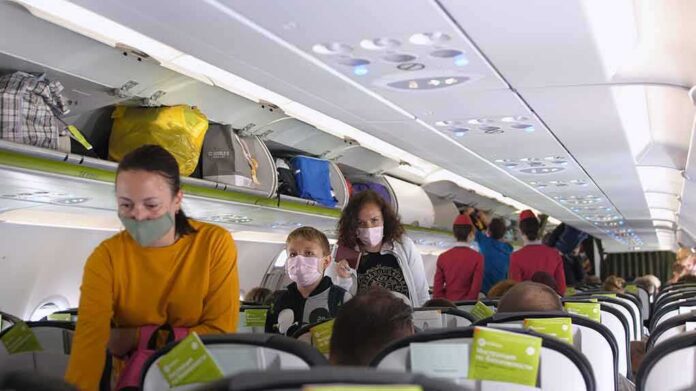
Passengers and crew stopped a cockpit attack on a Flydubai jet as it plunged, and President Trump called it “an incredible story.”
Story Highlights
- President Trump praised passengers who helped stop a cockpit attacker on a Flydubai flight.
- The jet diverted to Tabuk, Saudi Arabia, after an emergency descent and landed safely.
- Reports say one pilot stabbed another before passengers and crew subdued the attacker.
- Flydubai suspended Israel routes while investigators review the incident.
What Happened On Board Flight FZ 1073
Israeli and international outlets report that a Flydubai flight from Dubai to Tel Aviv issued an emergency alert on September 30 after a struggle in the cockpit. Witnesses and officials say one pilot stabbed the other and the plane dropped thousands of feet before passengers and crew forced their way in and restrained the attacker. The airline diverted the aircraft to Tabuk, Saudi Arabia, where it landed safely. A reserve Flydubai crew on board helped secure the landing, a spokesperson said.
Prime Minister Benjamin Netanyahu said the attacker “apparently tried to crash the plane,” and credited the wounded pilot and several passengers for helping to stop him. Multiple passenger accounts describe a rapid descent, screams in the cabin, and a rush toward the front as people realized something was wrong. Flydubai later confirmed an in-flight incident on Flight FZ 1073 and said it was cooperating with authorities as they investigate.
President Trump’s Response And Immediate Steps
President Trump told reporters the episode was “an incredible story,” praising the quick action of passengers and crew who intervened during the descent. The president’s remarks matched early accounts that highlighted the role of people on board in stopping the attacker. Following the landing, Flydubai paused flights to and from Israel while investigators worked to confirm details and ensure safety for future operations, according to statements cited by major outlets.
News reports also noted that the aircraft diverted to Tabuk after the emergency alert and that passengers assisted in restraining the attacker until other crew could take control and land the plane. Those facts align with standard aviation practice: during an onboard emergency, the only people who can act right away are crew members and nearby passengers. That is why training focuses on fast coordination in the cabin and cockpit when violence breaks out.
Why This Fits A Larger Aviation-Security Pattern
Security rules after the September 11, 2001, terror attacks made cockpit doors far harder to breach from the cabin. But experts have long warned that threats can also come from inside the flight deck, which is harder to guard against with doors alone. When violence occurs on board, resolution often depends on people already present. Many recorded cases show crew and passengers restraining an attacker before the plane can land, echoing what played out here, according to industry histories and training guidance.
Public attention is fixed on two facts that cut across politics: the system worked because regular people stepped up, and the risk was real. For readers who feel leaders often fail them, this story highlights everyday courage amid institutional limits. Investigators will sort out motive and process improvements. For now, the through-line is clear: crew training, passenger awareness, and quick action prevented a disaster, and leaders across governments acknowledged that reality promptly.
Sources:
youtube.com, news18.com, bbc.com, bbc.co.uk, irishtimes.com, nbcnews.com, nytimes.com, rmb.reuters.com, airguide.info
© unitedfrontnews.com 2026. All rights reserved.