
A Texas court gave one Tesla owner a refund-sized win, and the case cut straight to the company’s long-running Full Self-Driving promises.
Quick Take
- Ben Gawiser won a small-claims judgment against Tesla after buying Full Self-Driving software for his Model 3 [2]
- The reported judgment came to $10,672.88, including taxes and court costs [2]
- Tesla has kept fighting the payment, according to reporting on the case [2][3]
- The dispute adds to broader litigation over whether Tesla oversold what Full Self-Driving could actually do [3]
What the Texas judgment changed
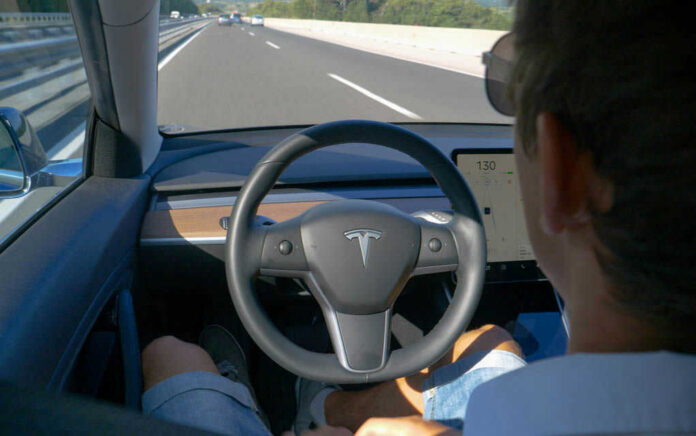
Ben Gawiser, identified in reporting as an Oracle executive and Tesla owner, sued after paying $10,000 for Full Self-Driving in 2021 and later claiming the feature never delivered the capability Tesla promoted [1][2]. A Travis County court entered a judgment in his favor, and Electrek reported the total at $10,672.88 after adding taxes and court fees [2]. For Tesla owners who have waited years, that kind of result looks less like a technical squabble and more like a basic consumer refund fight.
Electrek also reported that Tesla has tried to delay paying the judgment, which keeps the dispute alive even after the court ruling [2]. That matters because the company has spent years telling buyers that Full Self-Driving was coming, while owners say they paid for a finished product that still behaves like an unfinished driver-assistance system [1][3]. In plain terms, the legal fight is not only about one check; it is about whether Tesla can keep selling a promise while delaying accountability.
The wider legal pressure on Tesla
The Gawiser case is not isolated. A separate class-action case in federal court moved forward after Judge Rita F. Lin certified classes of Tesla drivers, according to the law firm that described the ruling [3]. That lawsuit alleges Tesla marketed Full Self-Driving as though the cars already had the hardware needed for complete driverless operation [3]. It also says Tesla has not shown the ability to complete a fully autonomous drive or obtained the California certifications required for driverless operation [3].
That broader litigation gives Tesla critics a larger frame for the same complaint: buyers paid thousands of dollars years ago, but the product still has not matched the sales pitch [1][2][3]. Conservative readers know the danger of a company or government selling fantasy first and delivering later, especially when ordinary people are the ones left holding the bill. Here, the issue is not ideology; it is whether a manufacturer can market a costly feature as near-complete when the real-world result remains unfinished.
Why Tesla still has room to fight back
Tesla still has a defense path, even if the optics are bad. The reporting set shows the Gawiser matter appears procedurally narrow, with Tesla not responding in the small-claims setting rather than losing after a full merits trial [2]. That limits how much the result says about the entire Full Self-Driving program. The class-action summary also reflects an early certification stage, not a final ruling that Tesla committed fraud or violated consumer law across the board [3].
Electrek reported that Gawiser cited Elon Musk’s April 22, 2026 statement as part of his argument that Tesla could not deliver a working version of Full Self-Driving for his vehicle [2]. That detail cuts against any claim that the product was already complete at the time he paid, but it still does not replace the missing primary records: the original purchase terms, Tesla’s exact disclaimers, and the full court file [1][2][3]. Without those documents, the record remains strong on frustration and weak on finality.
What readers should watch next
The next step is not guessing; it is the paper trail. The most important documents would be the Travis County file, Tesla’s response if it exists, and the federal class-certification order [2][3]. Those records would show whether Tesla promised a future capability, reserved enough legal wiggle room to shield itself, or simply overreached in marketing. Until then, the headline is straightforward: at least one judge has told Tesla to pay an owner back, and the company is still fighting to avoid doing it.
Sources:
[1] Web – This Tech Exec Sued Tesla Over Its Full Self-Driving Promises
[2] Web – This Tesla owner won $10k in court for Tesla’s FSD lies. Tesla is …
[3] Web – Tesla “Full Self-Driving” Litigation Moves Forward With Class …