
President Trump said the United States now controls the Strait of Hormuz and should be paid for it, turning a wartime shipping fight into a bigger test of power, law, and oil flow.
Quick Take
- Trump said the United States controls the Strait of Hormuz and described the Navy’s blockade as “infallible.”
- He also said the United States should be reimbursed, including a 20% charge on cargo shipped through the strait.
- Reporting says American forces were monitoring or helping secure traffic, while some ships still continued to move through the waterway.
- The wider dispute remains tied to Iran, shipping risk, and the fact that the strait is one of the world’s most important oil routes.
Trump Ties Control Claims to Payment Demands
Trump repeated the claim that the United States, not Iran, controls the Strait of Hormuz. He told reporters the United States Navy was the “only” force with control and said the strait was open. In the same set of remarks, he paired that claim with a demand for payment, saying the United States should be reimbursed for providing safety and security in the waterway.
That message marks a sharp shift from normal talk about maritime security. Instead of framing the mission as a short-term escort effort, Trump described the United States as the “guardian” of the strait and suggested a toll on cargo passing through it. Reports also say he had earlier described a secret military effort that helped tankers and commercial ships move through the area. The claim was presented as a presidential assertion, not as a legal ruling.
What U.S. Forces Are Said to Be Doing
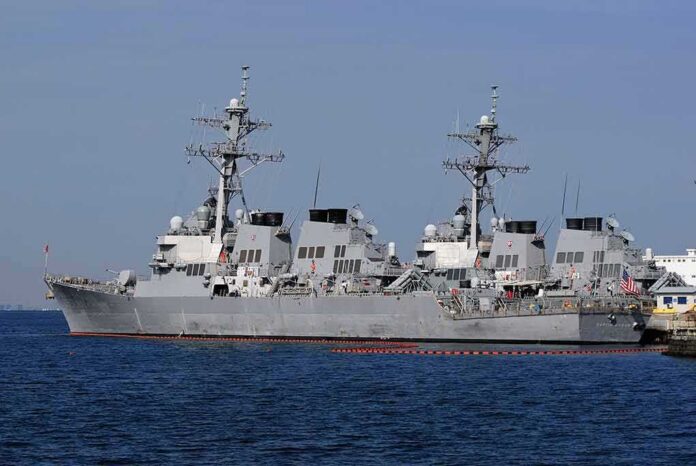
Reporting shows American forces have been active around the strait, including a blockade on Iranian-linked shipping and efforts to keep the route open. U.S. Central Command said the strait remained open to all vessels and that U.S. forces were positioned to ensure freedom of navigation. Other reports say traffic was still moving through the passage, even as the fight over access deepened.
That matters because the Strait of Hormuz is not a side issue. It is a major oil route, and the flow of ships through it affects prices, supply chains, and global nerves. The reporting suggests U.S. power has influenced who can pass and when, but it also shows that ships were still moving and that the route was still contested.
Why the Legal Question Still Matters
The public record in the provided reporting does not show a treaty, United Nations mandate, or other clear legal basis for sovereign U.S. control of the strait. That does not erase the military reality on the water. It does mean Trump’s language goes beyond what the reports confirm. The coverage supports a picture of forceful pressure and blockade, not a settled transfer of authority.
#World I ‘Get Blown Away’: Trump Warns Iran Against ‘Doing Something’ In Strait Of Hormuz#DonaldTrump #US #Iran #USIranConflict #USIranWar #StraitofHormuz https://t.co/SUMgZNRFg0
— News18 (@CNNnews18) August 12, 2026
That gap leaves room for a familiar Washington pattern. One side makes a sweeping claim. The other side rejects it. Newsrooms then describe a live dispute instead of a final answer. For readers, the deeper issue is less about one speech than about how often national security policy now arrives through slogans, legal gray zones, and emergency measures that affect trade and fuel prices at once.
Sources:
cbsnews.com, apnews.com, theguardian.com, cnbc.com, usatoday.com, middleeasteye.net, npr.org, abcnews.com, nampa.org, aljazeera.com
© unitedfrontnews.com 2026. All rights reserved.