
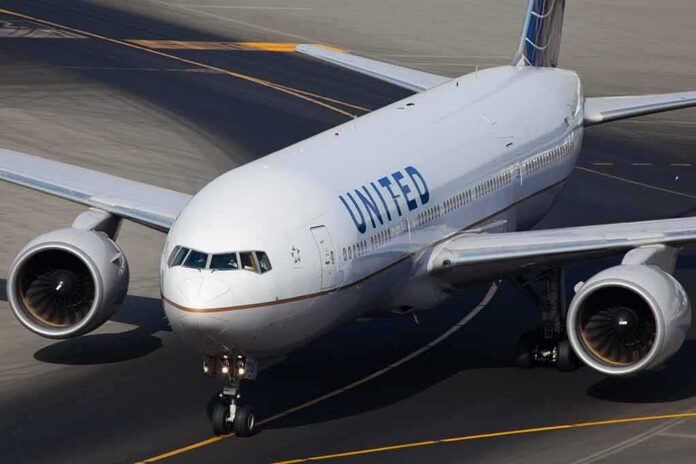
A United Airlines flight sent a hijack alert after a passenger said he had a bomb and moved toward the cockpit, yet the plane still landed safely and police made an arrest.
Story Snapshot
- Jefferson Parish deputies arrested a passenger after landing in New Orleans, with no injuries reported.
- Authorities say the man claimed he had a bomb and tried to approach the cockpit on United Flight 2174.
- Officials booked the suspect on felony counts tied to a false bomb threat and terrorizing.
- The case highlights rising unruly-passenger risks and how most bomb threats prove false but must be treated as real.
What Authorities Say Happened Onboard
Jefferson Parish Sheriff’s Office officials said a 34-year-old passenger on United Flight 2174 from Newark to New Orleans told crew members he had a bomb and moved toward the cockpit late Monday night. Pilots sent a hijack alert, and the crew managed the situation until landing at Louis Armstrong New Orleans International Airport. Deputies arrested the man without incident after the aircraft reached the gate. No injuries were reported. Officials did not find an explosive device, and the man faces felony charges under Louisiana law.
Multiple outlets identified the passenger as Rony Alexander Gomez-Alberto and reported he allegedly claimed he had a bomb and tried to reach the cockpit area during the flight. Authorities described his behavior as irrational around 11:20 p.m., prompting the alert and an immediate security response. United Airlines confirmed the flight landed safely in New Orleans. The sheriff’s office said the man was booked for communicating false information of planned arson and terrorizing, which are serious state offenses.
How The Response Fits Standard Aviation Security
Airlines, pilots, and law enforcement treat any bomb claim as real until proven false. Reuters has reported that the vast majority of aviation bomb threats turn out to be false alarms, but officials cannot assume that in the moment. The goal is to keep the cockpit secure, calm the cabin, and land as soon as practical so police can take control. That playbook appeared to guide this flight, which ended with a safe landing and a quick arrest at the gate.
Federal aviation material shows that unruly-passenger cases remain a steady concern. The Federal Aviation Administration reported 2,102 unruly-passenger incidents in 2024, and safety documents note more than 150 Level 3 threats and over 40 Level 4 threats over the prior decade. Those categories cover severe cases, including threats and attempts to breach the cockpit. Incidents like this one put stress on crews and can disrupt many travelers far beyond a single flight.
Why This Incident Resonates Beyond One Flight
This case taps into a wider fear that the system struggles to stop dangerous behavior before it reaches the cabin. People on the left and right worry that officials and agencies react after the fact rather than prevent problems. When a passenger claims a bomb and moves toward the cockpit, it rattles trust in basic safety. Even when threats prove false, the scare is real, and the costs fall on working families who depend on safe, steady travel.
✈️ United flight triggers hijack alert after passenger claims bomb threat.
A suspect attempted to storm the cockpit on a flight bound for New Orleans.
Authorities arrested the individual following the mid-air security incident.#AviationSafety #UnitedAirlines pic.twitter.com/D8K8y4RPaD— WorldScopeX (@WorldScopeX2) November 11, 2026
The methodical outcome here matters. Crew members kept control, the pilots signaled an alert, the plane landed safely, and police arrested the suspect. That sequence shows training and coordination can work under pressure. Still, repeated hoaxes can drain resources and risk complacency. Officials must maintain strict standards without numbing crews and passengers. Clear rules, quick law enforcement follow-up, and strong penalties for false threats aim to deter copycats and keep the flight deck secure.
What Comes Next For Passengers And Policy
Travelers will likely see the same visible defenses: locked flight deck doors, firm crew instructions, and zero tolerance for threats. Behind the scenes, carriers review crew reports, security teams refine checklists, and prosecutors weigh charges to send a clear signal. Data-driven enforcement helps focus attention on the small share of cases that pose high risk. That is how the system guards thousands of flights a day while keeping the public calm and commerce moving.
Sources:
pjmedia.com, en.royanews.tv, timesnownews.com, kpel965.com
© unitedfrontnews.com 2026. All rights reserved.