
President Trump said the United States will unleash unprecedented financial measures against Iran, shifting the conflict from missiles to money as soon as this week.
Story Snapshot
- Trump is pivoting from new strikes to tighter economic pressure on Iran.
- Treasury plans measures “never seen” before, with rollouts expected within days.
- The campaign builds on years of sanctions and a naval blockade to choke oil revenue.
- Experts say sanctions hit economies hard but often fail to change regimes’ behavior.
White House Signals a Money-First Strategy on Iran
President Trump told reporters and interviewers that the United States is “low keying it” militarily while watching economic pressure “mount on Iran,” describing Tehran as cash-strapped and unable to borrow. He framed the choice as letting Iran “fail economically” or hitting “really, really hard,” and said Washington controls much of the regime’s accessible funds. The approach aims to squeeze Iran’s leaders without ordering a fresh round of large strikes in the near term.
The policy turn follows months of conflict and an existing naval blockade designed to restrict Iran’s oil exports, a main source of state revenue. Reporting indicates the administration sees the financial route as a way to maintain pressure while conserving munitions and limiting risk to U.S. forces. Officials have also hinted at targeting networks that help Tehran move money, including digital asset channels used to skirt restrictions in recent years.
Treasury’s Role: “Measures Never Seen” and Rapid Timelines
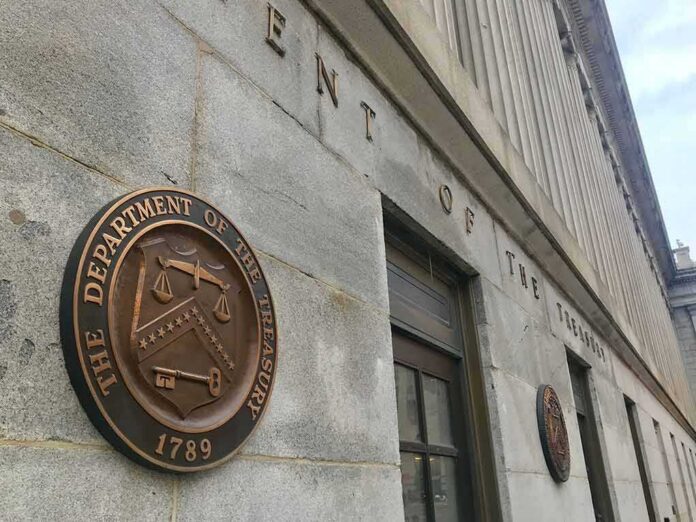
The Department of the Treasury is preparing actions that officials describe as unprecedented, with announcements expected as soon as this week. Prior campaigns used sweeping designations, maritime insurance restrictions, and banking cutoffs. In 2018, the Office of Foreign Assets Control carried out what it called its largest single-day action on Iran, signaling how far Washington has pushed such tools before. New steps could widen secondary pressure on foreign buyers, shippers, and financiers that touch Iranian energy and metals flows.
The toolkit likely includes sanctions on entities that help Iran settle trades outside normal banking rails. The State Department recently detailed actions against firms and a network tied to digital assets that help the regime maintain financial links abroad. By choking side doors, the United States seeks to block Iran’s workarounds, raise transaction costs, and starve government budgets. The speed of rollout suggests coordination across agencies and with select partners to enforce penalties and seize leverage points.
Why Both Parties Should Care: Power, Costs, and Outcomes
Americans across the spectrum worry that Washington’s choices often punish regular people abroad without fixing the core problem. Research on sanctions shows they reliably hurt economies but are mixed at forcing political change or concessions, especially over time. Studies on Iran find strong hits to oil exports, exchange rates, and inflation, yet limited proof that long-run goals are met. That gap between pain and outcome can fuel doubts about strategy and the costs paid by U.S. families and allies.
🇺🇸BREAKING: Trump Announces “Economic D-Day” on Iran
“I am announcing the MOST CRUSHING ECONOMIC OPERATION EVER TAKEN AGAINST ANY COUNTRY! This will be Economic Warfare and Isolation on an unprecedented scale.”
“I am also announcing that ANY country that allows its financial… pic.twitter.com/QcmVhkksXD
— And We Know©🇺🇸 (@andweknow) August 20, 2026
For conservatives, backers argue that economic force protects U.S. troops and compels adversaries without new wars. For liberals, critics warn that sanctions can deepen humanitarian strain while regimes endure. Both sides see a familiar pattern: the government leans on the same tools, claims new “unprecedented” power, and asks the public for patience while elite networks often find escape hatches. The current push fits a decades-long playbook of escalating financial pressure on Iran.
What to Watch Next: Targets, Enforcement, and Blowback
Watch three signals to judge impact. First, which sectors get named and whether secondary penalties hit big foreign banks, insurers, and shippers. Second, how strictly the United States enforces actions at sea and in trade finance, where gaps can blunt results. Third, signs of market reaction: oil flows, freight rates, and currency moves. Prior efforts show early success can fade if targets adapt faster than enforcers tighten the net.
Sources:
aljazeera.com, cnbc.com, fortune.com, npr.org, finance.yahoo.com, state.gov, wsj.com
© unitedfrontnews.com 2026. All rights reserved.