

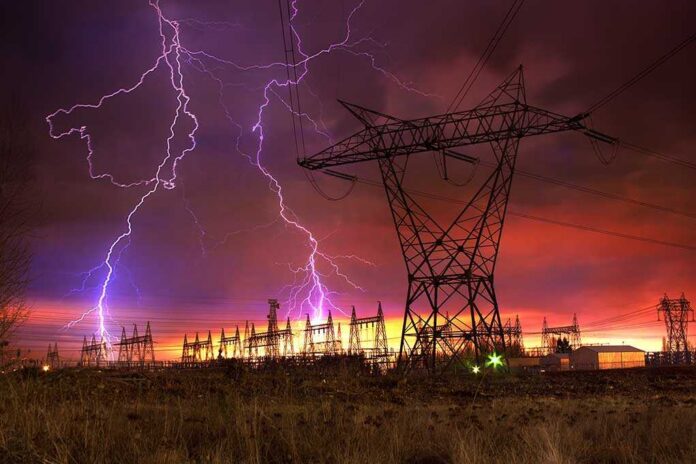
A single high-altitude electromagnetic pulse could cripple large parts of America’s power and communications systems, according to multiple federal sources and expert testimony.
Story Highlights
- Federal guidance says an intentional electromagnetic pulse could damage large parts of the grid and key services.
- Department of Energy and Department of Homeland Security run programs to harden energy systems against high-altitude threats.
- Government watchdogs warn gaps remain in planning and coordination across agencies and industry.
- Experts urge targeted protections, spare parts, and backup communications to speed recovery.
What Federal Agencies Say About the Electromagnetic Pulse Risk
Cybersecurity and Infrastructure Security Agency guidance states that an intentional electromagnetic pulse attack could damage significant parts of the electrical grid, communications equipment, water systems, and transport networks. The language is cautious but clear. It says a high-altitude blast may disable large sections of grid control systems. The Department of Energy describes ongoing work to address high-altitude electromagnetic pulse risks to the nation’s energy system with other agencies and laboratories. The message from government is plain: this is a low-frequency, high-impact hazard.
Department of Homeland Security and Department of Energy documents frame electromagnetic pulse and severe solar storms as related hazards. Both can stress transformers, substations, and control gear that keep power flowing. Federal planners use models, tests, and drills to judge which parts fail first and how fast crews can restore service. They push steps like shielding, surge protection, and better grounding. They also stress backup communications and protected spare equipment, so repairs can begin even if phones and internet go dark.
What Experts and Oversight Bodies Have Told Congress
Expert witnesses told Congress the electric grid’s weak points include long-lead transformers, older substations, and digital controls that were not built for intense electromagnetic fields. They warned that losing even a fraction of these assets at once would slow recovery. The Government Accountability Office reported that agency efforts often moved in silos and needed better coordination and shared plans with industry. Another review said electromagnetic risks could hit electricity and other sectors that depend on power, like communications.
Several former officials argued for practical protections now, rather than waiting for perfect data. They urged focused investments at critical substations, key pipelines, hospitals, and public safety sites. They called for stockpiles of shielded spare parts and mobile transformers. They also backed simple steps that help in any disaster: fuel reserves for generators, manual operating modes, and training to run systems with little or no connectivity. These are not exotic fixes. They mirror hurricane and wildfire playbooks, adapted to an electromagnetic pulse scenario.
How an Electromagnetic Pulse Could Disrupt Daily Life
A high-altitude detonation would send a fast spike that can fry or confuse sensitive electronics. It could also induce damaging currents on long transmission lines. Grid relays could trip. Substations could sustain damage. Control rooms could lose sensors and links to field devices. Cell towers, data centers, and fiber repeaters could fail. Water pumps and traffic systems could stop. Recovery would start with damage checks, switching, and repairs. Work would go faster where spare parts and backup radios are ready.
For families and businesses, the first hours would test basic resilience. Cash registers and ATMs might not work. Refrigeration and heating could stop. Roads could clog if signals fail. Local radio with hardened transmitters may carry updates. Hospitals with protected generators and parts would fare better. Communities with microgrids and manual controls could bring back limited service sooner. These steps do not end the risk. They shorten the outage and protect life and property while larger repairs move ahead.
Why This Matters Beyond Partisan Lines
Americans across the spectrum see a pattern: the system is fragile, and leaders talk more than they fix. The electromagnetic pulse debate fits that story. Agencies admit the risk and outline plans, yet watchdogs still find gaps and delays. People sense that when crisis hits, they will be on their own for a while. That is why practical protection, clear roles, and honest timelines matter. They turn warnings into action and reduce the odds that one strike cascades into chaos.
Sources:
youtube.com, hsgac.senate.gov, cisa.gov, energy.gov, docs.house.gov, congress.gov, ferc.gov, oversight.house.gov, dhs.gov
© unitedfrontnews.com 2026. All rights reserved.