

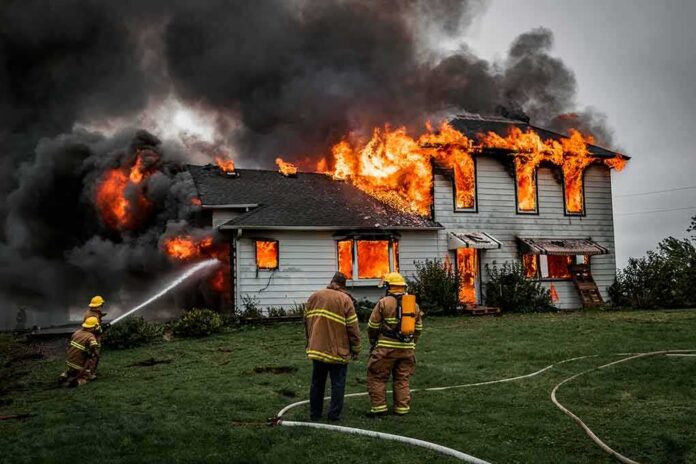
New York City’s fire deaths have climbed to 90 this year, nearly double the pace of 2025, after two people were killed in separate daytime fires, according to the Fire Department.
Story Snapshot
- Fire deaths reached 90 across 62 fires, compared with 51 by this point in 2025.
- Two latest deaths followed separate fires in Crown Heights and the Bronx.
- City Council held an emergency hearing as battery and home fire risks draw focus.
- A six-fatality Sunset Park fire earlier this month underscored the danger.
What Happened: Two More Fatal Fires Push 2026 Total to 90
Fire Department officials reported two people died Thursday in separate residential fires, bringing the citywide death toll to 90 across 62 fires this year. One fire started just after 10 a.m. on the first floor of a four-story building on Lincoln Place near Classon Avenue in Crown Heights. Another began around 12:25 p.m. on the second floor of a private home on Metcalf Avenue near East 172nd Street in the Bronx. The deaths updated the year’s total count.
Reporters covering the department’s figures noted the total now stands far above last year’s pace. By this point in 2025, fire deaths were 51. The city’s running 2026 count stands at 90, a jump tied to a series of deadly home fires in the fall. The Fire Department’s numbers circulated as agencies briefed City Council members and the public about the surge and what is driving it.
Context: A Sharp Short-Term Rise After Years of Long-Run Decline
City data over the past decade showed fire deaths generally trending lower than historic levels, with 63 deaths in 2020 and 66 in 2019. Those totals sat far below earlier eras when hundreds died each year. This fall’s surge breaks that calmer pattern. While long-run safety advances remain real, this year’s jump is a clear short-term setback that demands focus from City Hall, the Fire Department, building owners, and residents alike.
The City Council convened an emergency hearing to press agencies on causes and fixes. Council materials cited a rise in residential structural fires between fiscal years 2025 and 2026. Members also highlighted growth in battery-related fires and called for tighter storage and charging rules. Leaders framed the hearing as a push for practical steps that cut risk in older buildings and crowded homes where small mistakes can turn deadly fast.
Details on Notable Incidents Driving the 2026 Toll
A three-alarm house fire in Sunset Park on November 5 killed six people and injured several others. First responders found a fast-moving blaze that trapped residents before crews could reach them. Investigators removed electric bikes from the home as they worked to confirm the cause. That single event accounted for a major share of this month’s deaths and showed how quickly a home fire can overwhelm families and neighbors.
Other recent fires spread through multifamily buildings and private homes in minutes, often before residents could escape. Firefighters described heavy smoke conditions and flames in stairwells and hallways. These settings complicate rescues and make early warnings vital. Working smoke alarms, clear exits, and self-closing doors can save lives. Officials urged residents to charge devices safely, avoid blocked egress routes, and call 911 at the first sign of smoke.
Why This Matters to New Yorkers Across the Spectrum
Rising fire deaths cut across politics because safety in the home is a basic promise. People on the left and right see the same failures when simple safeguards do not work and agencies talk past each other. Older buildings lack modern protections. Illegal rooming and crowded storage raise risks. Lithium-ion batteries, when mishandled, can ignite fast. Families who do everything right still depend on landlords, city inspectors, and reliable power and heat. That chain is only as strong as its weakest link.
I convened today's emergency @NYCCouncil hearing on fire safety because this year's increase in fires and fatalities in New York City is a crisis. pic.twitter.com/RCbBhOmedy
— Speaker Julie Menin (@SpeakerMenin) November 20, 2026
New Yorkers also face pocketbook tradeoffs. Many cannot afford safer housing or new devices that meet higher standards. Some rely on e-bikes for work and store them in small apartments. Others live in buildings without sprinklers or safe exits. City leaders pledged tougher enforcement, clearer rules for battery storage, and better outreach in multiple languages. Those steps can help, but they require steady follow-through and fair application in every neighborhood.
What To Watch Next: Enforcement, Education, and Building Safety
Watch for new battery safety measures, including certified chargers, safe charging areas, and penalties for unsafe storage in shared spaces. Expect increased landlord inspections for self-closing doors, clear exits, and working alarms. Track how the Fire Department targets high-risk buildings, and whether response times and staffing keep pace. Families should test alarms, plan two ways out, and never charge devices overnight or near exits. Small changes add up when seconds matter.
Sources:
nypost.com, yahoo.com, nydailynews.com, abc7ny.com, amny.com
© unitedfrontnews.com 2026. All rights reserved.